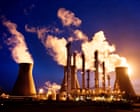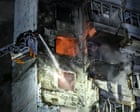
The lights in Chisinau do not flicker because of a technical glitch. They flicker because of a cruise missile landing 200 kilometers away. On Tuesday, Moldova’s Parliament was forced to trigger a 60-day state of emergency in its energy sector, a desperate legislative reflex following Russian strikes on Ukraine’s southern power infrastructure. The primary victim was the Isaccea-Vulcanesti high-voltage line, a critical artery that pumps Romanian electricity through a 40-kilometer stretch of Ukrainian soil before reaching Moldovan homes. When that line went dark, Moldova lost approximately 70% of its power supply in a heartbeat.
This is not a singular event. It is a recurring nightmare for a nation caught in the structural trap of Soviet-era engineering. While Western analysts often view energy security through the lens of pricing or policy, for Moldova, it is a matter of basic physical survival. The current crisis has exposed a 400-megawatt deficit at peak hours, forcing the government to plead with its 2.5 million citizens to shut off non-essential appliances. This is the reality of a "buffer state" in 2026: a country trying to join the European Union while its physical heart remains wired to a war zone.
The Geography of Vulnerability
The Isaccea-Vulcanesti line is a masterpiece of geopolitical misfortune. To get electricity from Romania—an EU member and Moldova’s primary western ally—the current must travel into Ukraine’s Odesa region before crossing back into Moldova. This "U-turn" was designed during the Soviet era to ensure that no republic could operate independently of the central grid. Today, that design is a weapon.
Russian drones and missiles targeting Odesa do not need to hit a Moldovan substation to cripple the country. They simply need to disrupt the Ukrainian nodes that sustain this transit. The March 24 strike did exactly that, leaving Moldovan engineers staring at a "dead" line that requires demining operations and five to seven days of specialized repair before it can be re-energized.
The Transnistria Factor
Even more complex is the role of the Cuciurgan power plant (MGRES). Located in the Russian-backed separatist region of Transnistria, this facility has historically provided the bulk of Moldova's domestic generation. However, it is a double-edged sword:
- Ownership: It is owned by Inter RAO, a Russian state-controlled entity.
- Fuel Crisis: Since 2025, the plant has struggled as Russian gas transit through Ukraine vanished, forcing it to switch to coal-fired operations.
- Political Leverage: Tiraspol uses the plant’s output to extract political concessions from the pro-Western government in Chisinau.
When the Isaccea-Vulcanesti line fails, Moldova becomes more dependent on the very separatist region that Moscow uses to destabilize it. It is a circular trap where every emergency repair is a temporary patch on a systemic wound.
Why Energy Ramstein is Falling Short
The international community has not been idle. The "Energy Ramstein" group and the European Commission have pledged hundreds of millions of euros to "Repair, Rebuild, Restart" the regional grid. Yet, the physical reality on the ground often outpaces the arrival of funds.
The core issue is that Moldova needs direct interconnections with Romania that bypass Ukraine entirely. The Balti-Suceava and Vulcanesti-Chisinau lines are under construction, but infrastructure of this scale takes years, not months. Until these are completed, Moldova remains an electrical hostage.
Prime Minister Alexandru Munteanu was blunt during the parliamentary session. He noted that the state of emergency is not a "measure of panic" but a "measure of responsibility." In plain terms, it allows the government to bypass standard procurement laws to buy expensive "balancing energy" on the spot market and to implement rolling blackouts if the deficit becomes unmanageable.
The Human Cost of Megawatt Deficits
For the average Moldovan, this is the second winter of discontent. In January, a similar disruption led to a total collapse of voltage, stalling trolleybuses in the capital and forcing border crossings to be managed by hand. Last week, a strike on a Ukrainian hydroelectric plant polluted the Dniester River, threatening the water supply for 80% of the population.
These are not "cascading failures" in the abstract sense. They are the deliberate dismantling of a civilian life. When the power goes out, the pumps for the water systems fail. When the water fails, the heating systems—often dependent on electric pumps—shut down.
Current Power Balance (Estimated March 2026)
| Source | Contribution (Pre-Strike) | Status (Post-Strike) |
|---|---|---|
| Romania (via Ukraine) | 60-70% | Offline |
| Local Generation (CHPs) | 15-20% | Operating at Max |
| MGRES (Transnistria) | 10-15% | Unreliable/Political |
| Emergency Imports | <5% | High Cost/Limited |
The Brink of Total Dark
The 60-day window provided by the state of emergency is intended to get the country through the final weeks of the heating season. However, the underlying threat remains. Moscow has repeatedly denied intentions to destabilize Moldova, yet the pattern of strikes suggests a "strategic strangulation" policy. By hitting the Ukrainian links that feed Moldova, Russia achieves a dual objective: it exhausts Ukrainian repair crews and breaks the will of the Moldovan public.
The pro-European administration of President Maia Sandu is betting everything on the fast-track construction of new lines and the integration into the ENTSO-E (European Network of Transmission System Operators). But the "brutal truth" is that cables are easier to cut than they are to bury.
Moldova is currently operating its grid at the absolute limit of its technical capability. Without the Isaccea-Vulcanesti line, the remaining 110 kV lines are being overloaded to keep hospitals and schools running. It is a high-stakes game of electrical engineering where the margin for error is zero.
The next seven days will be a test of whether the alternative "island" grids can hold. If they fail, the state of emergency will move from a legal formality to a nationwide blackout. Chisinau is waiting for the lights to stay on, but for now, they are just waiting.