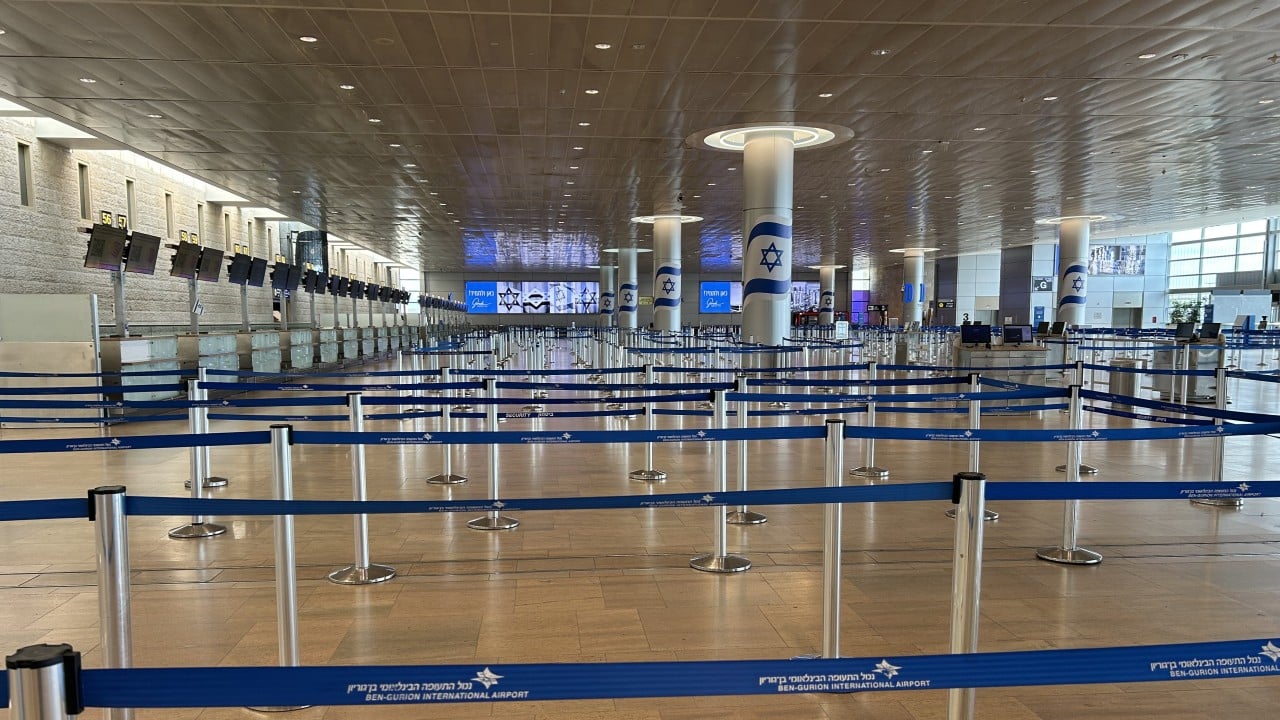
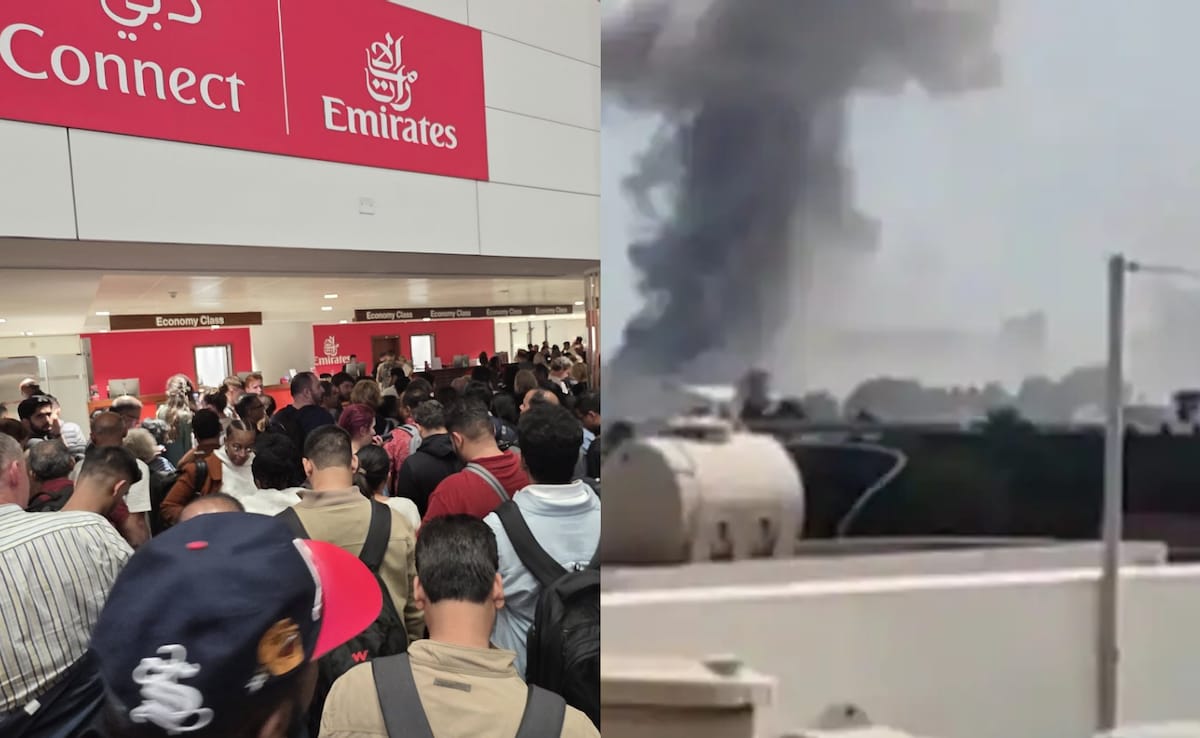
The headline factory is churning out the same tired narrative: Middle Eastern airspace is a "no-go zone," Dubai is "paralyzed," and the regional aviation industry is teetering on the edge of a wartime collapse.
It is lazy journalism. It is also factually bankrupt.
While mainstream outlets obsess over the optics of grounded planes and disgruntled passengers in Terminal 3, they are missing the most sophisticated display of operational resilience in modern history. The recent Iranian missile salvos and the subsequent airspace closures across Jordan, Iraq, and Israel didn't prove the fragility of the Middle Eastern hub model. They proved its absolute dominance.
The Myth of the Grounded Giant
Every time a radar screen goes dark over the Levant, analysts rush to declare the "death of the layover." They point to flight cancellations as a sign of failure.
In reality, a cancellation is a proactive safety maneuver, not a systemic collapse.
When Emirates or Qatar Airways scrubs a flight path, they aren't "recovering" from a crisis; they are executing a pre-baked algorithmic redirection. I have sat in operations centers where the diversion of 200 wide-body aircraft is handled with less frantic energy than a Starbucks barista handles a morning rush.
The competitor's narrative suggests that travelers should fear these disruptions. On the contrary, you should be terrified of an airline that doesn't cancel flights when $GPS$ jamming is detected. The "chaos" at Dubai International (DXB) is actually the sound of a well-oiled machine processing a massive surge in data points.
Geopolitical Friction is the Feature Not the Bug
We need to stop treating Middle Eastern volatility as an "unforeseen circumstance." In the aviation business, particularly for the "Big Three" (Emirates, Etihad, Qatar), regional tension is a foundational part of the business model.
These carriers have built their entire empires on the "Crossroads of the World" logic. You cannot claim the benefits of being the world's bridge without accepting that bridges occasionally need to close for maintenance—or in this case, for incoming projectiles.
The "lazy consensus" argues that these conflicts will drive traffic back to European hubs like Heathrow or Frankfurt. This is a fundamental misunderstanding of geography and fuel economics.
The Math of the Mid-Point
If you are flying from London to Sydney, you have two choices:
- Suffer through a 22-hour ultra-long-haul flight that taxes the limits of human endurance and $CO_2$ efficiency.
- Break the journey in the Gulf.
Even with a 15% increase in flight time due to circuitous routing around Iranian or Iraqi airspace, the Gulf hubs remain more efficient than any alternative. An Airbus A350-1000 burning fuel to circumnavigate a conflict zone is still more profitable than a legacy carrier trying to bypass the region entirely.
The GPS Spoofing Reality Check
The media loves a good "War Fears" headline, but they rarely talk about the technical warfare happening in the cockpit.
Currently, pilots over the Middle East are dealing with "circle spoofing"—a phenomenon where the aircraft's navigation system thinks it is flying in circles over an airport hundreds of miles away. This isn't just a "flight cancellation" issue; it’s a hardware-software integrity battle.
The reason flights are cancelled isn't just because of the risk of a missile. It's because the digital infrastructure of the sky is being weaponized.
The industry insiders I talk to aren't worried about the "war." They are worried about the data. If an Inertial Reference System (IRS) disagrees with a spoofed GPS signal, the pilot has to revert to "old school" navigation. Most modern pilots can do this, but the sheer density of traffic in the Dubai corridor makes it a high-workload environment.
Cancellations are a way to reduce that density. It is an intentional throttling of the network to maintain a 100% safety record. Calling it "chaos" is like calling a surgical prep "a bloody mess."
Why Your Travel Insurance is the Real Scam
People ask: "Should I cancel my trip to the Middle East?"
The premise of the question is flawed. You are safer in a flight-delayed DXB lounge than you are in most major Western metropolitan hubs. The security protocols triggered by these regional "attacks" are the most stringent on the planet.
The real threat isn't a missile; it's the predatory behavior of insurance companies and the "fear-porn" generated by news cycles.
- Misconception: A "War Risk" clause means you get your money back.
- Reality: Most policies have specific exclusions for "civil unrest" or "acts of war" that were "foreseeable."
Since the Middle East has been in a state of flux for 75 years, insurance adjusters will argue that a missile exchange is as foreseeable as rain in London. If you want to "disrupt" your travel plans, stop looking at the flight board and start reading the fine print of your policy.
The Resilience of the Hub-and-Spoke
The competitor article suggests that passengers will flee to "safer" routes.
I’ve seen this play out before. During the 2017 Qatar blockade, "experts" predicted the demise of Doha as a hub. Instead, Qatar Airways expanded, found new routes, and became the most awarded airline of the decade.
The current Iran-Israel friction is just another stress test.
The Gulf carriers operate with a level of state-backed liquidity that makes them immune to the market shocks that would bankrupt a United or a Lufthansa. When flights are cancelled, Emirates doesn't just lose money; it reallocates resources. They use the downtime for accelerated maintenance. They shuffle crews to optimize rest cycles. They play the long game.
Stop Asking if it’s Safe
Is it safe to fly through the Middle East? Yes. Statistically, it remains the safest corridor in the world because it is the most monitored.
The real question you should be asking is: "Why am I so easily manipulated by a flight board?"
A cancelled flight is an inconvenience for your vacation, but it is a triumph for aviation safety standards. The fact that the industry can shut down and restart the world’s busiest international airport in a matter of hours—while missiles are literally in the air—is a feat of engineering and diplomacy that deserves respect, not a panicked headline.
If you want "predictability," stay home. If you want to witness the most advanced logistical network in human history, keep your booking.
The sky isn't falling. It's just being rerouted.
Stop looking for a "conclusion" to a conflict that has no expiration date. Instead, look at your boarding pass. If the flight is on, the experts—the guys who have billions of dollars and thousands of lives at stake—have already decided the risk is negligible.
Trust the math, not the news.
The next time you see a "Flight Cancelled" notification, don't groan. Realize you’re watching a $100 billion insurance policy in action.
Go to the lounge. Order a drink. The "war" is a rounding error in the Gulf's flight schedule.