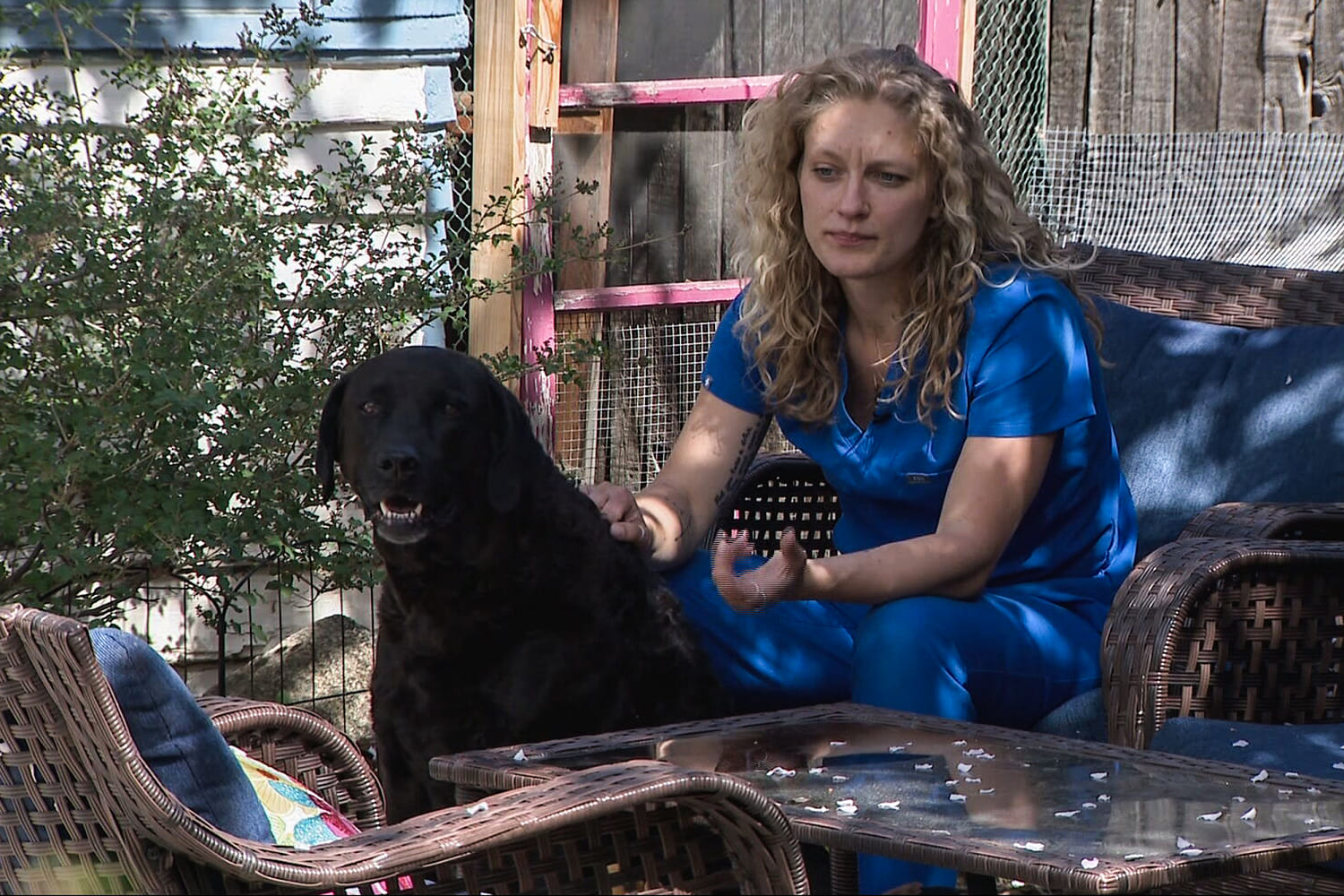
A quiet residential street in Colorado recently became the front line of a disturbing public health intersection where the domestic drug crisis met the vulnerability of family pets. A local family discovered their dogs had been poisoned not once, but twice, by hot dogs intentionally laced with methamphetamine and discarded in their own yard. This is not an isolated prank. It is a grim indicator of how the ubiquity of high-purity synthetic stimulants is bleeding out of private spaces and into the public commons, creating a secondary wave of toxicity that local law enforcement and veterinary clinics are struggling to contain.
The mechanics of these incidents point to a targeted, malicious intent that goes beyond accidental littering. When a dog ingests methamphetamine, the physiological response is immediate and often catastrophic. Unlike humans, who may have a built-in understanding of the substance they are consuming, an animal experiences a total neurological hijack. Their heart rate skyrockets, body temperatures reach levels that cause organ failure, and the resulting seizures can be fatal within minutes. The fact that this specific family was targeted twice suggests a breakdown in neighborhood security and a terrifying new weapon for those seeking to settle domestic or property disputes.
The Chemistry of Backyard Poisoning
To understand the severity of these attacks, one must look at the substance itself. The methamphetamine circulating in American communities today is far more potent than the "crank" of previous decades. Most of it is produced via the P2P method in industrial-scale labs, resulting in a product that is nearly pure d-methamphetamine. This version of the drug is exceptionally hard on the central nervous system. When stuffed into a porous delivery vehicle like a hot dog, the meat acts as a mask for the chemical scent and a sponge for the liquid or powdered drug.
Veterinarians across the Mountain West report a steady increase in "toxicity events" involving illicit substances. While accidental ingestion of marijuana remains the most common, the rise of "hard" stimulant poisoning represents a shift toward higher lethality. A dog’s liver is not equipped to process synthetic phenethylamines efficiently. The drug bypasses standard metabolic filters and hits the brain with the force of a hammer.
The Colorado case highlights a specific vulnerability in suburban life. We treat our fenced-in yards as impenetrable sanctuaries. We assume the perimeter is a hard border. This sense of security is precisely what the perpetrator exploited. By using a high-value treat like a hot dog, the attacker ensures the animal will consume the poison quickly, often before a nearby owner even realizes something has been dropped over the fence.
Why Law Enforcement is Falling Behind
Investigating these crimes is notoriously difficult. Unless a neighbor catches the act on a high-definition doorbell camera, there is rarely any physical evidence beyond the contaminated meat. Methamphetamine degrades, but it leaves a clear chemical signature in the animal's blood and the remains of the bait. However, by the time a necropsy or blood panel is completed, the trail is often cold.
Police departments are frequently forced to categorize these incidents as "animal cruelty," a charge that, in many jurisdictions, lacks the investigative resources of a felony drug distribution case. This is a mistake in methodology. A person in possession of enough methamphetamine to lace multiple hot dogs is, by definition, involved in the felony drug trade. Treating the poisoning as a localized "pet issue" ignores the larger criminal infrastructure required to obtain the poison in the first place.
The lack of a centralized database for pet poisonings makes it nearly impossible to track patterns. If a disgruntled individual is lacing baits across a three-county radius, the individual police departments may never talk to one another. We are looking at a fragmented response to a synchronized threat.
The Economic Burden of Survival
For the family in Colorado, the emotional toll is compounded by a staggering financial hit. Emergency veterinary care for a methamphetamine overdose is not a simple procedure. It requires intensive monitoring, cooling baths to prevent brain melt from hyperthermia, and often the use of intravenous lipid emulsion therapy to "soak up" the toxins from the bloodstream.
A single night in an emergency vet can easily exceed $3,000. When an attack happens twice, the cost becomes prohibitive for most American households. This creates a secondary trauma. Families are forced to choose between a "heroic" financial sacrifice or the death of a companion. The perpetrator isn't just killing a dog; they are targetedly draining the financial stability of the household.
Hardening the Perimeter
If you live in an area where property crimes or drug activity are on the rise, the traditional chain-link fence is no longer sufficient. Security must be proactive.
- Install motion-activated lighting that covers the entire perimeter of the yard, not just the entry points.
- Utilize fine-mesh screening along the bottom three feet of fences to prevent small objects from being pushed or rolled into the grass.
- Muzzle training for high-risk environments. While it sounds extreme, a "basket muzzle" allows a dog to pant and drink but prevents them from vacuuming up scraps found on the ground during unsupervised yard time.
- Chemical testing kits. In areas with frequent incidents, keep a basic surface-level drug testing kit at home. If you find a suspicious piece of meat, you can identify the threat before the vet does.
The Toxic Intersection
We have reached a point where the overflow of the synthetic drug trade is impacting those who have no part in it. The "hot dog" method is a coward’s tactic, designed to inflict maximum emotional pain with minimum risk of confrontation. It relies on the trusting nature of the animal and the complacency of the owner.
As long as methamphetamine remains cheap and accessible, it will continue to be repurposed as a tool of malice. The Colorado case is a warning shot for every pet owner in the country. The sanctity of the backyard is gone. Constant vigilance is the only remaining defense against a threat that arrives wrapped in the guise of a treat.
Check your fence line every morning. Every single morning. This isn't paranoia. It’s the new reality of suburban land management. Keep your eyes on the grass because the person on the other side of the fence is no longer playing by the rules of neighborly conduct.