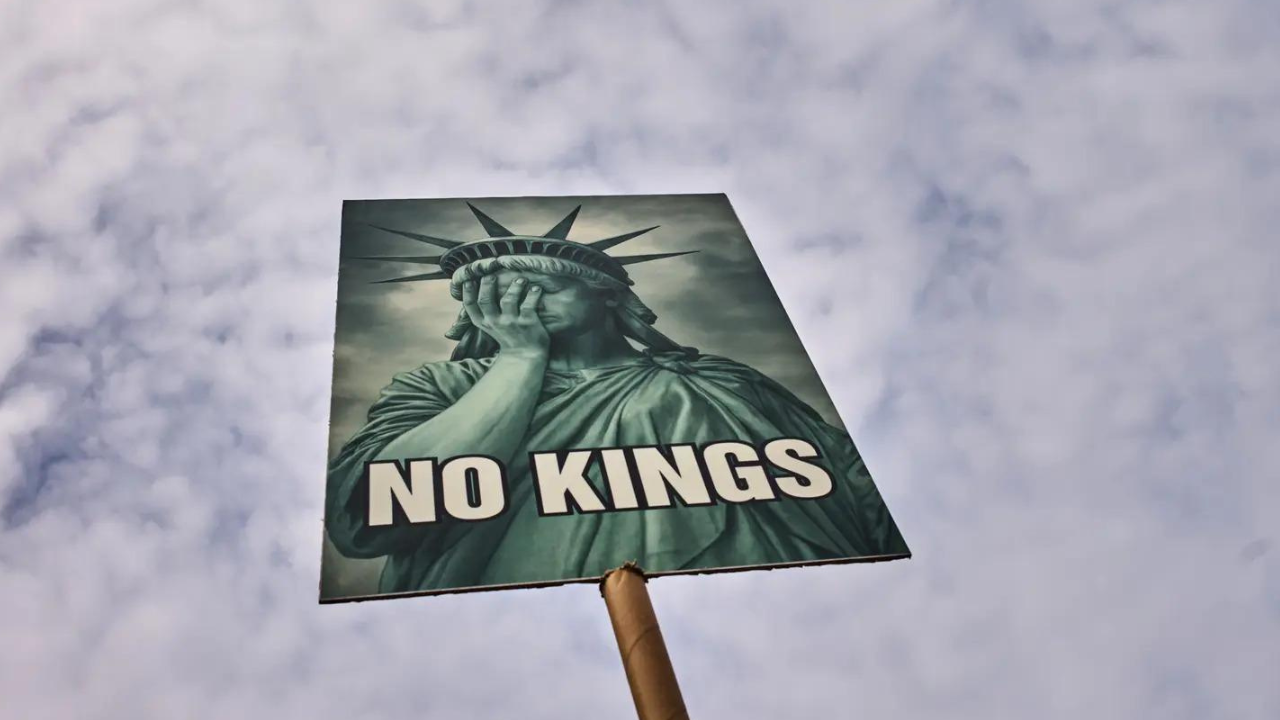
Mass political mobilization is not a spontaneous eruption of emotion; it is a logistical and psychological coordination problem solved through the alignment of three specific variables: ideological friction, network density, and the lowering of individual participation costs. When millions of citizens prepare to take to the streets in opposition to a presidential administration, they are responding to a breakdown in traditional institutional mediation. This analysis deconstructs the structural components of the impending protest wave, moving past the surface-level narrative of "anger" to examine the operational reality of large-scale civil resistance.
The Friction Coefficient of Executive Action
The primary driver of mass mobilization is the perceived delta between executive policy and established social norms. Political scientists often refer to this as "grievance-based mobilization," but a more precise framework is the Friction Coefficient. Every executive order or policy shift acts as a force applied to the body politic. When that force exceeds the dampening capacity of legislative or judicial checks, the energy translates into physical movement—protest.
The current escalation follows a predictable sequence:
- Policy Shock: The introduction of high-impact directives (e.g., mass deportations, federal workforce restructuring, or the dissolution of regulatory agencies) that bypass incrementalism.
- Institutional Bypass: When the public perceives that the courts or Congress are unable or unwilling to moderate these shocks, the "street" becomes the only remaining venue for political expression.
- Coordination Signal: Social media and decentralized communication platforms act as a low-latency signal, synchronizing individual discontent into a collective event.
This process is quantifiable. The scale of a protest is generally proportional to the number of distinct identity groups impacted simultaneously. A policy that targets a single demographic yields localized pushback; a policy that threatens the economic or legal status of multiple large cohorts—such as unions, federal employees, and immigrant communities—creates the "network effect" necessary for million-person marches.
The Architecture of Modern Civil Resistance
The shift from 20th-century hierarchical protesting to 21st-century decentralized "swarming" has fundamentally altered the cost-benefit analysis for the individual participant. In previous eras, a protest required a central organizing body (a union or a civil rights organization) to provide the infrastructure. Today, the infrastructure is pre-installed in the pocket of every citizen.
The Network Density Variable
Modern dissent relies on "Scale-Free Networks." In these systems, a few highly connected hubs (influencers, community leaders, or grassroots organizations) link to a vast number of nodes (individual citizens). This structure makes the movement resilient. If a central leader is discredited or a specific organization is hampered by legal challenges, the network reroutes.
This density creates a social feedback loop. As the perceived "winning" or "majority" status of a movement increases, the social cost of participation drops while the social cost of silence rises. This is the "Threshold Model of Collective Behavior," where each individual has a different point at which they will join a crowd. Once the "early adopters" (activists) hit the streets, they lower the barrier for the "pragmatic middle," eventually leading to a cascade effect that fills city centers.
The Cost Function of Participation
Participation in a mass protest is an economic decision. The individual weighs the "Expected Utility" of protesting against the risks (arrest, physical harm, loss of wages). Organizations planning these events maximize turnout by systematically reducing these costs through:
- Legal Shielding: Providing pro-bono legal support and "know your rights" training.
- Information Symmetry: Real-time updates on police movements and safe routes via encrypted messaging apps like Signal or Telegram.
- Logistical Subsidies: Organizing carpools, providing childcare, and distributing supplies to ensure that economic precarity does not bar participation.
Tactical Evolution and the Policing Paradox
The upcoming waves of dissent face a transformed security landscape. The state's response to mass mobilization has shifted from reactive containment to proactive disruption. This creates a tactical arms race.
The Bottleneck Effect occurs when security forces use "kettling" or strategic closures of public transit to artificially cap protest density. By limiting the physical space available, the state can make a crowd of 500,000 appear smaller or more chaotic, diminishing its political impact. In response, organizers have adopted "fluidity tactics," where multiple smaller actions occur simultaneously across a geography, preventing the concentration of police resources in a single "kill zone" or protest site.
Furthermore, the "Policing Paradox" suggests that high-visibility, militarized police responses often serve as recruitment tools for the movement. When the state uses force against non-violent actors, it validates the movement’s narrative of overreach, triggering a "backfire effect" that draws in neutral observers.
The Economic Impact of Mass Civil Disobedience
While media coverage focuses on the optics of the crowd, the structural power of a protest lies in its ability to generate economic friction. A million people in the streets of Washington D.C., New York, or Los Angeles is not just a visual statement; it is a temporary strike.
- Direct Disruption: The closure of major transit arteries and the shutdown of commerce in urban cores.
- Productivity Loss: The diversion of labor from the workplace to the protest line.
- Governance Tax: The massive allocation of municipal budgets toward overtime pay for law enforcement and emergency services.
If these protests transition from "one-day events" to "sustained occupations," the economic pressure increases exponentially. Markets dislike uncertainty; sustained civil unrest signals a lack of sovereign stability, which can lead to capital flight or the downgrading of municipal credit ratings. This is the ultimate "lever" of mass mobilization: making the status quo more expensive to maintain than the cost of political concession.
The Digital Front Line and Algorithmic Resistance
The battle for the "American street" begins in the digital "infosphere." In the lead-up to mass actions, we see a surge in Algorithmic Warfare. Pro-administration forces and anti-administration organizers both attempt to manipulate the "trend" functions of major platforms.
Organizers use "Search Engine Optimization of Dissent" to ensure that when a curious citizen searches for information, they find logistics rather than counter-propaganda. Conversely, the state may utilize "Shadow Banning" or "Throttle Tactics" to slow the spread of mobilization calls. This digital layer is where the "Selection Bias" of the movement is formed. If the information silo is too tight, the protest remains a "bubble" event; if it breaks into the mainstream feed, it achieves the critical mass required for systemic change.
The Limitations of the "March" Model
It is a mistake to view a single march as a terminal event. Historically, mass protests that lack a secondary "Institutional Integration" phase fail to achieve long-term policy shifts.
The "Momentum Decay" curve is steep. Without a clear transition from the street to the ballot box, the courtroom, or the strike, the energy of a million people dissipates. This is the "Aspirin Effect": the protest treats the symptom (public anger) without curing the disease (the underlying policy framework).
The current organizers are attempting to circumvent this by building "Permanent Infrastructure." This involves turning protest sign-up lists into local precinct-level organizing committees. The goal is to convert the temporary high of a mass march into a sustained "Parallel Governance" structure that can challenge executive power over a four-year cycle.
Strategic Forecast: The Shift Toward Targeted Attrition
As the initial novelty of mass protesting wears off, the strategy will likely pivot from "Massive Assemblies" to "Targeted Attrition."
Expect to see a move toward:
- Financial De-platforming: Targeting the donors and corporate backers of the administration rather than the administration itself.
- Bureaucratic Friction: Flooding federal agencies with FOIA requests, legal challenges, and whistleblower reports to slow the machinery of executive action from the inside.
- Geographic Concentration: Focusing resources on "Swing State" capitals where the political ROI (Return on Investment) is higher than in deep-blue urban centers.
The success of the opposition will not be measured by the peak number of people on a single Saturday in January, but by the "Floor" of participation maintained over the first 100 days of the term. If the floor remains high, the administration faces a "Legitimacy Crisis" that can paralyze its legislative agenda. If the floor drops, the administration will interpret the silence as a mandate for further escalation.
The strategic play for those looking to understand or engage in this landscape is to move beyond the aesthetic of the protest. Focus instead on the "Resource Mobilization Theory"—monitor the flow of funds, the development of encrypted communication networks, and the formation of cross-sector alliances between labor and tech. These are the "Leading Indicators" of political impact. The street is the scoreboard, but the game is played in the logistics.