The global trade of physical commodities—specifically crude oil, liquefied natural gas (LNG), and dry bulk—suffers from a structural information asymmetry rooted in the physical lag between extraction and consumption. While financial markets trade at microsecond speeds, the underlying physical assets move at the speed of a Suezmax tanker (roughly 13-15 knots). Kpler has established its market dominance by collapsing this visibility gap, transforming disparate, "noisy" maritime data into a high-fidelity digital twin of global commodity flows. The value proposition is not merely "tracking ships," but the systemic quantification of global inventory shifts before they manifest in official government reporting or price benchmarks.
The Data Synthesis Architecture
The transition from raw maritime signals to actionable market intelligence requires a multi-layered processing stack. Most market participants underestimate the failure rate of raw Automatic Identification System (AIS) data. AIS signals are frequently spoofed, manually altered by crews, or lost in high-traffic zones like the Strait of Malacca. Recently making waves recently: The Cuban Oil Gambit Why Trump’s Private Sector Green Light is a Death Sentence for Havana’s Old Guard.
Kpler’s competitive advantage rests on a proprietary synthesis of three distinct data layers:
- Terrestrial and Satellite AIS: Real-time positioning data providing the "where" and "when" of vessel movement.
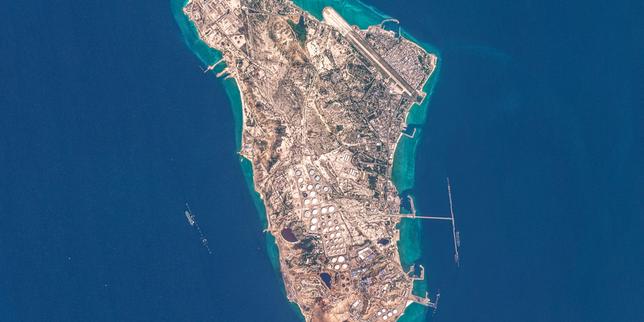
- Synthetic Aperture Radar (SAR): Satellite imagery that can penetrate cloud cover and darkness to verify vessel presence and, crucially, to estimate the draft of a ship. By measuring how deep a hull sits in the water, the system calculates the displacement, which serves as a proxy for the volume of cargo on board.
- Human-in-the-Loop (HITL) and Public Filings: Integrating port agent reports, customs manifests, and berth schedules into a cohesive, normalized dataset.
The synthesis of these layers allows for a critical transition in market transparency: moving from knowing a ship is at a port to knowing exactly which grade of crude oil (e.g., Brent, WTI, Urals) is being offloaded and into which specific storage tank it is moving. Additional insights into this topic are covered by The Wall Street Journal.
The Three Pillars of Commodity Visibility
Kpler’s methodology rests on three pillars that redefine how traders, analysts, and national energy agencies approach market strategy:
Pillar 1: Predictive In-Transit Inventory (Floating Storage)
Traditional oil market reports rely on historical data, often lagging by 30 to 60 days. Kpler’s platform allows for the quantification of "floating storage"—crude oil that is currently at sea but not yet delivered. This is a critical indicator of market contango or backwardation. When floating storage levels rise sharply, it signals a supply glut that the paper markets have often not yet priced in.
The analytical shift here is profound: Kpler has turned a logistical necessity (transportation) into a financial indicator (inventory on the water). By tracking the specific draft changes of VLCCs (Very Large Crude Carriers) at departure and arrival, the system can provide a near-real-time balance sheet of global oil-in-transit.
Pillar 2: The Logic of Geographic Arbitrage
Global trade is driven by price differentials across regions. For example, if the price of LNG in North Asia (JKM) is significantly higher than in Europe (TTF), tankers will reroute mid-voyage. Kpler’s system tracks these diversions in real-time. By monitoring the speed and heading of vessels alongside the real-time pricing data of regional benchmarks, the platform allows market participants to see arbitrage opportunities closing or opening before the physical volume even reaches the destination.
Pillar 3: Granular Grade-Level Granularity
Not all oil is created equal. The distinction between light sweet crude and heavy sour crude is fundamental to refinery margins. Kpler’s intelligence doesn’t just report that "oil moved from the US to Europe." It reports that "500,000 barrels of WTI Midland moved from the Corpus Christi terminal to the port of Rotterdam." This level of detail allows refineries to plan their feedstock more efficiently and gives competitors insight into a refinery’s operational strategy.
The Cost Function of Information Asymmetry
The economic value of Kpler’s platform can be modeled as the reduction of a "Search and Verification Cost" ($C_{sv}$). In a pre-Kpler environment, a trading desk would need dozens of analysts manually calling port agents and scouring PDF manifests to build a partial view of global flows. The cost of this process ($C_{manual}$) was high and the result was inherently fragmented ($F$).
$V_{kpler} = C_{manual} - (C_{subscription} + C_{verification})$
By centralizing and automating the verification process, Kpler has lowered the entry barrier for smaller trading entities while providing institutional-grade transparency to the largest players. The platform effectively turns "dark data"—signals that existed but were unorganized—into a standardized, searchable database.
Systemic Limitations and the "Dark Fleet"
Despite the technological sophistication, several systemic bottlenecks persist. The most significant is the emergence of the "dark fleet"—vessels that intentionally disable their AIS transponders to evade sanctions (e.g., Iranian, Venezuelan, or Russian oil exports).
Kpler addresses this through "AIS Gap Analysis." When a vessel’s signal disappears near a known loading zone and reappears days later with a significantly deeper draft, the system infers a ship-to-ship (STS) transfer. However, this remains a probabilistic rather than a deterministic data point. The reliance on inference creates a margin of error that sophisticated traders must hedge against.
A second limitation is the "black box" of onshore storage in certain jurisdictions. While satellite imagery can track the floating lids of oil tanks to estimate volume, the internal logistics of state-controlled refineries in regions like China or Russia remain partially obscured. The data is highly accurate for maritime flows, but the transition from "water" to "land" represents a loss of data fidelity.
The Operational Logic of Strategic Intelligence
To move from data to strategy, a firm must treat Kpler’s output not as a news feed, but as a direct input for its internal risk-management models. The strategic play is to integrate Kpler’s API directly into a firm’s proprietary supply and demand (S&D) models.
- Normalization: Ensure that Kpler’s grade definitions match your refinery’s internal specs.
- Cross-Verification: Use Kpler’s data to verify the claims of counterparties during negotiations. If a seller claims a cargo is "on the water" and arriving in 10 days, the Kpler platform provides the independent verification of the ship’s location and speed.
- Alpha Generation: In the LNG markets, where liquidity is lower than in oil, the movement of a single large vessel can shift regional prices by several percentage points. Identifying a vessel diversion 24 hours before it is public knowledge is the primary source of alpha for modern commodity desks.
The ultimate strategic move for a market participant is to identify the "inflection points" in global inventory. When the rate of global crude discharge consistently exceeds the rate of global crude loading, a supply deficit is imminent. Tracking this "delta" across all major exporting hubs simultaneously provides a macro-view of the global energy balance that is superior to any single-country report.
The integration of satellite-derived maritime intelligence into the core of commodity trading has permanently altered the market's price-discovery mechanism. The next phase of this evolution will likely involve the integration of predictive AI that doesn't just report where a ship is, but predicts where it will go based on historical seasonal patterns and real-time price signals. The competitive edge no longer belongs to those who have the data, but to those who can synthesize the data into a more accurate prediction of the next 48 hours of global cargo movements.