The geopolitical punditry class is currently obsessed with a comfortable, lazy narrative: that Beijing is breathe-easy-happy about delaying a summit with Washington. They argue that with the Middle East teetering on the edge of a regional conflict involving Iran, China suddenly has "leverage" or "breathing room."
They are dead wrong.
Delay isn't a strategy for Xi Jinping; it is a slow-motion catastrophe. The idea that China "wins" by waiting out a distracted U.S. administration ignores the brutal reality of capital flight, internal demographic collapse, and the specific mechanics of the global supply chain. If you think China is playing the long game here, you aren't looking at the data. You’re looking at a 1990s textbook that no longer applies to a world of fragmented trade.
The Myth of the Distraction Advantage
The consensus suggests that if the U.S. is bogged down in the Persian Gulf, it can't focus on the South China Sea or semiconductor export bans. This assumes the U.S. government is a single-threaded processor. It isn't.
The Department of Commerce and the Office of the Foreign Assets Control (OFAC) don't stop drafting entity lists because there's a carrier strike group in the Strait of Hormuz. In fact, wartime or "near-war" footing usually accelerates protectionist trade policies under the guise of national security.
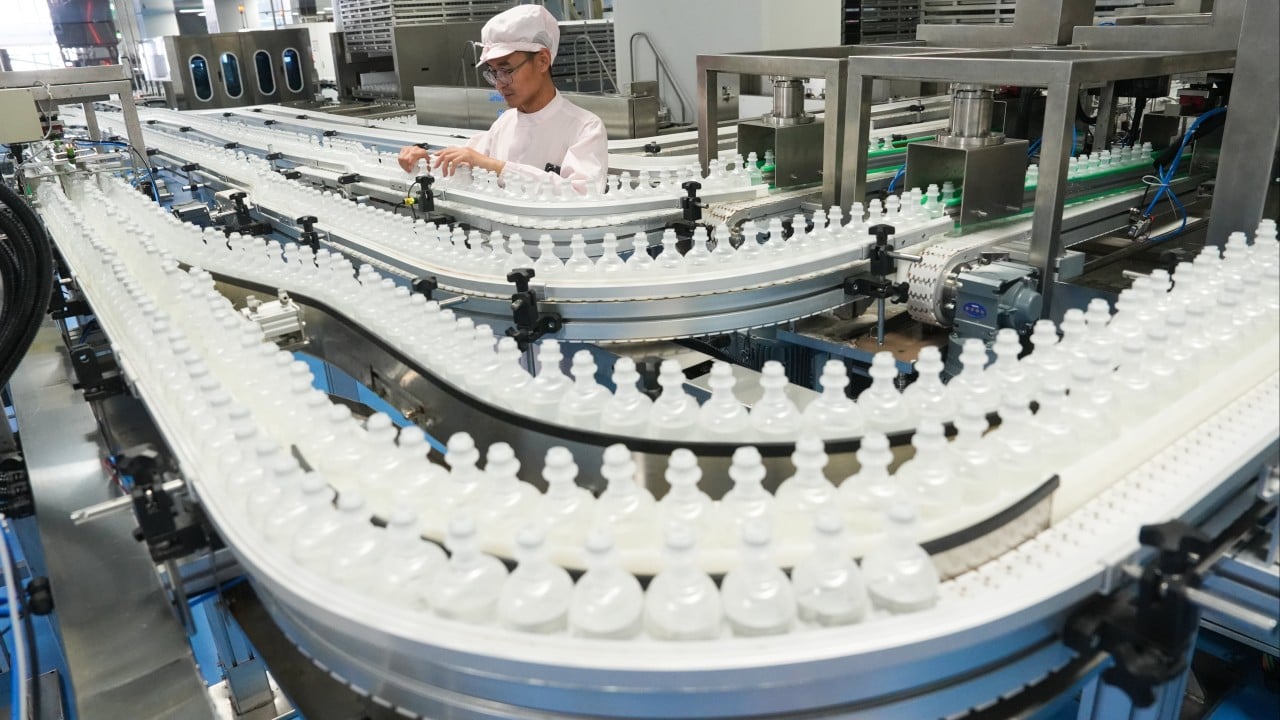
For Beijing, every day without a solidified trade "truce" is a day where more Western firms move their manufacturing to Vietnam, Mexico, or India. This isn't just theory. I’ve sat in boardrooms where the decision to move a $500 million assembly plant wasn't based on "current tariffs," but on the uncertainty of future ones.
When a summit is delayed, the "Uncertainty Tax" on Chinese manufacturing rises. Xi doesn't want to wait; he needs to stop the bleeding of foreign direct investment (FDI), which turned negative for the first time in decades recently. You don't "wait out" a hemorrhage.
The Iran Trap
The "Iran distraction" theory also ignores China’s energy vulnerability. China is the world’s largest importer of crude oil. A significant portion of that flows through the very waters that a conflict would destabilize.
If Iran and Israel go to a full-scale kinetic war, oil doesn't just get expensive—it gets physically difficult to move. While the U.S. is now a net exporter of energy thanks to the Permian Basin, China is tethered to the whims of the Middle East.
- Energy Costs: A spike to $120 a barrel nukes the margins of Chinese factories.
- Inflation Export: High energy costs in China lead to higher prices for finished goods globally, further depressing demand in the West.
- The Russia Parallel: Beijing saw what happened to the Ruble and the Russian banking system. They know that if they are perceived as the "silent partner" in an Iranian escalation, the next round of sanctions won't just hit chips—it will hit the banks.
Why the "Long Game" is a Fantasy
We’ve been told for twenty years that China thinks in centuries while the West thinks in fiscal quarters. That was a convenient lie used to explain away our own policy failures.
Xi Jinping is facing a demographic cliff that makes the Great Depression look like a dip in the road. The working-age population in China is shrinking by millions every year. They are getting old before they get rich.
$P = E \times W$
In this basic economic identity, Output ($P$) is a function of Efficiency ($E$) and Workers ($W$). With $W$ in a permanent tailspin, China must maximize $E$. You don't get efficiency gains when you are cut off from Dutch lithography machines (ASML) or American GPU clusters (Nvidia).
Every month the summit is delayed is a month where the technological gap between the West and the East widens. By the time a "delayed" summit actually happens, the U.S. will have already codified the next three iterations of export controls.
The Fallacy of Chinese "Leverage"
People ask: "Doesn't China hold all the U.S. debt?"
This is the ultimate mid-wit take. Yes, China holds roughly $700 billion to $800 billion in U.S. Treasuries. But in a conflict, that isn't leverage—it's a hostage. If the U.S. freezes those assets (as they did with Russia's central bank reserves), China’s balance sheet evaporates overnight.
Furthermore, China needs the U.S. consumer more than the U.S. needs Chinese high-yield savings. The U.S. economy is 70% domestic consumption. China’s economy is heavily weighted toward exports and an over-leveraged property sector that is currently a smoking crater.
The Property Crisis vs. Trade
Imagine a scenario where your house loses 30% of its value, your local government is broke because they can't sell land, and your only hope is selling plastic widgets to Americans. Now imagine the Americans tell you, "Maybe we'll talk about the price of those widgets in six months."
That is Xi's reality. The delay isn't a "suit." It's a "shroud."
Stop Asking if China is Ready for War
The wrong question being asked in every Sunday morning talk show is: "Is China preparing for a move on Taiwan while we are distracted by Iran?"
The right question is: "Can China survive the economic isolation that follows even a rumor of a move on Taiwan?"
The answer is no. Their economy is a high-performance engine that requires constant infusions of foreign tech and foreign dollars. A delay in diplomatic resolution is a signal to the markets that the "de-risking" (a polite word for "divorce") is permanent.
I’ve seen this play out in the tech sector. Once an engineering team decides to port their software from a Chinese-hosted environment to AWS or Azure because of "geopolitical risk," they don't come back. The cost of switching is too high. The "delay" is making those switch-over decisions permanent for thousands of companies.
The Actionable Reality
If you are an investor or a supply chain lead, stop waiting for the summit. The "big deal" isn't coming because both sides have realized they are in a zero-sum game for the next century's infrastructure.
- Move Beyond "China Plus One": The smart money isn't just adding a factory in Vietnam; it's completely re-architecting products to remove Chinese components that are subject to "gatekeeper" tariffs.
- Ignore the Iran Noise: The Middle East is a volatility spike for oil, but the South China Sea is a structural shift for the entire global economy. One is a storm; the other is a climate change.
- Bet on the Gap: The technological divergence is real. We are moving toward two different "stacks"—a Western stack and a Chinese stack. They won't be compatible.
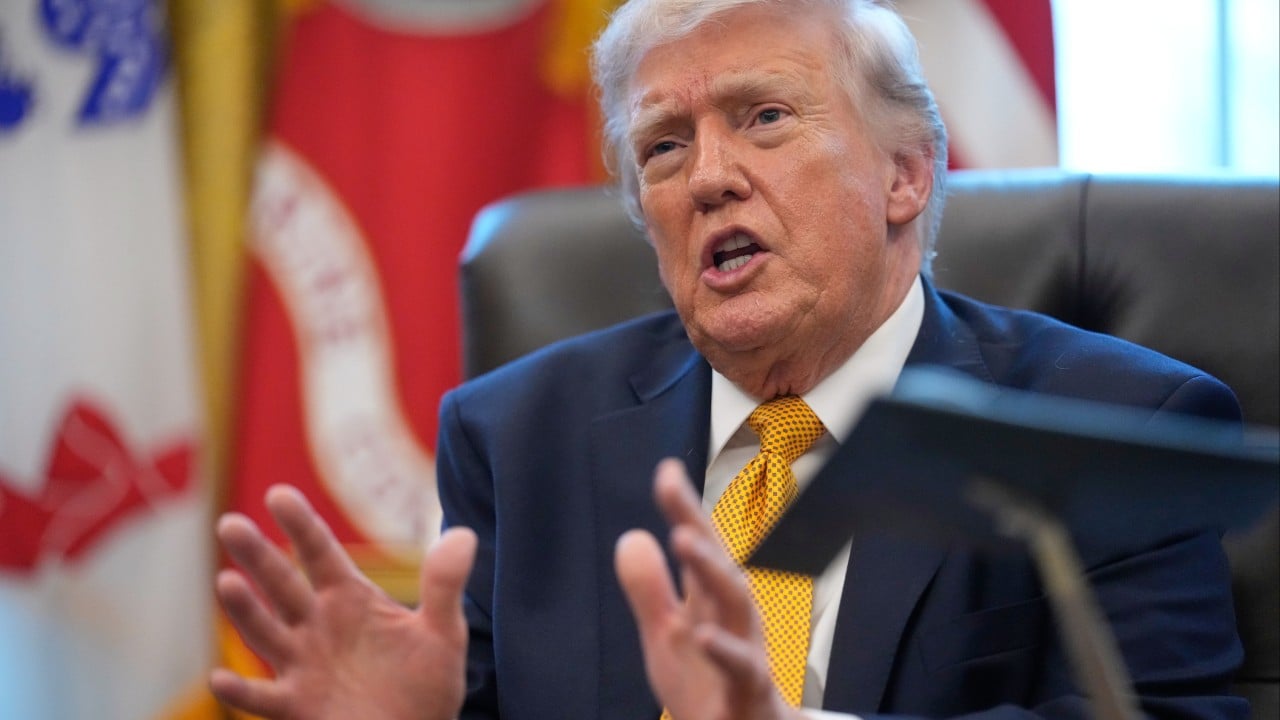
The delay of the Trump-Xi summit isn't a tactical masterstroke by Beijing. It is a symptom of a relationship that has moved past the point of "win-win" rhetoric into a cold, hard calculation of who can survive the decoupling.
Xi knows the clock is ticking. He knows the "distraction" of Iran only gives the U.S. hawks more excuses to ring-fence the Chinese economy. He isn't smiling at the delay. He’s looking at his watch, wondering how much of his middle class will be left when the talking finally starts.
Stop treating Chinese silence as strength. In a collapsing market, silence is just the sound of everyone leaving the room.