The shift in American foreign policy toward Iran represents a fundamental transition from ideological confrontation to a high-stakes model of "managed friction." By signaling an intent to "wind down" the conflict while simultaneously rejecting a formal ceasefire, the Trump administration is applying a strategy of coercive flexibility. This approach attempts to decouple the cessation of active hostilities from the cessation of economic and geopolitical pressure, creating a strategic vacuum that forces an adversary to negotiate from a position of systemic exhaustion.
The Asymmetric Cost-Benefit Matrix
The logic of refusing a ceasefire while pursuing a "winding down" of kinetic action rests on three distinct pillars of leverage. A formal ceasefire is a legal and diplomatic instrument that typically requires bilateral concessions, international monitoring, and a "freeze" on positional advantages. By avoiding this framework, the administration retains the ability to re-escalate at a moment's notice, maintaining what game theorists call "the threat that leaves something to chance."
The Persistence of Sanctions as Primary Kinetic Substitutes
A "winding down" of military posture does not imply a relaxation of the "Maximum Pressure" economic architecture. In this model, financial isolation functions as a slow-motion bombardment. By refusing a ceasefire, the U.S. ensures that the Iranian economy remains under a state of siege even if the drones stop flying. The goal is to reach a "Point of Total Illiquidity" where the cost of maintaining regional proxies exceeds the state's internal revenue generation.Strategic Ambiguity and the Escalation Ladder
In traditional conflict resolution, a ceasefire provides a predictable floor for stability. The current doctrine intentionally removes that floor. By keeping the option of military strikes on the table—categorically "ruling out" a ceasefire—the administration prevents Iran from re-establishing a "new normal" where they can rebuild infrastructure without fear of disruption.Proxy Decoupling
The U.S. strategy aims to sever the link between Tehran and its "Axis of Resistance." By winding down direct U.S. involvement, the administration attempts to shift the burden of regional security onto local partners (Israel, Saudi Arabia, the UAE), transforming a bilateral U.S.-Iran conflict into a multilateral containment system.
The Three Pillars of Coercive Winding Down
To understand the operational reality of this policy, one must categorize the actions into specific functional domains: the Kinetic, the Fiscal, and the Cyber-Informational.
The Kinetic Domain: Tactical Retraction
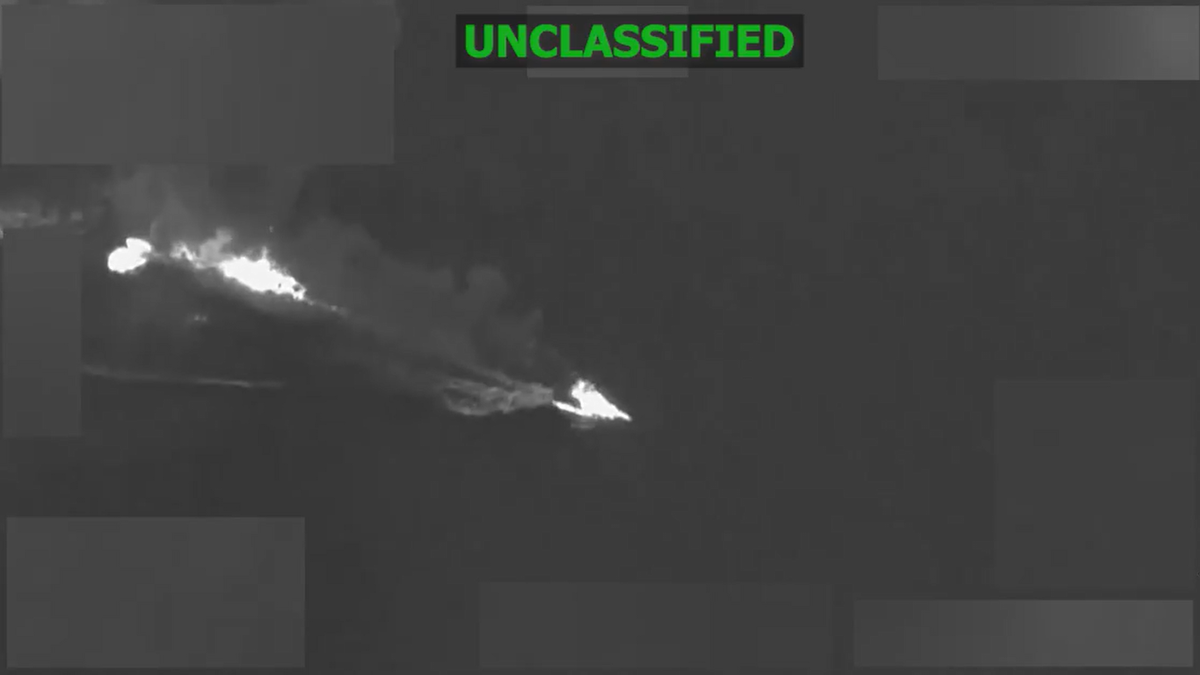
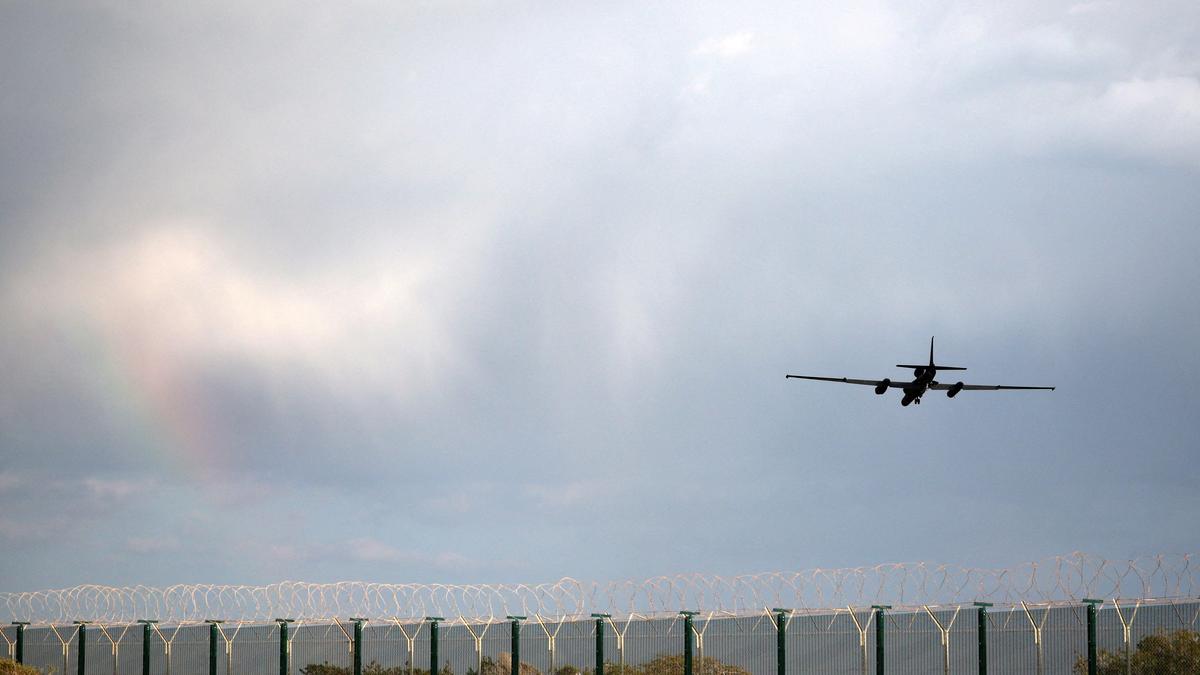
Winding down is not synonymous with withdrawal. It is a transition from "Force Presence" to "Over-the-Horizon" capability. This reduces the target surface area for Iranian-backed militias while maintaining the ability to strike high-value targets via precision-guided munitions and unmanned aerial systems (UAS). The cost function here is simple: minimize U.S. casualties (the primary political liability) while maximizing the psychological pressure on the Iranian command structure.
The Fiscal Domain: The Secondary Sanctions Loop
The refusal of a ceasefire ensures that the "Secondary Sanctions" loop remains closed. This mechanism penalizes third-party nations and private corporations for engaging with the Iranian energy and banking sectors.
- The Revenue Bottleneck: Iran’s inability to access the SWIFT banking system.
- The Currency Devaluation Cycle: Forcing the Rial into a hyper-inflationary spiral to incite domestic civil unrest.
- The Infrastructure Deficit: Preventing the import of dual-use technologies necessary for both oil extraction and missile development.
The Cyber-Informational Domain: Persistent Engagement
While conventional military actions might scale back, cyber operations typically intensify during a "winding down" phase. This is "Gray Zone" warfare—actions that fall below the threshold of open conflict but cause significant structural damage. This includes the disruption of centrifuges, the compromise of military communications, and the exposure of the regime's financial opaque networks.
The Structural Risks of "Managed Friction"
No strategy of this complexity is without significant systemic risks. The primary limitation of "winding down" without a ceasefire is the "Accidental Escalation" trap. Without formal lines of communication or a mutually agreed-upon "red line" framework, small-scale tactical encounters can rapidly spiral into a general war that neither side initially intended.
The Miscalculation Variable
The Iranian leadership operates under a different set of domestic pressures than the U.S. executive branch. If the "winding down" is perceived not as a strategic pivot but as a sign of waning American resolve, Tehran may be emboldened to increase its enrichment levels or expand its maritime harassment in the Strait of Hormuz. This creates a "Security Dilemma" where both parties' defensive maneuvers are interpreted by the other as offensive preparations.
The Proxy Autonomy Problem
Groups like Hezbollah, the Houthis, and various PMFs in Iraq do not always act as perfect puppets of Tehran. As the U.S. winds down and Iran’s financial support becomes strained, these groups may engage in "wildcat" operations to secure their own local relevance or funding. A U.S. refusal to enter a ceasefire means there is no diplomatic mechanism to hold the "center" accountable for the actions of the "periphery."
The Economic Calculus: Energy Markets and Global Trade
The administration’s refusal to grant a ceasefire serves a specific purpose in the global energy market. A formal ceasefire would likely lead to a "Peace Dividend" expectation, potentially causing a sharp drop in oil prices that would devalue U.S. domestic shale production. By maintaining a state of "perpetual near-conflict," the U.S. keeps a geopolitical risk premium baked into the price of Brent and WTI crude.
This creates a dual-benefit for the U.S. energy sector:
- Market Share Capture: Sanctions on Iranian oil allow U.S., Saudi, and Russian producers to fill the supply gap.
- Investment Certainty: High-risk premiums incentivize long-term capital expenditure in North American energy infrastructure.
The Logistics of De-escalation
A "winding down" involves a complex logistical reshuffling of assets across the Central Command (CENTCOM) area of responsibility. We can quantify this transition through the movement of Carrier Strike Groups (CSGs) and the deployment of Expeditionary Air Wings.
- Shift from Static to Dynamic Force Employment: Instead of permanent base presence, the U.S. moves toward "Dynamic Force Employment," where assets appear unpredictably in the theater, conduct exercises or strikes, and then depart. This maintains a credible deterrent while lowering the permanent footprint.
- Hardening of Regional Hubs: Moving personnel and sensitive equipment into "Hardened" facilities in countries like Qatar and Kuwait that are beyond the immediate range of Iranian short-range ballistic missiles (SRBMs).
The Endgame: Negotiated Capitulation vs. Long-Term Attrition
The stated goal of the Trump administration remains a "Better Deal"—a comprehensive treaty that addresses not just nuclear enrichment, but also ballistic missile development and regional "malign activity." The refusal of a ceasefire is a tactical choice to ensure that the "Better Deal" is negotiated under conditions of extreme Iranian duress.
However, the more likely outcome is a state of "Long-Term Attrition." If the Iranian regime proves more resilient to economic pressure than the U.S. anticipates, the "winding down" will become a permanent feature of the Middle Eastern landscape—a low-intensity, high-technology standoff that consumes resources without ever reaching a definitive resolution.
Strategic Recommendations for Global Actors
Entities operating within this geopolitical environment must adapt to a "No-Ceasefire" reality.
For Energy and Commodity Traders:
Expect continued volatility and a permanent "Geopolitical Risk Premium." Do not price in a "grand bargain" or a total removal of sanctions in the 12-to-18-month horizon. The "winding down" refers to troop levels, not the economic embargo.
For Regional Sovereigns:
Accelerate the "Internalization of Defense." As the U.S. winds down its direct kinetic presence, the burden of missile defense (through systems like Iron Dome, David’s Sling, and Patriot batteries) and maritime security falls on local coalitions. The Abraham Accords framework should be viewed as a logistical necessity for shared defense, rather than just a diplomatic gesture.
For Corporate Compliance Officers:
The "winding down" rhetoric may create a false sense of security regarding trade with Iranian-linked entities. Given the "No Ceasefire" stance, OFAC enforcement will likely remain aggressive. Treat any "winding down" as a tactical military shift that has zero impact on the legal risk of sanctions violations.
The U.S. is not leaving the Middle East; it is retooling its presence for a more sustainable, less casualty-intensive form of dominance. By rejecting the ceasefire, the administration ensures that while the "war" might be winding down, the "conflict" remains at full throttle.
Would you like me to map the specific impact of this "no-ceasefire" policy on the current price of Brent Crude and the projected volatility of the energy sector for Q3 2026?