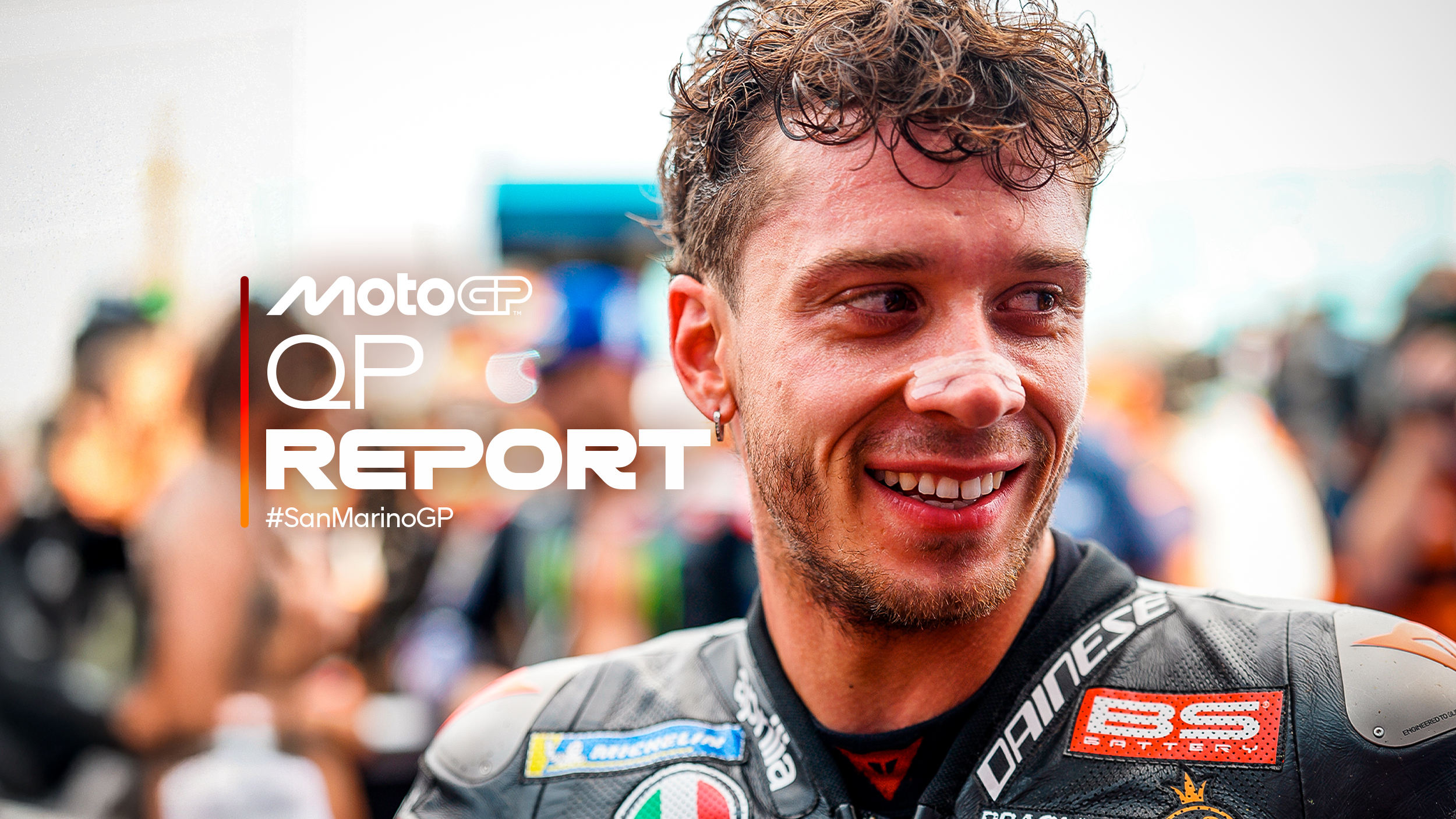
The headlines are screaming about a "masterclass" in Brazil. The pundits are tripping over themselves to call Marco Bezzecchi the new king of two wheels. Four straight wins. Total dominance. A sea of yellow and black flooding the podium.
They are wrong. What we witnessed at the Autódromo Internacional Ayrton Senna wasn’t the birth of a legend. It was the clinical, boring execution of a technical advantage that is turning MotoGP into a high-speed version of a spreadsheet. If you enjoyed the Brazilian Grand Prix, you don't love racing; you love math.
The "Bezzecchi Dominance" narrative is the laziest consensus in motorsports today. It treats the rider as a god and the machine as a footnote. In reality, the current state of the sport has created a vacuum where genuine racecraft is being replaced by aerodynamic efficiency and "clean air" physics. Bezzecchi isn't out-braking his rivals into submission—he's simply the primary beneficiary of a technical regulations loophole that makes passing at the front nearly impossible once a three-tenth gap is established.
The Clean Air Myth and the Dirty Truth of Downforce
Every "expert" analysis of the Brazil race focused on Bezzecchi’s "impeccable rhythm." That’s code for "he didn't have to deal with anyone else's wake."
Modern MotoGP bikes have become aerodynamic monsters. We are talking about winglets, strakes, and "ground effect" fairings that generate massive downforce. When Bezzecchi leads from the first corner, he is riding in laminar flow. His front tire stays cool. His braking markers remain consistent. His bike behaves exactly as it did in the wind tunnel.
Contrast that with the riders in second through fifth. They are stuck in a washing machine of turbulent air.
- Front Tire Overheating: Following another bike causes the front tire pressure to skyrocket. This isn't a skill issue; it's a thermodynamic certainty.
- The Suction Effect: Try braking from 340km/h when the bike in front has sucked all the air out of the zone you’re entering. You don't slow down. You run wide.
- Aero-Push: The downforce on the following bike’s front end drops by as much as 20% when tucked behind a leader.
Bezzecchi’s "four straight wins" aren't a testament to his untouchable talent. They are a testament to the fact that he is the best at the "Sprint to Turn 1." Once he secures the hole-shot, the race is effectively over because the current technical regulations have banned the overtake. We aren't watching a race; we are watching a 40-minute qualifying session where the results are dictated by the first 400 meters.
Why the VR46 Narrative is a Marketing Scam
The media loves the "Valentino Rossi Protégé" angle. It’s a comfortable, warm-and-fuzzy story about a legend passing the torch. It sells merchandise. It keeps the Italian fans buying tickets.
But let’s look at the data. Bezzecchi isn't winning because he has the "Doctor's" DNA. He's winning because the VR46 team has arguably the best data-sharing agreement in the history of the sport with Ducati.
I have spent years in the paddock watching how data flows between the factory and the satellite teams. In the 90s and early 2000s, a satellite rider was lucky if they got last year’s engine and a pat on the back. Today, Bezzecchi has access to the telemetry of eight different riders. Every time Francesco Bagnaia or Jorge Martin finds a millisecond in Sector 3, it’s on Bezzecchi’s tablet within minutes.
This isn't "finding a setup." This is algorithmic optimization.
Bezzecchi’s brilliance is his ability to mimic a computer-generated ideal line. He is a high-resolution printer. He takes the collective data of the Ducati armada and prints it onto the asphalt. That takes a specific type of mental discipline, sure, but let’s stop pretending it’s the same type of raw, seat-of-the-pants genius we saw from Casey Stoner or Kevin Schwantz. Those guys rode around problems. Bezzecchi waits for the engineers to solve them.
The Brazil "Masterclass" That Wasn't
If you look at the sector times from the Brazilian GP, a disturbing pattern emerges. Bezzecchi wasn't actually faster than the pack for the entire race. He was faster for exactly three laps.
- Lap 1-3: Bezzecchi burns his tires and uses 105% of his physical energy to create a 1.2-second gap.
- Lap 4-20: He drops his pace. Crucially, the riders behind him also have to drop their pace because their front tires are melting in his wake.
- The Result: A processional march to the flag.
People ask: "If it’s so easy, why doesn’t everyone else just do what Bezzecchi does?"
The answer is brutal: because they can't afford the entry price of the "Lead Rider Advantage." If you qualify on the second row in today’s MotoGP, your race is effectively a battle for the podium's lowest step. The bike's design prohibits you from making the moves necessary to catch a leader who is managed by a pit-wall monitoring real-time tire degradation sensors.
Stop Asking if He's the Best—Start Asking if the Sport is Broken
The "People Also Ask" sections on Google are filled with queries like "Is Marco Bezzecchi better than Marc Marquez?" or "How can Bezzecchi be stopped?"
These are the wrong questions. You're asking about the players when you should be looking at the board.
Marquez, even in his prime, relied on late-braking maneuvers that defied physics. He thrived in the chaos of a dogfight. But you can't have a dogfight when the bikes are equipped with ride-height devices that turn them into dragsters on the straights and stabilize them like tanks in the corners.
Bezzecchi isn't "better" than the old guard. He is simply the most "evolved" for a sterilized environment. He doesn't fight the bike; he operates it. If you want to stop Bezzecchi, you don't need a faster rider. You need a hacksaw. You need to cut off the wings, rip out the holeshot devices, and force these guys to actually manage a sliding rear tire again.
The Cost of Predictability
I’ve seen this before in Formula 1 during the early 2000s and the Mercedes era. When dominance becomes a product of technical insulation rather than competitive friction, the sport dies.
Fans in Brazil were cheering, but the television numbers tell a different story. Engagement drops when the winner is decided by the time the riders hit the back straight on the opening lap. Bezzecchi’s four-win streak is a symptom of a technical sickness. We are rewarding "Gap Management" instead of "Overtaking Prowess."
Think about the "scary" moments in the Brazil race. There weren't any. No desperate lunges at the hairpin. No crossed-up entries into the final turn. Just Bezzecchi, hitting his marks with the soul of a metronome, while the guys behind him struggled with the physics of a vacuum.
If this is the "Golden Age" of MotoGP, I’d rather go back to the bronze.
The Uncomfortable Truth for the VR46 Camp
The irony of Bezzecchi’s success is that it undermines the very thing Valentino Rossi stood for: the triumph of the rider over the machine. Rossi’s greatest wins came when he was on the "worse" bike—the 2004 Yamaha transition being the prime example. He won through psychological warfare and tactical brilliance.
Bezzecchi is winning because he has the best bike, the best data, and the best starting position. There is no warfare. There is no tactic other than "be first at the apex of Turn 1."
We are watching the death of the "Sunday Man." In the past, some riders were "Saturday Men"—fast over one lap—and others were "Sunday Men" who found an extra gear in the heat of battle. Bezzecchi has unified them into a "System Man."
If you want to keep believing the hype, go ahead. Buy the #72 shirt. Celebrate the "four-peat." But don't complain in two years when the grandstands are empty because the "race" has become a 200mph parade of carbon fiber and corporate efficiency.
The sport isn't growing; it's being optimized into oblivion. Bezzecchi is just the guy holding the remote.
Go back and watch the 1990 Brazilian Grand Prix. Watch the bikes move. Watch the riders fight the geometry. Then watch Bezzecchi’s onboard from Sunday. If you can't see the difference between a gladiator and a technician, you're the reason the sport is in trouble.
Don't celebrate the win. Mourn the competition.
Stop looking at the trophy. Look at the empty space between the bikes. That’s where the sport used to live. Bezzecchi didn't conquer Brazil; he just occupied the only patch of air that wasn't broken.