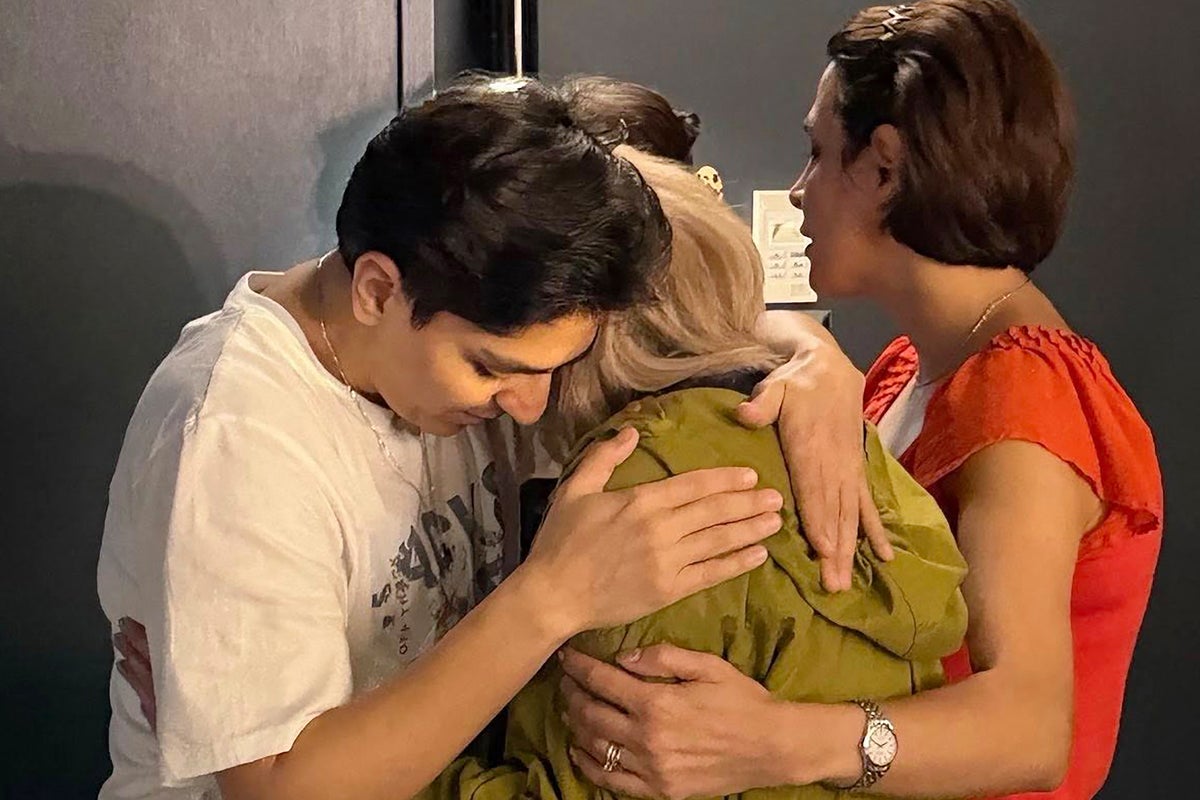
The grass at the training pitch in Australia is a shade of green that feels almost offensive when your mind is stuck in the dust of Tehran. It is lush, irrigated, and safe. For a professional footballer from Iran, this turf represents the ultimate achievement—a physical manifestation of a dream that usually dies in childhood. You have the kit, the boots, and, most miraculously, a document in your hand that says you never have to go back. You have asylum.
Most people assume the story ends there. They see the headline about a female athlete fleeing a restrictive regime and they check a box in their heads labeled Rescue Complete. But human hearts are not geopolitical chess pieces. They are messy, tethered things.
Recently, three women from the Iranian national setup stood on that Australian grass, looked at their visas, and decided to walk away from them. They boarded planes heading back toward the very uncertainty they had ostensibly escaped.
To understand why, you have to stop looking at the scoreboard and start looking at the shadows.
The Invisible Tether
Imagine standing in a terminal with your life in a single duffel bag. Behind you is a country where you might be barred from stadiums, where your choice of clothing is a legal battlefield, and where your career has a glass ceiling made of iron. In front of you is a continent of "fair goes" and freedom.
The choice seems binary. It seems easy.
But the air in Australia is thin in a way no one warns you about. It lacks the scent of the family kitchen. It doesn't carry the sound of a mother’s voice over a boiling samovar. For these players, the "freedom" of the West began to feel like a high-end vacuum.
When an athlete from a sanctioned or restrictive nation seeks asylum, the media portrays it as a defection—a clean break. In reality, it is a jagged tear. Every day spent in safety is a day spent wondering if your brother is being questioned because of your choices. Every goal scored in a foreign league is a reminder that your father cannot see it from the stands.
The decision to return is rarely about a change of political heart. It is about the unbearable weight of the silence from home.
The Psychology of the U-Turn
We often treat asylum as a prize to be won, but for these three women, it quickly became a cage of a different sort.
In the high-stakes environment of international sports, identity is everything. You are a "National Player." You carry the flag. When you strip that away, you aren't just an athlete anymore; you are a "Refugee Athlete." That label carries a heavy, clinical baggage. It suggests you are a person of the past, someone who is defined by what they fled rather than what they are moving toward.
Consider the pressure of the locker room. In one world, you are a hero, a pioneer for women's rights in a country that desperately needs them. In the other, you are a bureaucratic case file.
The transition from being the pride of a nation to being a guest in a strange land is a psychic shock. Australia offered them a career, but Iran held their history. Sometimes, the fear of what you’ve left behind is eclipsed by the agony of being forgotten by it.
The Cost of the Kit
There is a specific kind of loneliness that happens in a suburban apartment in Sydney or Melbourne when the sun goes down. You have the internet. You have your phone. You see the photos of your teammates back home, training in the heat, laughing in the van on the way to the pitch.
You are safe, but you are a ghost.
The Iranian football federation and the state apparatus have a long memory. The pressure isn't always a threat of violence; often, it is a whispered promise of "all is forgiven." They reach out. They suggest that the "misunderstanding" can be cleared up. They play on the most vulnerable part of an exile's soul: the desire to belong again.
Three women listened to those whispers. They weighed the professional risk of returning to a system that might punish them against the personal void of staying in a place where they were essentially invisible.
They chose the danger they knew over the safety they didn't recognize.
Beyond the Pitch
This isn't just a story about football. It is a case study in the failure of our "rescue" narratives. We provide the legal paperwork, but we fail to provide the social architecture that makes a new life worth living. We expect gratitude to be a sufficient substitute for culture.
When we see players return to Iran after being granted asylum, we shouldn't see it as a failure of their resolve. We should see it as a testament to the gravity of home.
The stakes are invisible because they are emotional. A visa can protect your body, but it cannot feed your spirit. For these three athletes, the pitch in Australia was wide and open, but the lines of the field didn't lead anywhere they wanted to go.
They packed their bags. They didn't do it because they stopped wanting freedom. They did it because they realized that freedom, without the people you love to share it with, feels a lot like exile.
The plane touched down in Tehran, and the doors opened. The green grass of Australia was thousands of miles away. The air was dry, the heat was familiar, and the future was a dark room with no windows.
But for the first time in months, they weren't ghosts. They were daughters, sisters, and teammates again.
The price of that ticket was their safety. The price of staying was their soul.
They paid the fare.