In a small, windowless briefing room in Washington, the air smells of stale coffee and the hum of high-end ventilation. On the wall, a digital map of the Middle East glows with neon precision. It is a masterpiece of cartography, every border defined, every military asset tagged, every "red line" etched in bold. To the officials in the room, this map represents control. It is the board upon which they move their pieces, confident that a carrier strike group here or a stern diplomatic cable there will dictate the pace of history.
But outside those walls, the ground is moving. The map is staying still, but the earth beneath it is sliding into a shape the cartographers didn't authorize.
For decades, the geopolitical gravity of the Middle East was anchored by two massive weights: the military supremacy of Israel and the diplomatic shadow of the United States. If tension rose, these two powers held the thermostat. They decided when to cool things down and when to let them simmer. That era is ending. Not because of a single lost battle, but because of a thousand small fractures in the foundation of influence.
The Illusion of the Thermostat
Consider the way a master chess player feels when they realize their opponent isn't playing chess anymore. The opponent is simply overturning the table.
For months, the strategy has been one of "containment." The goal was to keep the fire in Gaza from leaping across the porch to the rest of the house. Diplomatic envoys flew back and forth like shuttlecocks, carrying messages meant to de-escalate. Yet, while the messages were being delivered, the reality on the ground was being rewritten by actors who no longer care about the traditional rules of the game.
The initiative—that invisible, magnetic force that allows a nation to lead rather than react—is leaking out of the room. It is flowing toward the fringes.
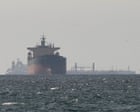
When a regional power can no longer predict the moves of its neighbors, it stops being a leader and starts being a passenger. We see this in the northern hills of Israel, where empty villages stand as silent witnesses to a war that hasn't officially started but refuses to end. We see it in the Red Sea, where global trade—the very lifeblood of the modern world—is being choked by a group that, on the digital map in Washington, barely looks like a footnote.
The Human Cost of Miscalculation
To understand the stakes, we have to look past the troop movements and into the eyes of someone like "Adina." She is a hypothetical composite of the thousands currently living in the crosshairs. Adina doesn't care about "strategic depth" or "proportional response." She cares that her children have been sleeping in a reinforced basement for so long they’ve started to think the sunlight is dangerous.
In her world, the "initiative" isn't a political concept. It’s the difference between hearing a siren and hearing a bird.
When the U.S. and Israel lose the ability to dictate the tempo of the conflict, people like Adina are the ones who pay the interest on that debt. The uncertainty grows. Every night, she checks the news to see if the "big one" has started. She is waiting for a script to be written by people who seem to have lost their pens.
The traditional levers of power—economic sanctions, the threat of air strikes, the promise of aid—are losing their grip. They are tools designed for a world of nation-states and clear hierarchies. They are significantly less effective against decentralized networks that view chaos not as a problem to be solved, but as a vacuum to be filled.
The Gravity of the Fringe
There is a specific kind of vertigo that comes when you realize the person you are arguing with isn't afraid of the consequences you’re threatening.
For years, the U.S. relied on a predictable cycle of deterrence. It was a language everyone spoke. But the new actors in this deepening crisis are speaking a different dialect. They are comfortable with long-term instability. They find strength in the very friction that wears the West down.
The "invisible stakes" here aren't just about territory. They are about the credibility of the entire global order. If the most powerful military on earth and its most capable regional ally cannot stop a disruptor from shutting down a shipping lane or emptying a border zone, then the map becomes a lie.
The initiative is slipping because the response has remained reactive. It is a game of Whac-A-Mole played with billion-dollar hammers. Each time a new threat pops up, the response is a frantic scramble to "address the situation." But addressing a situation is not the same as shaping it. Shaping requires a vision that goes beyond the next election cycle or the next tactical victory.
The Sound of a Breaking Pattern
Patterns are comforting. They allow us to sleep because we think we know what happens next. But the pattern in the Middle East has developed a stutter.
We are witnessing the emergence of a multi-front reality where the old "red lines" have been crossed so many times they’ve been rubbed away. When a line is crossed and nothing happens, that line ceases to exist. It becomes a ghost. And once you are surrounded by ghosts, you can no longer find your way home.
The danger isn't just that a larger war might break out. The danger is that a state of "neither war nor peace" becomes the permanent setting. A permanent gray zone where no one is in charge, and everyone is an expert at suffering.
The U.S. finds itself in a position where its presence is required but its influence is questioned. It is the heavyweight champion who has stayed in the ring too long; the muscles are still there, the reach is still long, but the timing is just a fraction of a second off. In the world of high-stakes geopolitics, a fraction of a second is an eternity.
The Unwritten Chapter
Behind the podiums and the press releases, there is a growing realization that the old scripts are exhausted. The rhetoric of "ironclad support" and "regional stability" sounds increasingly like a recording played over a loudspeaker in an empty terminal.
The ground is no longer just shifting; it is transforming into something unrecognizable to the generation of planners who grew up in the post-Cold War sun. They are trying to solve a 21st-century kaleidoscopic crisis with 20th-century monochrome logic.
True power isn't about the size of your arsenal. It’s about the ability to make others believe that your preferred future is the only one that is inevitable. Right now, that inevitability is dissolving. The actors on the fringe no longer see a wall; they see a curtain. And they are starting to wonder what happens if they just pull it aside.
The map in the windowless room is still there. The neon lights are still bright. The tags are still being updated in real-time. But the men and women in that room are starting to look at each other with a silent, gnawing question in their eyes. They are looking for the initiative, searching for the handle to a door that might have already been locked from the other side.
The crisis isn't just deepening. It is changing its very nature, moving from a series of events we can track to a state of being we can no longer escape.
Somewhere, in a village that doesn't show up on the high-res satellite feed, a young man looks at the sky and doesn't see a superpower. He sees a fading light. And in that moment, he realizes that for the first time in his life, the person holding the map is just as lost as he is.