The global economy is currently locked in a struggle over "overcapacity," a term that has become a political shorthand for a complex shift in industrial dominance. While Western leaders warn of a second "China Shock" that threatens to wipe out domestic manufacturing, the reality is far more nuanced than a simple flood of cheap goods. We are seeing a fundamental divergence in how industrial policy is funded and executed. The friction isn't just about trade balances; it is about the survival of the traditional Western automotive and energy sectors in the face of a state-backed juggernaut that has spent a decade preparing for this specific moment.
The Mechanical Reality of the New Export Wave
The original China Shock of the early 2000s focused on labor-intensive goods like textiles and basic electronics. This new era is different. It is capital-intensive and focused on high-tech "green" sectors: electric vehicles (EVs), lithium-ion batteries, and solar panels.
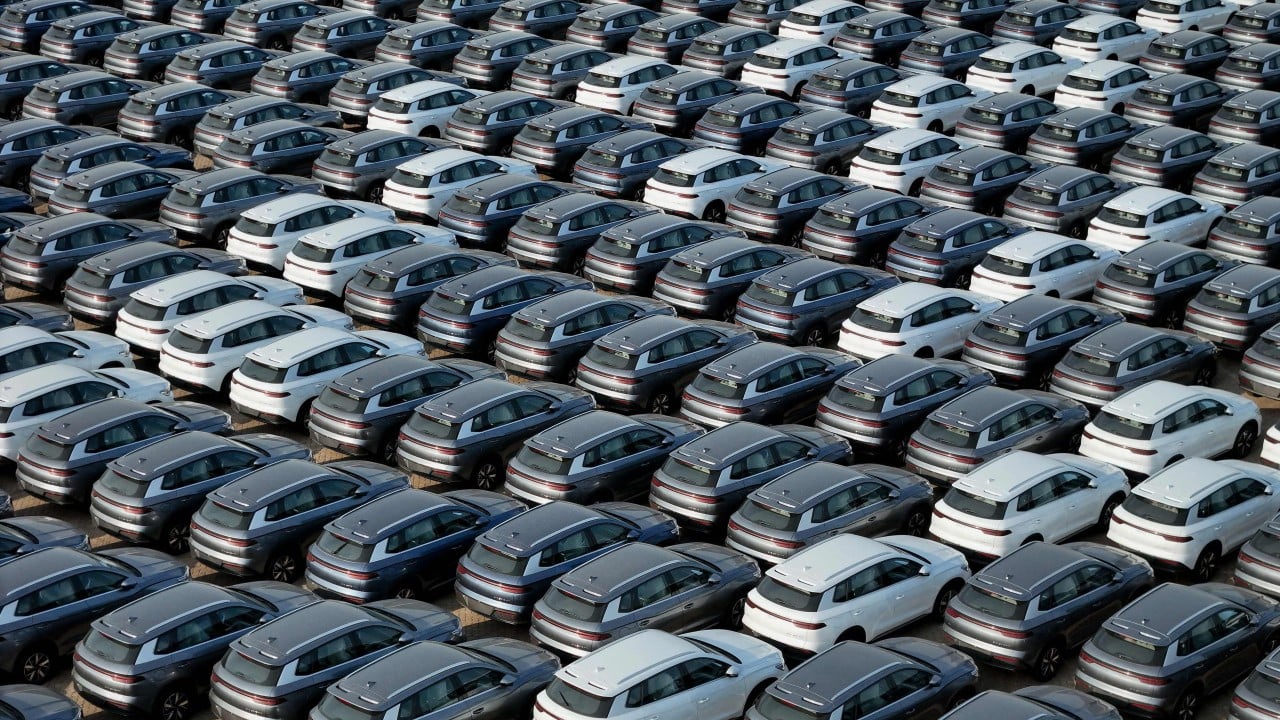
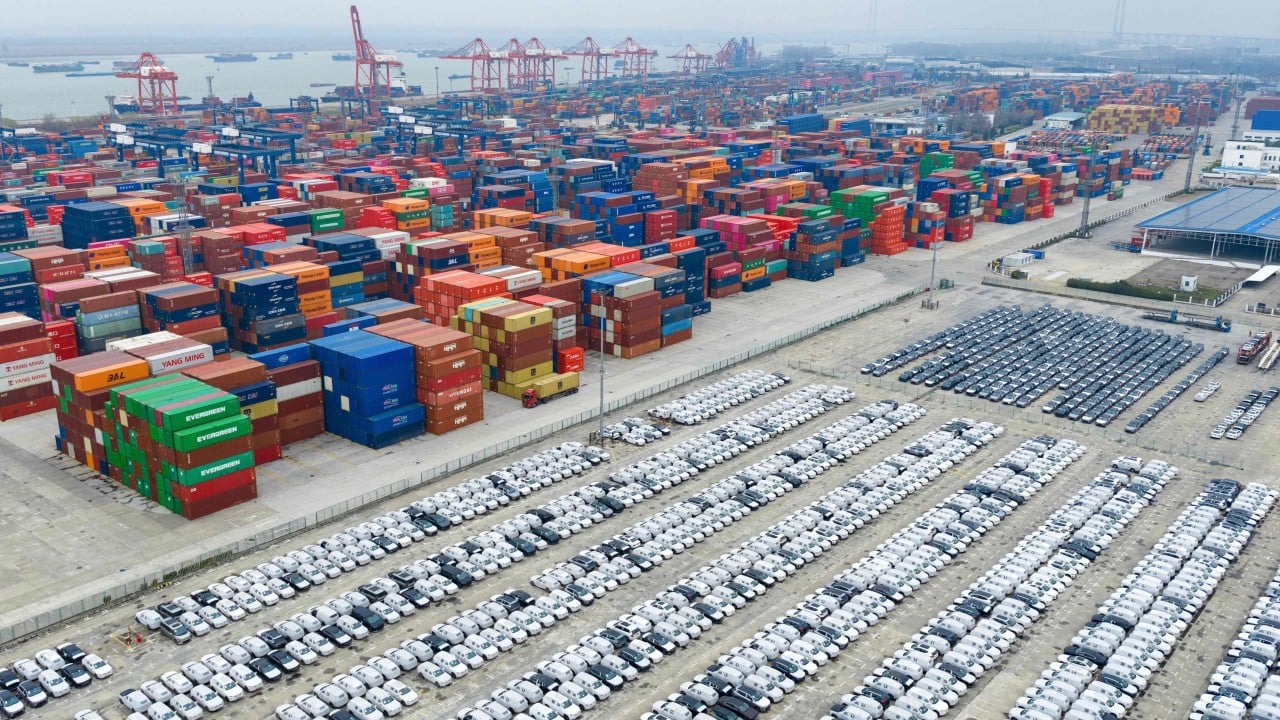
When Western analysts talk about overcapacity, they are looking at utilization rates. In many Chinese factories, production lines are running well below their peak potential, yet the goods continue to flow out at prices that seem to defy the laws of profit and loss. This isn't magic. It is the result of a domestic market in China that has cooled down, leaving massive industrial complexes with no choice but to look abroad to keep the lights on and the debt serviced.
The Debt and Subsidy Engine
To understand why a Chinese EV can be sold in Europe or Southeast Asia for a fraction of a domestic competitor's price, you have to look at the local government level. For years, Chinese provinces competed to become the "Detroit" of the East. They provided cheap land, subsidized electricity, and low-interest loans from state-owned banks.
This created a massive supply chain advantage. When a company like BYD builds a car, it isn't just assembling parts; it often owns the battery production and the mineral processing. This vertical integration, backed by a decade of state support, creates a cost floor that Western manufacturers—who answer to quarterly shareholders and rely on fragmented global supply chains—simply cannot match.
Why the False Narrative Argument Matters
Beijing's state media argues that the "China Shock 2.0" is a ghost story invented to justify protectionism. They claim that China’s dominance is the result of "comparative advantage" and superior innovation. There is a grain of truth here that Western critics often ignore to their own detriment.
China did not just "subsidize" its way to the top of the battery market. It out-invested the world in R&D and infrastructure while the West remained tethered to internal combustion engines. By the time Washington and Brussels realized the transition to electrification was a national security issue, China already controlled 80% of the solar supply chain and a massive portion of the world's battery grade minerals.
The Efficiency Gap
We have to admit that Chinese manufacturing is, in many ways, more efficient. The "speed of China" is a real phenomenon where a prototype can move to mass production in months, a process that takes years in the United States or Germany.
- Agile Supply Chains: Parts suppliers are often located within a few miles of the main assembly plant.
- Infrastructure Lead: High-speed rail and modern port facilities reduce the "hidden costs" of logistics.
- Labor Specialization: While wages have risen, the sheer scale of the skilled technical workforce remains a massive competitive moat.
The Global South as the New Battleground
The West is raising walls. The United States has implemented 100% tariffs on Chinese EVs, and the European Union is following suit with its own "anti-subsidy" duties. But these walls only divert the flow; they don't stop it.
Brazil, Mexico, and Southeast Asian nations are the new targets for Chinese exports. For these countries, the "China Shock" isn't a threat—it’s an opportunity to modernize their fleets and energy grids cheaply. This creates a geopolitical rift. If the West tries to force these nations to block Chinese goods, it risks pushing them further into Beijing’s economic orbit.
The Mexican Backdoor
A major point of contention is the "backdoor" into the North American market via Mexico. Chinese automakers are scouting locations for massive plants in Mexico to take advantage of the USMCA trade agreement. This move is designed to bypass tariffs by giving the cars a "Made in North America" stamp.
Washington is already preparing to close this loophole. This marks a shift from traditional trade disputes to something resembling economic warfare. We are moving away from a world of "free trade" toward a world of "managed trade," where the origin of a product is more important than its price or quality.
The Innovation Trap
There is a danger in the current Western strategy. By relying on tariffs to protect domestic industries, the U.S. and Europe risk creating "museum industries"—sectors that are protected from competition but fail to innovate. If Ford and Volkswagen don't have to compete with the price and tech of a Xiaomi or BYD car, they have less incentive to bridge the massive software and battery gap that currently exists.
Protectionism buys time, but time is only valuable if it is used to build a better product.
Structural Overcapacity is a Feature not a Bug
In the Western economic model, if you produce too much and nobody buys it, you go bankrupt. In the Chinese model, if you are a "national champion" industry, the state will often ensure you stay afloat. This creates a permanent state of overcapacity that keeps global prices suppressed.
This is the "shock" that the media refers to. It is the export of deflation. While cheaper solar panels help the world meet climate goals, they also destroy the business case for any company trying to build a factory in Ohio or Lyon without massive government hand-outs.
The Subsidy Race
We are now in a global subsidy race. The Inflation Reduction Act (IRA) in the U.S. is a direct mirror of the Chinese industrial policy it purports to despise. Billions of dollars are being funneled into domestic manufacturing.
$$Cost_{Total} = Cost_{Production} - Subsidy_{Government}$$
This formula is the new law of the land. The winner won't be the company with the best engineers, but the nation with the deepest pockets and the most political will to sustain losses.
The Disruption of the European Dream
Germany, the industrial heart of Europe, is the most vulnerable. Its economy was built on selling high-end internal combustion cars to China. Now, China is selling EVs back to Europe, and the Chinese middle class is buying domestic brands.
The "Shock" here is the sound of the German industrial engine stalling. When your primary export market becomes your primary competitor, the old trade models break. This isn't just about trade; it's about a total shift in the global hierarchy of value.
The Battery Bottleneck
Even if the West builds the car assembly plants, China still owns the "guts" of the machine.
- Refining: China processes the vast majority of the world's cobalt, lithium, and graphite.
- Patents: Chinese firms hold the lion's share of patents for LFP (Lithium Iron Phosphate) batteries, which are cheaper and safer than the NCM (Nickel Cobalt Manganese) batteries favored by Western firms.
- Scaling: They can build a gigafactory in half the time it takes to get a permit in the U.S.
The Mirage of Decoupling
Politicians love the word "decoupling," but the data suggests "re-routing" is a better description. Components are made in China, shipped to Vietnam or Mexico for final assembly, and then sent to the West. The dependence remains; only the paperwork has changed.
The "China Shock 2.0" narrative is a recognition that the West has lost its lead in the next generation of industrial technology. Calling it a "false narrative" is a defensive crouch from Beijing; calling it an "unprovoked attack" is a defensive crouch from Washington.
The truth is that the global manufacturing landscape has been permanently altered. The era of low-cost, high-quality Chinese exports isn't a temporary glitch in the system—it is the new system.
Manufacturers who cannot compete on the level of software-integrated, vertically-aligned production will find no permanent refuge behind tariff walls. The only way out of the squeeze is to out-engineer the competition, a task that becomes harder every day as the capital gap widens.
Stop looking for a return to the old status quo. It is gone.