The air in Changzhou doesn’t smell like exhaust anymore. It smells like ozone and damp pavement.
In the grey light of a Tuesday morning, a young father named Chen stands in a showroom that feels more like a cathedral of glass and brushed aluminum than a car dealership. He isn't looking at the leather stitching or the panoramic sunroof. He is looking at his phone, calculating a set of numbers that, only a month ago, refused to add up. Also making news in this space: The Cuban Oil Gambit Why Trump’s Private Sector Green Light is a Death Sentence for Havana’s Old Guard.
Outside, the March winds are shaking the cherry blossoms, but inside, something else is blooming. It is a recovery built on the back of cold steel and government ink. After a winter that felt like a permanent frost for the Chinese automotive industry, the numbers are surging back. Li Auto, Nio, and Xpeng—the trinity of China’s electric ambitions—are reporting delivery spikes that defy the gloom of January.
But a spreadsheet cannot tell you why Chen is smiling. To understand the "why," you have to look at the pressure building behind the dam. Additional insights on this are covered by The Economist.
The Great Thaw
The start of the year was brutal. When the clock struck midnight on December 31, the festive lights dimmed on a market that looked exhausted. For years, the Chinese government had been the wind beneath the wings of electric vehicle (EV) makers, tossing subsidies at every battery and motor that rolled off the line. Then, the wind stopped.
Price wars followed. It was a race to the bottom that left consumers paralyzed. If a car is 10% cheaper today than it was yesterday, why wouldn't it be 20% cheaper tomorrow? So, people waited. They sat on their hands while showrooms gathered dust. The industry held its breath, wondering if the electric dream was finally hitting a wall of reality.
Then came March.
The shift wasn't accidental. It was a calculated, massive injection of adrenaline. Local governments across China looked at the stagnant numbers and realized that the "green transition" wasn't just an environmental goal—it was a lifeblood for the economy. They didn't just bring back incentives; they reinvented them.
Chen represents the result of that reinvention. In his hand, he holds a flyer for a "trade-in" program. The government is now offering direct cash to families who swap their old, gas-guzzling relics for something that hums. Combine that with aggressive financing from state-linked banks—some offering zero-interest loans that stretch out for years—and the math finally changes.
The psychological barrier has been breached. The fear of missing out has replaced the fear of buying too early.
The Mechanics of a Miracle
Numbers are dry until they hit the pavement. BYD, the titan of the space, didn't just recover in March; it roared. By slashing prices on its entry-level models to under $10,000, it turned the EV from a luxury statement into a household appliance.
Think about that for a second.
A sophisticated piece of technology, packed with lithium and silicon, is now cheaper than a used sedan in many Western cities. This isn't just a business move. It is a democratization of technology. It is the moment the "future" becomes the "now."
But this surge isn't just about the cheap cars. It's about the specialized ones.
Li Auto, for instance, found its stride by targeting a very specific human emotion: the fear of being stranded. By focusing on extended-range vehicles—cars that have a small gasoline engine purely to charge the battery—they gave buyers a security blanket. In March, those deliveries didn't just tick upward; they jumped.
The strategy is simple: meet people where their anxieties live. If the consumer is afraid of the charging infrastructure in the rural provinces, give them a generator on wheels. If the consumer is worried about the economy, give them a loan that feels like free money.
The Invisible Stakes
Why does a surge in March matter to anyone outside of a boardroom in Beijing?
Because the world is watching this laboratory. China has become the global stress test for the electric transition. If they can make it work through a combination of brutal price wars and surgical government intervention, they create a blueprint that the rest of the world will either have to follow or fight.
The stakes are invisible but heavy. There is a human cost to this speed. The engineers in Shanghai and Shenzhen are working "9-9-6" schedules—9 a.m. to 9 p.m., six days a week—to keep the software updates rolling and the production lines moving. The competition is so fierce that a three-month-old model can feel like an antique.
It is a frantic, breathless pace. It is the sound of a thousand start-ups screaming for oxygen, knowing that only three or four will be standing by the end of the decade.
For the worker on the assembly line, the March surge is a reprieve. It means the shifts stay full. It means the paycheck is secure for another season. For the CEO, it is a momentary gasp of air before the next dive.
The Financing of a Dream
We often talk about "demand" as if it’s a natural weather pattern. It isn't. Demand is manufactured.
In March, the manufacturing process involved more than just robots; it involved the stroke of a pen at the People's Bank of China. By loosening the requirements for auto loans, the authorities essentially lowered the height of the hurdle.
Imagine you are a middle-class worker in a Tier-2 city. You’ve seen the shimmering ads for the Xiaomi SU7—the smartphone company’s first foray into the car world. You want it. It represents status, progress, and a clean break from the past. But your savings are tied up in a cooling real estate market.
Suddenly, the dealership tells you that you don't need a massive down payment. They tell you the government will kick in 10,000 yuan if you scrap your 2012 Honda. They tell you the monthly payment is less than what you spend on lunch.
Resistance dissolves.
That is how you get a surge. You don't wait for the tide to come in; you build a canal.
The Friction of Progress
It isn't all smooth glass and quiet motors, though. There is a tension in this recovery.
As the domestic market becomes saturated, these companies are looking toward the horizon. They are looking at Europe, at Southeast Asia, at South America. But as they grow, they hit the walls of geopolitics. Tariffs are rising. Suspicion is mounting. The very subsidies that fueled the March surge are the same ones being cited in trade disputes thousands of miles away.
The irony is thick. The world wants a green future, but it is terrified of the country that has figured out how to build it fastest.
Back in the showroom, Chen doesn't care about trade wars. He cares about the fact that his daughter can sit in the back seat and ask the car's AI to play her favorite cartoon. He cares about the "frunk" where he can store groceries. He cares about the silence of the drive home.
The March data is a victory for the planners and the financiers, certainly. But more than that, it is a testament to the sheer, stubborn momentum of a society that has decided the future must be electric, regardless of the cost.
The frost has melted. The batteries are full. The road ahead is long, winding, and dangerously fast.
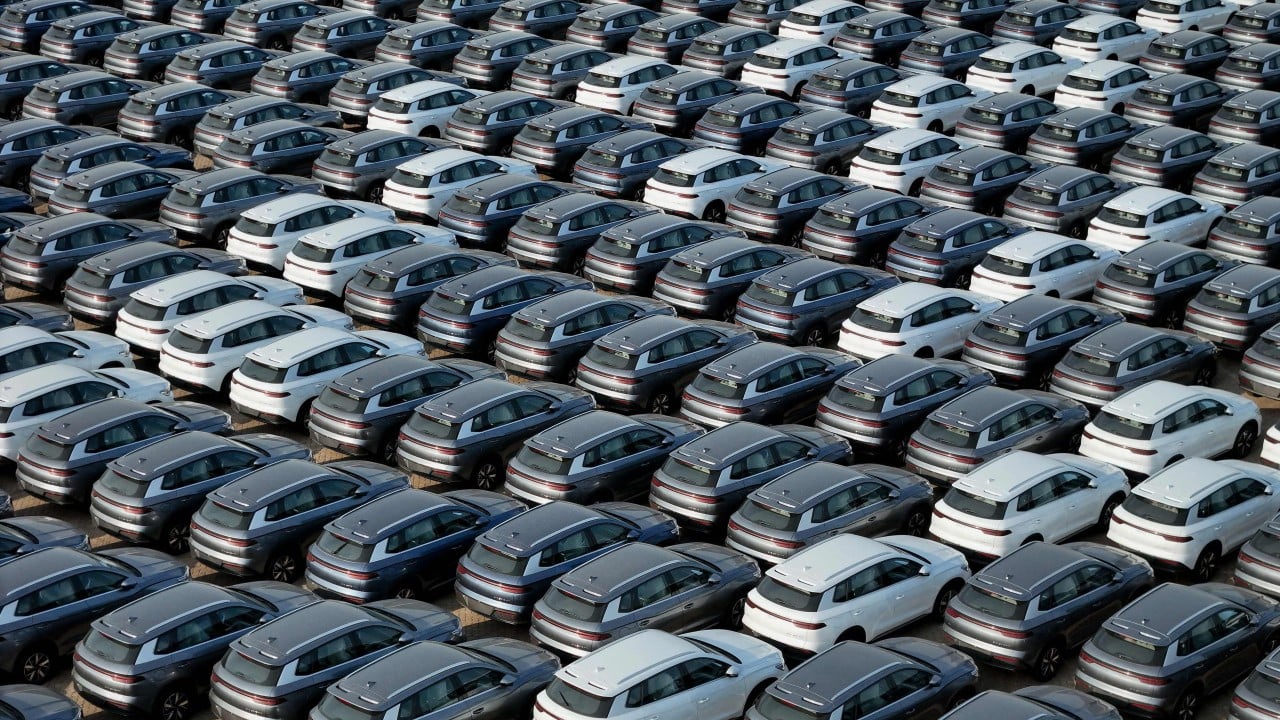
Chen signs the paperwork. He takes the keys. The haptic feedback on the door handle vibrates against his thumb, a tiny, electronic heartbeat. He pulls out of the lot and joins the river of white and silver cars flowing onto the highway. There is no roar of an engine, only the faint whistle of wind against the mirror, a sound so quiet you could almost miss it if you weren't listening for the change.