The room is usually smaller than you expect. When the world’s most powerful men are forced to answer for their private lives, they aren't standing on a balcony or behind a mahogany lectern. They are sitting in a nondescript office, probably under the hum of a flickering fluorescent light, watching a court reporter’s fingers dance across a steno machine. The air grows thin. The silence between a question and an answer feels like a physical weight.
This is the setting for a reckoning that has been decades in the making. Bill Clinton, a man whose political identity was forged in the fires of public scrutiny and narrow escapes, found himself once again under the microscope. This time, the questions didn't involve real estate deals in Arkansas or a blue dress in the West Wing. They centered on a ghost—Jeffrey Epstein.
To understand the gravity of a former president being grilled under oath, you have to look past the legal jargon. You have to look at the architecture of influence. For years, the names on flight logs were treated like trivia. People whispered about the "Lolita Express" as if it were a dark urban legend rather than a physical vessel of steel and jet fuel. But for those seeking the truth, those logs were a map of a hidden geography where power and depravity intersected.
The Weight of the Recorded Word
Imagine the mental chess game required in that moment. Every syllable is a potential landmine. When a lawyer asks a former president about his proximity to a convicted sex offender, they aren't just looking for a "yes" or "no." They are hunting for a crack in the narrative.
The defense has always been simple: "I knew him, but I didn't know him." It is a classic Washington pivot. It suggests that one can share a dinner table, a private jet, or a social circle with a predator without ever catching the scent of the hunt. But as the questioning deepened, that distance began to shrink.
We are talking about a man, Epstein, who built his entire existence on the acquisition of "great men." He collected them like rare stamps. If you have a former world leader on your plane, you have a shield. You have a badge of legitimacy. And when that shield is finally stripped away under the cold, flat gaze of a legal examiner, the noise of those engines begins to sound more like a warning.
The stakes aren't just about a single presidency or a single legacy. They are about the myth of the "inner circle." We want to believe that the people we elect to lead the free world are somehow immune to the gravity of common corruption. We want to believe that a man as brilliant as Bill Clinton could see a monster from a mile away. When he sits under oath, he is forced to confront the possibility that either he didn't see it—which would mean he was blind—or he did, and he stayed for the flight anyway.
The Geography of the Quiet Rooms
Consider the locations. Little St. James. A Manhattan townhouse. A ranch in New Mexico. These aren't just dots on a map; they are the private stages where the powerful played by different rules. In a deposition, these names are spoken with a clinical detachedness.
"Did you ever visit the island?"
The question is a blade. To answer it truthfully is to admit to being in a space that has become synonymous with human suffering. To deny it when the flight logs say otherwise is to court a perjury charge that could unravel a lifetime of work.
The human element here isn't just about the man being questioned. It’s about the victims who are finally hearing these names spoken in a room where a lie has a cost. For years, their stories were treated as background noise. They were the "unreliable narrators" in a story written by the elite. But when a former president is grilled, the power dynamic shifts. For a few hours, the man who once commanded the most powerful military on Earth is just another witness. He is a person who has to remember. He is a person who has to justify his presence in a story that makes everyone else’s skin crawl.
We aren't just witnessing a legal procedure. We are watching the slow, painful death of the "Golden Age" of political untouchability. The 1990s were a time when a certain kind of charisma could wash away almost any sin. If you were smart enough, charming enough, and useful enough, the world would look the other way. That world is gone.
The Cost of the Association
Think about the silence of the room again. It’s not just the silence of a man thinking. It’s the silence of a legacy being dismantled. Every question about a specific flight, a specific meeting, or a specific introduction is a brick pulled from the wall of a storied career.
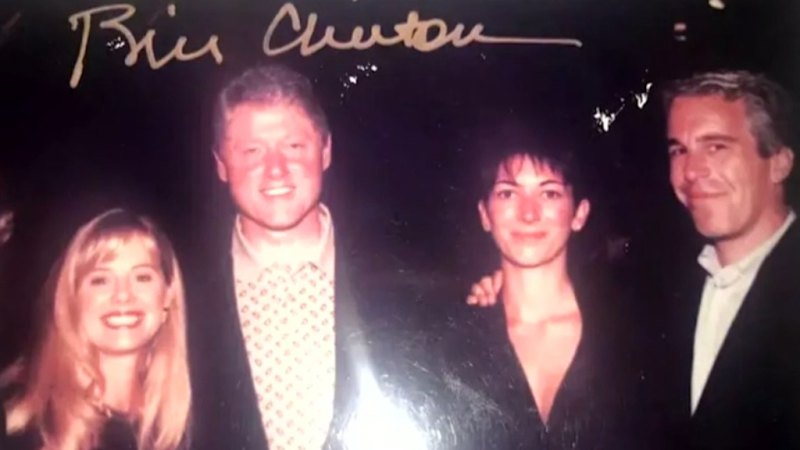
There is a psychological toll to being associated with Epstein that no amount of spin can fix. It’s a stain that doesn't wash out. It’s the kind of thing that makes people look at a photograph of a handshake and wonder what was said when the cameras were off.
The questioning of Bill Clinton under oath is the final, agonizing chapter of a story that started with private jets and ended with a cell in a Manhattan jail. It’s a reminder that no one is truly out of reach. Not even a man who once lived in the White House.
When the deposition ends, the lights stay on for a while. The lawyers pack their bags. The court reporter saves the file. The former president walks out into the world, but the air outside doesn't feel any fresher. The shadow of those flights, those dinners, and that association follows him. It’s a shadow that will likely outlive him.
The real story isn't in the transcript. It’s in the look on a witness's face when they realize that some questions can't be answered with a charming anecdote. Some truths are too heavy for even the most gifted orator to carry. The hum of the fluorescent lights fades, but the record remains. It’s a permanent ink on the pages of history, reminding us that power, no matter how great, eventually has to look itself in the mirror and answer for the company it kept.
The room is empty now, but the echo of the questions stays.