In a small, steam-filled kitchen in a Seoul suburb, Park Jun-ho stares at a plastic container of cooking oil. He is not a geopolitical analyst. He does not spend his mornings tracking the movement of naval destroyers in the Red Sea or reading the latest briefings from the Straits of Hormuz. But the price tag on that oil—and the electricity bill sitting on his counter—tells him everything he needs to know about a war happening five thousand miles away.
South Korea is an island in every way that matters. To the north, a sealed border makes it a functional peninsula without a land bridge. To every other side, there is only the deep, blue Pacific. Everything that keeps this hyper-modern miracle of a nation breathing—the fuel for its roaring factories, the heat for its high-rises, the very grain in its bowls—must arrive by ship.
When the Middle East catches a cold, South Korea starts to shiver.
This isn't just about a spike in the price of a barrel of crude. It is about a fragile, invisible thread that connects a fisherman in Ulsan to a drone strike in Yemen. It is about the terrifying realization that a country built on the "Miracle on the Han River" remains at the mercy of geography it cannot control and a conflict it did not start.
The Cost of the Horizon
Consider the path of a massive container ship. It is a slow, rhythmic journey. For decades, the route through the Suez Canal was the reliable jugular vein of global trade. Now, that vein is constricted. As tensions boil over in the Middle East, shipping companies are making a radical, expensive choice: they are turning around.
Instead of the short cut through the Red Sea, vessels are now rounding the Cape of Good Hope at the southern tip of Africa. This adds nearly 4,000 miles to the trip. It adds weeks of time. Most importantly, it adds millions in fuel costs and insurance premiums.
For a South Korean economy that lives and dies by export, this is a slow-motion catastrophe. Imagine you are a mid-sized manufacturer of auto parts in Gyeonggi Province. You have a contract to deliver components to a factory in Germany. Suddenly, your shipping costs have tripled. Your delivery window has vanished. You are not a combatant in any war, but your profit margins are being bled dry by the chaos of the Levant.
The data supports this anxiety. South Korea imports over 70% of its oil and a staggering amount of its natural gas from the Middle East. When the Strait of Hormuz—the narrowest of bottlenecks—gets mentioned in the evening news, the Korean Won flinches.
The Energy Trap
South Korea’s reliance on the Middle East is not a choice; it is a geographic sentence. The nation has almost zero domestic petroleum reserves. To keep the lights on in Seoul, the country must maintain a constant, pulsing flow of tankers from Saudi Arabia, the UAE, and Kuwait.
When regional instability flares, the South Korean government moves into a familiar crouch. They release strategic oil reserves. They offer subsidies to taxi drivers and truckers. But these are Band-Aids on a structural wound.
The real weight falls on the middle class. While the headlines focus on "collateral impact" and "macroeconomic headwinds," the reality is much more intimate. It is the choice to keep the heater at 18°C instead of 21°C during a brutal Siberian cold snap because the cost of Liquefied Natural Gas (LNG) has buckled under the weight of global supply fears.
South Korea is essentially a giant factory. It takes raw energy and raw materials, adds incredible human ingenuity and long hours, and spits out semiconductors, cars, and ships. If the input—energy—becomes volatile, the entire machine begins to rattle. The "collateral impact" mentioned by diplomats is actually the sound of a small business owner closing their doors because they can no longer afford the overhead of a heated storefront.
A Diplomatic Tightrope without a Net
There is a political price to pay, too. For years, Seoul has performed a masterful balancing act. It remains a staunch, "ironclad" ally of the United States, hosting thousands of American troops to deter the threat from the North. At the same time, it has spent decades cultivating deep commercial ties with Middle Eastern nations, including Iran.
When the U.S. asks its allies to step up and support maritime security in the Red Sea, Seoul faces an agonizing dilemma. To join a coalition is to protect the very shipping lanes they depend on. But it also risks painting a target on their back. It risks alienating the energy providers who hold the keys to Korea's industrial heart.
The pressure is invisible, yet it is everywhere. It is in the hushed meetings at the Blue House. It is in the hesitant language of the Foreign Ministry. They are trying to protect a "Global Pivotal State" identity while being acutely aware that their economy is held hostage by a region they have very little influence over.
South Korea's "Middle East Risk" is a reminder that in a globalized world, there is no such thing as a far-away war.
The Human Logistics of Chaos
Let's look at the "hypothetical" Lee Min-ji. She works for a logistics firm in Busan, the world’s sixth-busiest container port. Her job used to be predictable. She managed schedules, tracked shipments, and ensured that "Just-in-Time" delivery remained a reality.
Now, her days are a frantic exercise in crisis management. She watches satellite feeds of ships diverted around Africa. She explains to angry clients why their electronics are sitting in a hull off the coast of Mauritius instead of arriving at a warehouse in Rotterdam.
"We are tracking ghosts," she might say.
The stress isn't just professional; it’s existential. She sees the price of her lunch rising every week. She sees the anxiety in her father’s eyes—a retired factory worker who sees his pension being eaten alive by inflation driven by energy costs.
This is the true face of the Middle East crisis in East Asia. It isn't a map with red arrows. It is a quiet, creeping exhaustion. It is the realization that the prosperity South Korea worked so hard to build is surprisingly brittle.
The Search for an Exit
Is there a way out? South Korea is pivoting, or trying to. There is a renewed push for nuclear energy. There are massive investments in hydrogen and renewables. There is a desperate attempt to diversify where they buy their oil, looking toward the Americas and Southeast Asia.
But you cannot move a mountain, and you cannot quickly replace a supply chain that has been built over half a century. The infrastructure—the refineries, the long-term contracts, the specific chemical grades of crude—is all tuned to the Middle East. Changing it is like trying to rebuild an airplane's engine while it's mid-flight.
The situation creates a strange, jarring contrast. On the surface, Seoul is a neon-lit wonderland of the future. K-pop blasts from speakers, and high-speed trains whisper across the countryside. Yet beneath that gloss is a country holding its breath, waiting for the next headline from a desert half a world away.
The Ghost in the Machine
We often talk about the "global economy" as if it’s an abstract entity, a series of graphs and charts that exist in a vacuum. It isn't. It is a living, breathing organism. When one part of that organism is injured, the rest of the body compensates.
South Korea is currently the part of the body feeling the dull, throbbing ache of a distant trauma. It is a reminder that security isn't just about borders and bayonets. Security is the ability to buy a bottle of cooking oil without checking the exchange rate. Security is the confidence that the lights will stay on without needing to check the pulse of the Red Sea.
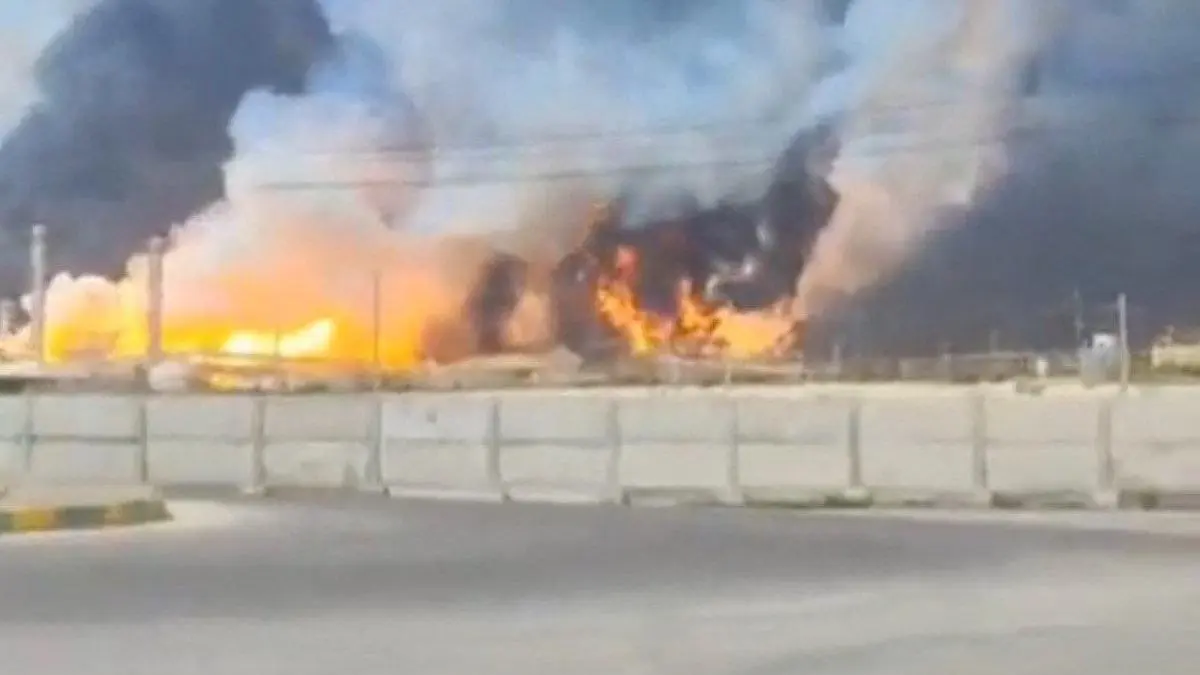
The fire in the Middle East is distant, yes. But the smoke is drifting across the Pacific, settling in the streets of Seoul, and reminding a nation of giants that they are still, in many ways, at the mercy of the wind.
Park Jun-ho finally puts the cooking oil in his cart. He pays a price that would have been unthinkable two years ago. He walks out into the cold Seoul air, pulls his coat tighter, and wonders when the world became so small.
The container ships continue their long, lonely trek around the Cape. The meters keep spinning. The shadow grows longer.
Would you like me to analyze the specific economic sectors in South Korea that are most vulnerable to these shipping delays?