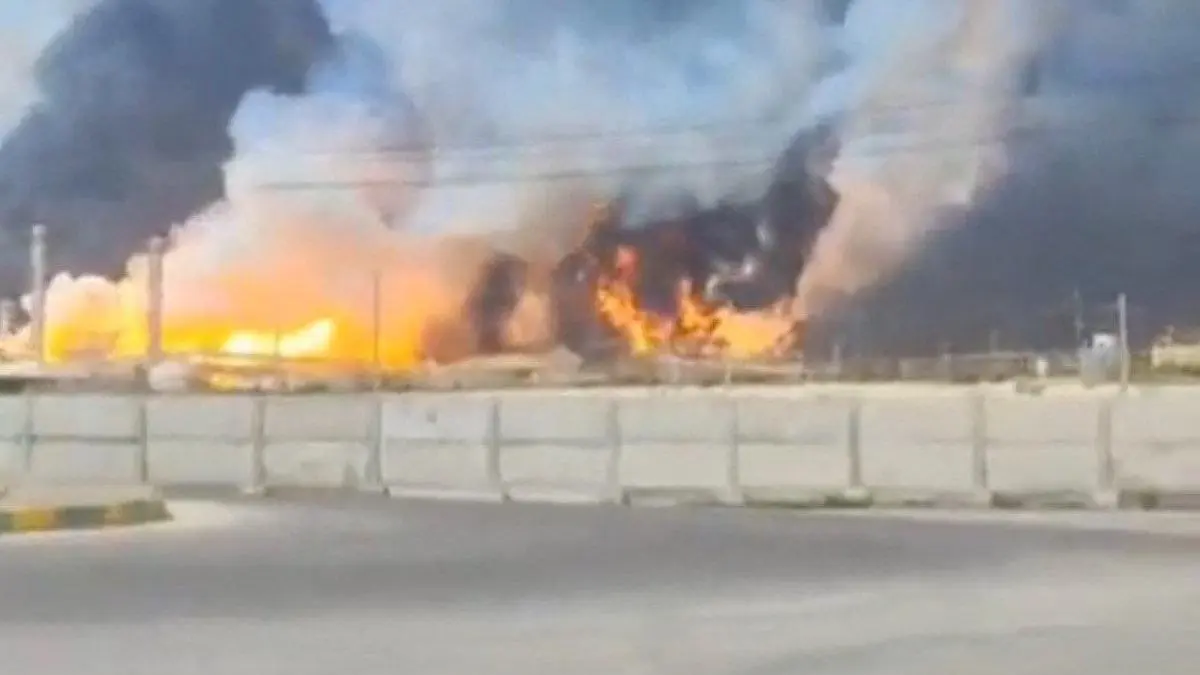
If you want to understand why Iran’s economy hasn't completely folded under decades of sanctions, look at a map of the Persian Gulf. There, straddling the maritime border with Qatar, sits the South Pars-North Dome field. It’s the largest natural gas repository on the planet. For Tehran, this isn't just a collection of offshore platforms and pipelines. It's the country's literal life support system. When news breaks about tensions, "accidents," or kinetic strikes near this area, the stakes aren't just about fluctuating global energy prices. They're about whether millions of Iranians will have electricity or heat by next week.
The South Pars field accounts for roughly 70% of Iran's domestic gas production. Think about that for a second. Most nations diversify their energy portfolios to avoid a single point of failure. Iran doesn't have that luxury. The regime has tethered its entire industrial base, residential heating, and power generation to this one patch of water.
The Fragility of a Single Energy Pillar
Iran's dependence on South Pars is a massive strategic headache. Because the field is shared with Qatar (who calls their side the North Field), there’s a constant, frantic race to extract as much as possible before the other side gets it. But while Qatar has partnered with global giants like ExxonMobil and Shell to keep their tech current, Iran has been largely isolated.
They're struggling with pressure drops. When a gas field gets older, the pressure naturally falls, making it harder to get the gas out. To fix this, you need massive compression platforms. Each of these platforms weighs about 20,000 tons. Iran’s domestic engineering firms, while capable, simply don't have the specialized technology to build and install these at the scale required to stop the production decline.
If South Pars goes offline—even partially—the domino effect is instant. First, the power plants fail. Then, the steel and petrochemical industries, which are the only sectors actually bringing in hard currency, grind to a halt. We saw a glimpse of this during recent winters when gas shortages forced the government to shut down factories just to keep home heaters running in Tehran. It's a zero-sum game played with the country's survival.
Why Targeted Strikes Change Everything
Military analysts often talk about "center of gravity." In a conflict, South Pars is exactly that. Unlike scattered oil wells in the Khuzestan province, the gas infrastructure at Asaluyeh is a concentrated target.
An attack here doesn't just hurt the government's wallet. It creates a humanitarian crisis. You can't just flip a switch and get that gas back if a processing plant gets leveled. It takes years to rebuild these facilities. If a strike hits the 24 gas processing refineries onshore at Asaluyeh, the Iranian power grid essentially vanishes.
This is why the Iranian leadership reacts so violently to any perceived threat in the Gulf. They know they're glass-jawed. Their reliance on a single geographic point for nearly all their energy needs is a massive tactical error they've been forced into by geography and geopolitical isolation.
The Technology Gap Nobody Mentions
Everyone talks about the "attack" or the "threat," but the real story is the silent decay of the equipment. Iran needs roughly $20 billion to $30 billion in investment just to maintain current production levels at South Pars. They don't have it.
Russia was supposed to help. Gazprom signed a $40 billion memorandum of understanding a few years back. But let’s be real. Russia is a direct competitor in the gas market and is currently preoccupied with its own issues. They aren't going to hand over high-end compression tech to a rival.
So, Iran is left "cannibalizing" parts from older sectors to keep the South Pars terminals running. It's a patchwork job. When you see reports of "technical failures" or "explosions" at these sites, it’s often hard to tell if it was a drone strike or just a 30-year-old valve finally giving up because it hasn't been serviced since the Clinton administration.
What Happens if the Gas Stops Flowing
If you're tracking the stability of the Middle East, you have to watch the flow from South Pars more than the price of Brent crude. Gas is much harder to move than oil. You need pipelines or incredibly expensive LNG (Liquefied Natural Gas) infrastructure. Iran doesn't have functioning LNG terminals. They are entirely dependent on their pipeline network.
If that network is severed at the source—the South Pars field—the internal pressure on the Iranian government becomes unbearable. People can handle expensive gas. They can't handle no gas. In a country where winter temperatures in the north can drop well below freezing, the loss of South Pars is a regime-ending event.
The focus shouldn't just be on the physical security of the platforms. It’s the cyber security of the control systems. These refineries run on industrial control software that is often outdated and vulnerable. A "soft" strike on the software could be just as devastating as a "hard" strike from a cruise missile.
Looking at the Real Numbers
To understand the scale, look at these production figures. South Pars produces over 700 million cubic meters of gas per day. That’s not a typo. It feeds a 440,000-kilometer piping network.
- Domestic Use: Almost all of this goes to keeping the lights on in Iranian homes.
- Industrial Use: The petrochemical sector relies on this gas as "feedstock"—the raw material for making plastics and chemicals.
- Exports: Iraq and Turkey buy Iranian gas to run their own power plants. If Iran can't deliver, they lose their remaining regional leverage.
Basically, South Pars is the only thing keeping the Iranian Rial from becoming literal wallpaper. It is the beginning and the end of their economic sovereignty.
If you’re watching this space, stop looking for "market trends" and start looking at the maintenance schedules and "security incidents" at the Asaluyeh port. That’s where the real power lies. If you want to understand the fragility of the Iranian state, look no further than the bubbles rising from the Persian Gulf floor.
Keep a close eye on the development of the "Phase 11" project. It’s the last major section of the field to be developed and has been passed around from TotalEnergies to CNPC and now to local firms. Its success or failure is the ultimate bellwether for whether Iran can keep its energy lifeline from snapping.