The air in the Dubai International Airport terminal carries a specific, metallic chill. It is the scent of recycled oxygen, expensive perfume, and the quiet, vibrating tension of a thousand different lives suspended in mid-air. For most, an airport is a transition—a bland purgatory between a business meeting and a hotel bed. But for others, it is a lifeline.
Consider a man we will call Aarav. He is hypothetical, but his story is mirrored in the eyes of nearly every passenger lining up at the SpiceJet check-in counters this week. Aarav has spent the last three years working in Sharjah, sending a steady stream of dirhams back to a village outside of Jaipur. He knows the weight of every coin. He knows the exact cost of the international calling cards that allow him to hear his daughter’s voice for ten minutes on a Sunday.
When the world shifts—when regulations change, when family emergencies strike, or when the rhythm of a work contract reaches its natural, sometimes abrupt end—the distance between the UAE and India stops being a three-hour flight. It becomes a chasm.
On March 6, that chasm narrowed.
The Logistics of Hope
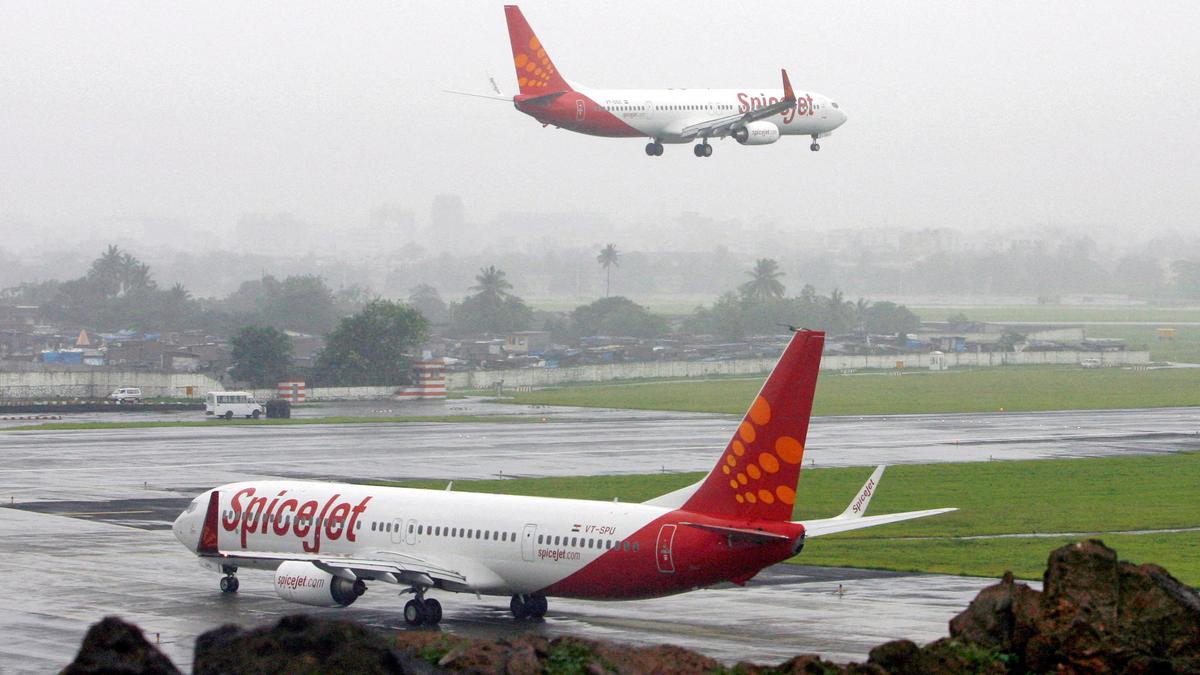
Airlines usually talk in the language of "units" and "slots." They speak of "operational efficiency" and "load factors." On paper, the news was a standard industry update: SpiceJet announced the operation of 14 special flights from the UAE to various Indian destinations. To a shareholder, this is a data point. To the person standing on the polished marble of the terminal floor with two suitcases containing their entire life, it is a rescue mission.
These are not your standard scheduled services. These are "special" flights, a term that carries a particular weight in the post-pandemic era of travel. They exist to fill the gaps that regular schedules leave behind. They are the surge capacity of human movement.
The 14 flights were strategically dispersed. They weren't just shuttling people into the chaos of Delhi or the sprawl of Mumbai. The wings were headed for the heartlands. Ahmedabad, Kochi, Kozhikode, and Mangaluru. These are the places where the porch lights are left on. By targeting these secondary cities, the airline wasn't just moving bodies; it was shortening the "last mile" of a journey that, for many, had already lasted years.
The Invisible Stakes of a Middle Seat
We often complain about budget airlines. We moan about the legroom, the price of a sandwich, or the plastic feel of the armrest. We forget that for a significant portion of the global workforce, that cramped middle seat is the most valuable piece of real estate in the world.
The pressure of "getting home" is a physical weight. It sits in the solarplexus. When an airline opens up 14 flights in a single day, they aren't just increasing capacity by a few thousand seats. They are releasing a pressure valve.
Think about the sheer coordination required for such a concentrated burst of activity. Fourteen aircraft must be fueled, cleaned, and staffed. Fourteen sets of ground crews in Dubai, Sharjah, and Ras Al Khaimah must coordinate with fourteen sets of arrival teams across the Indian subcontinent.
The Precision Behind the Surge
- Fleet Readiness: Every Boeing 737 in the rotation has to be vetted for back-to-back cycles to ensure the tight window of March 6 is met without technical delays.
- Navigational Complexity: Managing the flight paths for over a dozen extra sorties through some of the busiest airspace in the world requires surgical timing.
- Human Capital: Pilots and cabin crew aren't just operating a vehicle; they are managing the high-emotion environment of a "special" flight where passengers are often more stressed than the average vacationer.
But the real magic isn't in the mechanical. It’s in the timing. In the travel industry, March is a bridge. It’s the tail end of the winter rush and the precursor to the scorching Gulf summer. For workers whose contracts are ending or students heading back for the start of a new season, the availability of these seats on a specific date like March 6 is the difference between a smooth transition and a bureaucratic nightmare.
Beyond the Ticket Price
There is a common misconception that "low-cost" means "low-stakes." In reality, the lower the cost of the ticket, the higher the stakes for the passenger.
When a premium carrier adds a flight, it’s for the convenience of the executive who doesn't want to wait two hours for the next connection. When a carrier like SpiceJet adds 14 special flights, it is for the person who has been refreshing a browser window for three weeks, praying for a fare that won't devour two months of savings.
The economics of these flights are a delicate dance. Operating "specials" involves higher overheads—extra permits, temporary staffing surges, and the risk of one-way load imbalances. Yet, the demand remains insatiable. The UAE-India corridor is one of the densest migratory paths on the planet. It is an artery of global trade and human aspiration.
The Silence of the Cabin
If you were to walk down the aisle of one of these 14 flights, you would notice a different kind of silence. It isn't the bored silence of a commuter flight. It’s a silence of exhaustion mixed with profound relief.
There is the elderly woman going to see a grandchild she has only ever seen on a grainy WhatsApp video call. There is the young man in the crisp new shirt, clutching a bag of duty-free chocolates, heading home to get married. There is the worker whose eyes are closed before the safety demonstration even begins, finally letting go of the hyper-vigilance required to survive in a foreign land.
The airline industry often forgets its own soul. It hides behind apps and automated check-in kiosks. But on a day like March 6, when the fleet is pushed to its limits to move thousands of people across an ocean in a 24-hour window, the humanity of the enterprise resurfaces.
It is a reminder that we are a species that moves. We seek, we toil, and eventually, we return.
The Meaning of Fourteen
Fourteen is a small number in the grand scheme of global aviation. There are tens of thousands of flights every day. But numbers are relative.
To the cities of Kochi or Mangaluru, an extra flight isn't a statistic. It’s 180 people walking through the arrival gates. It’s 180 families waiting behind the glass barriers. It’s the sudden, localized spike in the economy of taxi drivers, tea-stall owners, and porters.
A single flight carries roughly 30,000 pounds of human hope, give or take a few suitcases. Multiply that by fourteen. That is a massive amount of emotional cargo to move in a single day.
We live in a world that feels increasingly fragmented, where borders feel sharper and distances feel longer. Technology was supposed to make the world smaller, but it often just makes us more aware of how far away we are from the people who matter. In that context, a plane is more than a machine. It is a bridge built of aluminum and jet fuel.
As the sun sets over the Arabian Gulf on March 6, fourteen planes will have banked into the sky, their noses pointed East. They leave behind the glitz of the malls and the heat of the construction sites. Below them, the desert gives way to the dark expanse of the sea.
Inside the cabin, the lights dim. The hum of the engines becomes a lullaby. For the passengers, the destination is no longer a coordinate on a map or a line on a visa. It is a front door, a familiar smell of home-cooked food, and the end of a very long wait.
The wheels will touch down on Indian soil, the brakes will whine, and the collective exhale of two thousand people will join the humid night air. The "special" nature of these flights isn't found in the ticket code or the airline's press release. It is found in the moment the cabin door opens and the first breath of home rushes in.