The current volatility between the United States and Iran represents a shift from conventional "gray zone" tactics to a high-stakes stress test of global energy and security infrastructure. While headlines focus on the rhetoric of political leaders and the immediate panic of tourist site threats, the actual strategic calculus rests on three quantifiable pillars: the Hormuz Choke-point Elasticity, the Asymmetric Targeting Cost-Ratio, and the NATO Alliance Integration Failure. Understanding these mechanisms reveals that the conflict is not merely a series of retaliatory strikes, but a systemic attempt to reprice the cost of American presence in the Middle East.
The Hormuz Choke-point Elasticity
The Strait of Hormuz functions as the singular most critical valve in the global energy supply chain. Its geography creates a natural bottleneck where approximately 21 million barrels of oil pass daily. Iran’s strategy relies on the threat of "closure," though a literal physical blockade is less likely than a "friction-based" blockade.
In a friction-based blockade, Iran does not need to sink every tanker; they only need to increase the War Risk Insurance Premium to a level that renders transit economically non-viable for commercial fleets. When insurance underwriters at Lloyd’s of London reassess the risk of a "hull stress event" (a mine or drone strike), the resulting spike in shipping costs acts as a shadow tax on the global economy. This creates a feedback loop where:
- Physical insecurity leads to higher premiums.
- Higher premiums force re-routing around the Cape of Good Hope.
- Re-routing increases transit time by 10 to 14 days, reducing global tanker liquidity.
- Reduced liquidity spikes Brent Crude prices regardless of actual production levels.
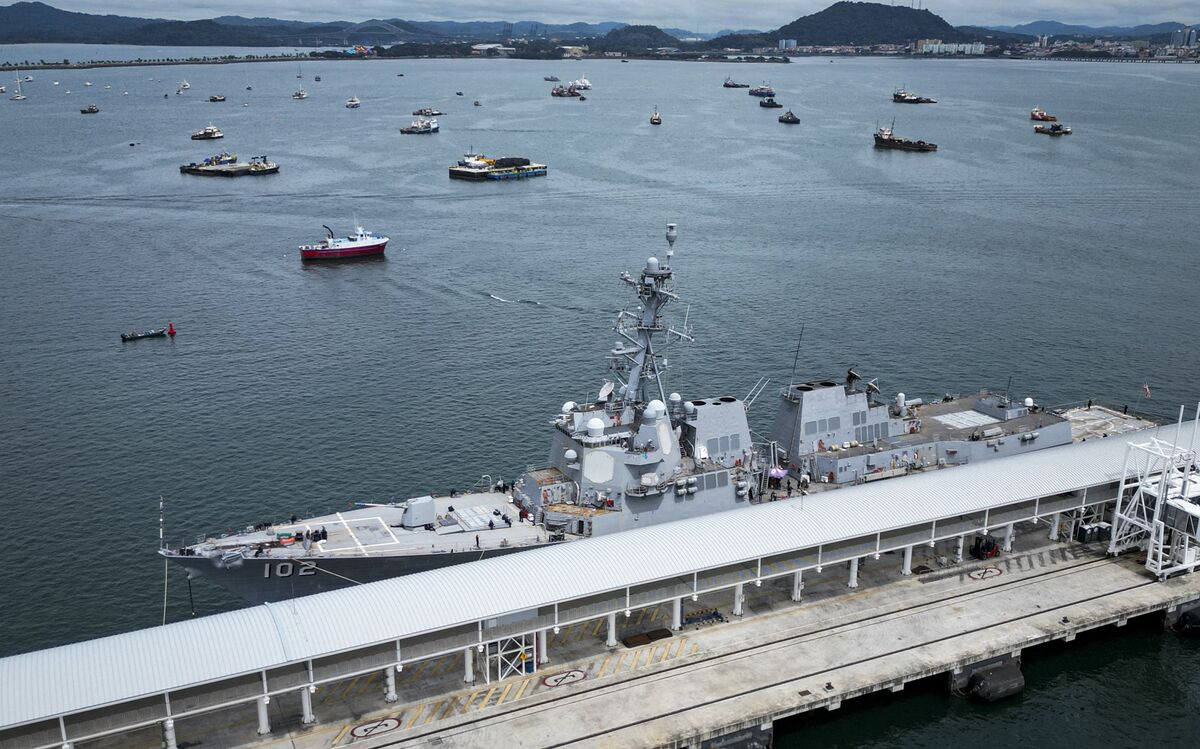
Trump’s critique of NATO allies regarding the protection of this waterway stems from a fundamental disagreement over the Security Burden-Sharing Ratio. From a Washington perspective, if European and Asian economies consume the majority of the hydrocarbons flowing through Hormuz, those nations should provide the kinetic assets (destroyers, minesweepers) to secure the passage. The refusal of certain allies to commit naval assets is viewed not just as "cowardice" in political terms, but as a "free-rider" problem in maritime security economics.
The Asymmetric Targeting Cost-Ratio
The threat against "tourist sites worldwide" and "Gulf energy sites" represents a deliberate shift toward Asymmetric Attrition. Iran recognizes that it cannot win a symmetrical naval or aerial engagement against a U.S. Carrier Strike Group. Instead, it utilizes a cost-imbalance strategy.
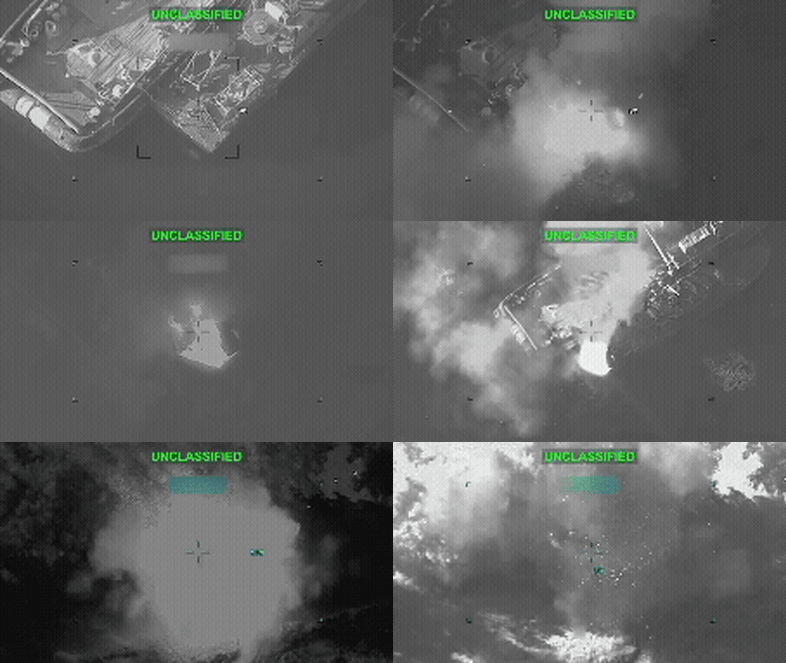
The math of modern interception is heavily skewed against the defender. If Iran or its proxies launch a swarm of one-way attack drones (costing approximately $20,000 to $50,000 per unit), the U.S. Navy often responds with SM-2 or SM-6 interceptor missiles, which cost between $2 million and $4 million per shot.
- Attacker Cost: $500,000 for a swarm of 10 drones.
- Defender Cost: $20,000,000 for 10 interceptor missiles.
- Cost Ratio: 1:40 in favor of the aggressor.
This ratio ensures that even a "successful" defense results in a long-term depletion of the defender's precision-guided munition (PGM) stockpiles. When Iran targets energy infrastructure—such as refineries or pumping stations in the Persian Gulf—the goal is to induce Infrastructure Hysteresis. This term describes a state where the damage to a system is so specific that it cannot easily return to its original state, even after the threat is removed. Replacing a custom-built cracking tower at a Saudi refinery is a multi-year engineering project, not a simple repair.
Kinetic Infrastructure vs. Soft-Target Terrorism
The Iranian threat to target tourist sites serves a different psychological function: the Global Threat Dispersion Strategy. By expanding the target set beyond the geographic confines of the Middle East, Tehran forces Western intelligence agencies to reallocate resources from offensive monitoring to defensive "hardening" of civilian spaces.
This creates a "dilution effect." When security assets are spread across thousands of soft targets (hotels, museums, landmarks), the density of protection at any single point decreases. This is a classic move in irregular warfare designed to create a sense of omnipresent risk, which in turn pressures democratic governments to seek de-escalation to appease a frightened electorate.
However, the leap from attacking Gulf energy sites—a tactical military objective—to attacking international tourist sites carries a massive Diplomatic Escalation Penalty. While energy strikes can be framed as "counter-pressures" against sanctions, targeting civilians globally risks triggering Article 5 of the NATO treaty or similar collective defense mechanisms, which would move the conflict from a localized maritime dispute to a global state of war.
The Structural Failure of Collective Maritime Defense
The breakdown in NATO cooperation regarding the Strait of Hormuz reveals a deeper fracture in the Post-Cold War Security Architecture. The U.S. has historically acted as the guarantor of the "Global Commons" (the sea, space, and cyberspace).
The reluctance of allies to join a "Coalition of the Willing" in the Persian Gulf signals a transition toward Regionalized Security Blocs. European powers, particularly France and Germany, are increasingly wary of being pulled into a "Maximum Pressure" campaign that they did not design. This creates a bottleneck in command and control. Without a unified Rules of Engagement (ROE) framework, the tactical response to an Iranian mine attack becomes fragmented.
- Information Siloing: Different navies use different encrypted communication channels, slowing the reaction time during a swarm attack.
- Logistical Incompatibility: Small-scale naval contributors often lack the "reach-back" capability for long-term deployments without U.S. refueling and repair support.
- Political Paralysis: A commander on the scene may see a threat but must wait for a capital-city sign-off that may never come due to domestic political sensitivities.
The Energy Security Paradox
The paradox of the current crisis is that the U.S. is now a net exporter of oil, yet it remains tethered to the security of the Persian Gulf. This is due to the Global Commodity Interconnectivity. Even if not a single drop of Iranian or Saudi oil reaches American shores, a supply shock in the Gulf raises the global price of oil everywhere.
Domestic American shale production cannot ramp up fast enough to offset a total closure of Hormuz. The "Time-to-Market" for new fracking wells is measured in months, whereas a naval blockade affects prices in minutes. Consequently, the U.S. military is effectively subsidizing the energy security of its competitors (like China) and its allies (like Japan and Europe) by keeping the lanes open. Trump's rhetoric reflects a desire to transition from this "Global Guard" role to a "Transaction Security" model, where protection is contingent on direct financial or political reciprocity.
Tactical Forecasting and Kinetic Indicators
To determine if the situation is moving toward a full-scale kinetic engagement, observers must track three specific technical indicators rather than political speeches:
- A2/AD Density: An increase in Iranian anti-access/area-denial (A2/AD) assets, specifically the deployment of long-range anti-ship cruise missiles (ASCMs) like the Ghadir or Raad, to mobile coastal launchers.
- Electronic Warfare (EW) Signatures: Increased "spoofing" of AIS (Automatic Identification System) signals for commercial ships, leading to navigation errors that could push vessels into Iranian territorial waters.
- Mine-Laying Activity: The deployment of "stealth" mines—non-metallic or bottom-dwelling mines that are difficult for standard sonar to detect—is the most likely precursor to a sustained maritime conflict.
The strategic play for the United States involves a "Bifurcated Deterrence" model. This requires maintaining enough naval presence to prevent a total blockade while simultaneously using cyber-kinetic operations to degrade Iran's command-and-control (C2) nodes without launching a full-scale invasion.
The immediate tactical move for any entity operating in the region is to transition from "Just-in-Time" logistics to "Just-in-Case" buffering. This means increasing regional storage capacity and diversifying transit routes to bypass the Hormuz bottleneck entirely—utilizing pipelines like the Habshan–Fujairah line in the UAE or the East-West Pipeline in Saudi Arabia, though their current capacity is insufficient to replace the Strait entirely. The goal is to reduce the "Criticality Score" of the Strait of Hormuz, thereby stripping Tehran of its most potent economic lever.