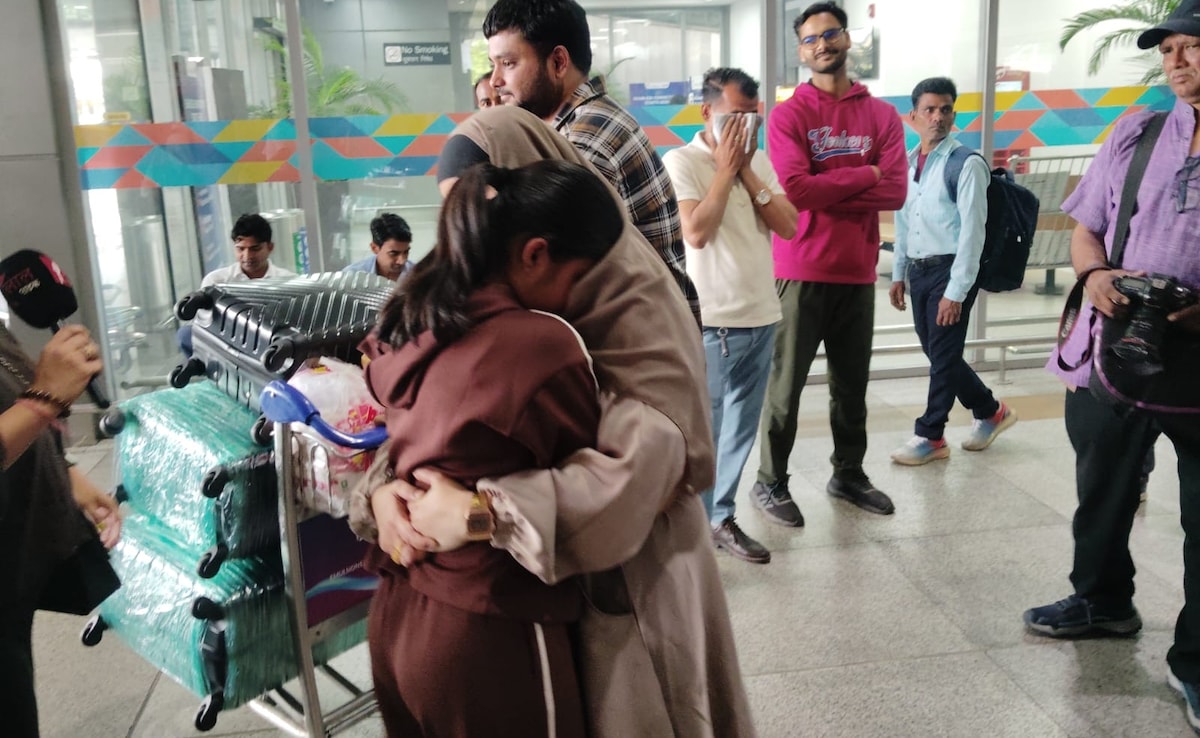
The sudden closure of the Azerbaijan-Iran border represents more than a localized diplomatic friction; it is a systemic failure of a critical transit node that has left hundreds of Indian nationals—primarily students and small-scale traders—trapped in a logistical vacuum. When a primary overland route is severed by executive fiat, the resulting crisis is governed by three variables: the rate of diplomatic de-escalation, the availability of high-cost aerial extraction, and the structural integrity of alternative corridors. The repatriation of the first batch of Indian citizens highlights the friction between state-level security imperatives and the individual’s right to mobility.
The Tri-Node Bottleneck: Anatomy of a Transit Crisis
The current paralysis is not a random occurrence but a calculated move within a broader regional security framework. To understand why citizens remain stranded, one must analyze the crisis through three distinct layers of impact. Building on this idea, you can also read: Why the Green Party Victory in Manchester is a Disaster for Keir Starmer.
1. The Geopolitical Friction Coefficient
Azerbaijan’s decision to seal its southern border with Iran stems from escalating bilateral tensions, often categorized by intelligence analysts as a "security-first" posture. For Indian nationals, this means their presence in the region has been caught in a geopolitical crossfire. The border is not merely a gate; it is a valve for the International North-South Transport Corridor (INSTC). When Azerbaijan closes this valve, the flow of human and commercial capital stops instantly. The primary cause-and-effect chain starts with a security incident (real or perceived) at the border, leading to a total cessation of land-based transit, which then forces a reliance on air bridges—a significantly more expensive and less efficient method of evacuation.
2. The Economic Elasticity of Repatriation
The cost of returning to India has undergone a massive spike due to the sudden elimination of low-cost overland and connecting routes through Iran. Logistics firms and airlines operate on a supply-demand curve that is currently heavily skewed. Analysts at TIME have provided expertise on this trend.
- The Loss of Land-Sea Multimodality: Before the closure, many travelers utilized a combination of bus routes to Iranian ports and subsequent sea or air travel.
- The Premium on Direct Flights: With the land route gone, demand for direct flights from Baku to Delhi or Mumbai has surged, exceeding the current scheduled capacity.
- Currency Liquidity Issues: Many stranded individuals hold assets in local denominations or have limited access to international banking systems, creating a "liquidity trap" where they have the funds for a ticket but cannot execute the transaction in a sanctioned or restricted environment.
3. The Administrative Latency of the Indian Consulate
The speed of the "first batch" return is a function of the Indian government’s bureaucratic throughput. The mission must verify identities, issue emergency certificates for lost or expired passports, and negotiate landing slots for special flights. The bottleneck here is not just physical; it is a data-processing challenge.
Structural Failures in the INSTC Framework
The International North-South Transport Corridor was designed to be a 7,200-km multi-mode network. However, the current situation reveals the "fragility of the middle mile." If Azerbaijan and Iran cannot maintain a functional border, the entire logic of the INSTC collapses for Indian interests.
The mechanism of this failure is rooted in Geographical Path Dependency. Indian students in the Caucasus are geographically isolated. To the North lies Russia (under international sanctions and logistical strain), to the West lies Armenia (involved in its own conflict with Azerbaijan), and to the East is the Caspian Sea. When the Southern exit through Iran is blocked, the "exit cost" for a stranded citizen rises by an order of magnitude.
The Cost Function of Stranded Populations
For a student or a trader, every day spent stranded is a compounding financial loss. We can define the Total Crisis Cost ($C_{total}$) as:
$$C_{total} = (D \times O_c) + T_a + S_l$$
Where:
- $D$ = Days stranded
- $O_c$ = Daily opportunity cost (lost wages/tuition) plus daily subsistence
- $T_a$ = The delta between normal transit price and emergency airfare
- $S_l$ = The "Security Levy" (bribes, emergency documentation, or loss of assets)
The first batch of returnees represents those with the lowest $C_{total}$—individuals with valid documentation and immediate access to liquid capital. The remaining population consists of those for whom $C_{total}$ has exceeded their available resources, necessitating state-funded intervention.
Risk Mitigation and the Shift to Air Bridges
The Indian Ministry of External Affairs (MEA) is currently transitioning from a "facilitation" role to an "extraction" role. This shift involves moving from simply providing information to chartering specific flights. The structural problem with this approach is the Slot Allocation Paradox. Baku’s Heydar Aliyev International Airport has a finite number of takeoff and landing slots. If the Azerbaijani government prioritizes security or military flights, civilian evacuation is de-prioritized.
Furthermore, the lack of a direct land bridge to Central Asia forces India to rely on "islands of stability." Currently, the UAE or Qatar serve as these islands, where stranded Indians are flown from Baku for a layover before reaching India. Each additional leg in this journey introduces a new point of failure, including visa requirements for transit and the risk of luggage loss or further delays.
The Strategic Imperative for Diversified Transit
This crisis exposes India’s over-reliance on specific nodes within the INSTC. To prevent a recurrence, the strategic playbook must evolve.
- Redundancy in Transit Agreements: India must negotiate "Force Majeure Transit Rights" with regional powers. These would be pre-negotiated legal frameworks that allow for the swift movement of citizens through alternative borders (such as the Azerbaijan-Georgia-Turkey route) in the event of a bilateral border closure between Azerbaijan and Iran.
- Digital Consular Readiness: The delay in the first batch suggests a need for a decentralized, blockchain-verified database of citizens living abroad. This would allow for the instant issuance of digital "Emergency Transit Credentials," bypassing the physical bottleneck of the consulate office.
- The Insurance-Linked Repatriation Model: For students and workers in high-risk corridors, a mandatory "Geopolitical Risk Insurance" should be integrated into visa applications. This would provide the necessary $T_a$ (emergency airfare delta) without waiting for government-allocated taxpayer funds.
The border closure between Azerbaijan and Iran is a clear indicator that the "Peace Dividend" of the INSTC is currently non-existent. The strategic play for the Indian government is to cease viewing these transit routes as stable infrastructure and instead treat them as high-volatility assets. The immediate priority must be the establishment of a semi-permanent air bridge between Baku and New Delhi, bypassing the Iran-Azerbaijan land border entirely until a trilateral security guarantee is signed. Future travelers must be briefed on the Exit-Risk Profile of the Caucasus, where the "cost of departure" is no longer a fixed variable but a fluctuating function of regional stability.
Move all remaining citizens to a centralized staging area near Baku's international transport hub, consolidate documentation processing into a 24-hour mobile unit, and secure dedicated flight paths through Arabian Peninsula hubs to clear the backlog within the 72-hour window before local resource depletion leads to a humanitarian secondary crisis.
Would you like me to map out the specific alternative transit routes through Georgia and Turkey, including the projected cost-per-passenger delta?