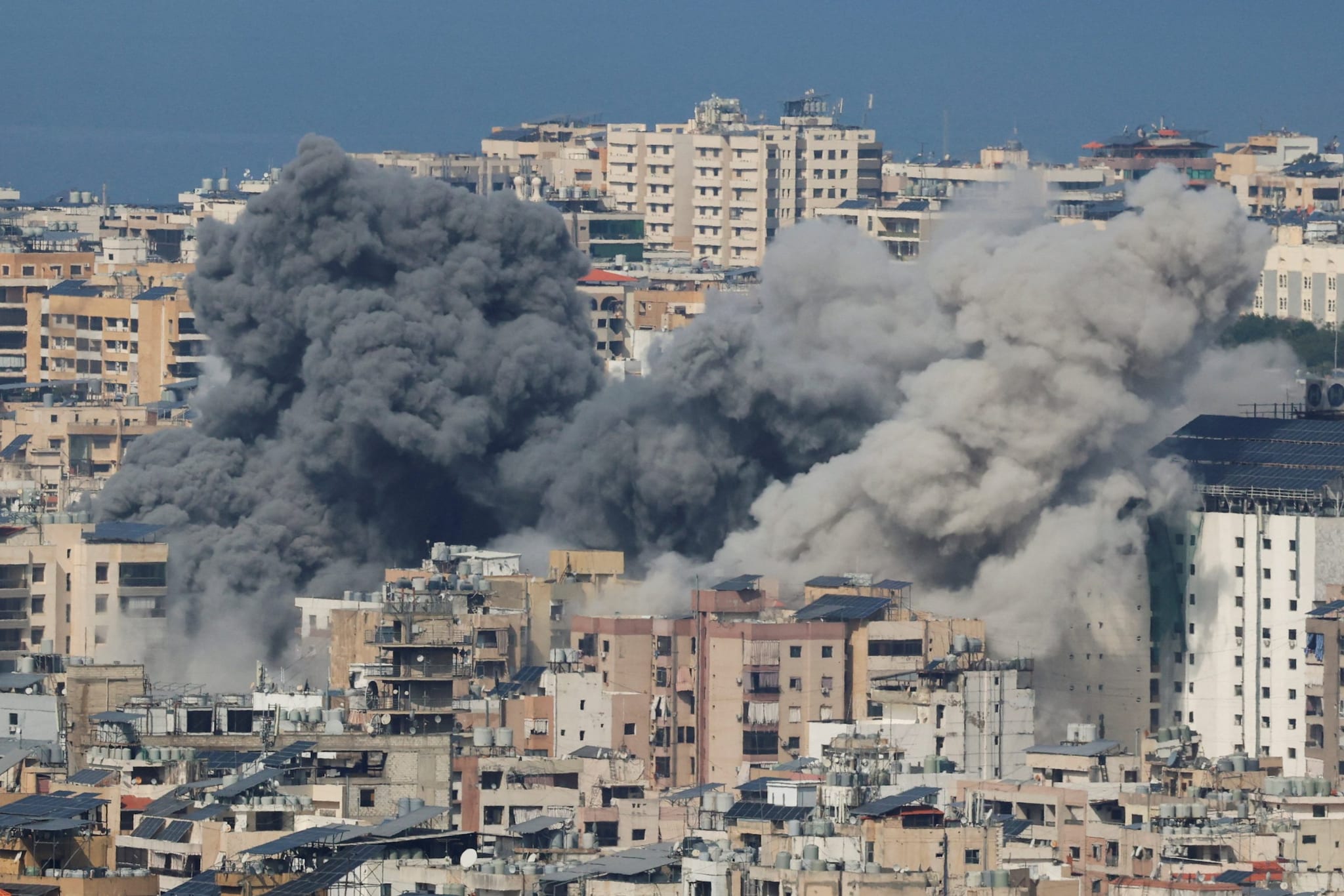
The bombs started falling on February 28, 2026, and the legal arguments started flying about thirty seconds later. While the Pentagon calls it Operation Epic Fury, the rest of the world is asking a much harder question: Is any of this actually legal?
If you're looking for a simple "yes" or "no," you won't find it in Washington or The Hague. Whether these strikes on Iran hold up under scrutiny depends entirely on which law book you're reading. If it's the US Constitution, the President has a massive amount of leeway. If it's the UN Charter, the US and Israel might be on very thin ice.
Let's cut through the noise. People keep talking about "surgical strikes" and "defensive measures," but when you're targeting the leadership of a sovereign nation and its nuclear sites, the legal definitions of war change. Honestly, the situation is a mess, and the gap between what the US says it can do and what international law allows has never been wider.
The Article II Loophole and the Power of the President
Inside the US, the debate isn't about international treaties. It's about who gets to push the button: the President or Congress. Under Article II of the Constitution, the President is the Commander-in-Chief. This gives them the power to use military force to defend the country from an "imminent threat" without waiting for a formal declaration of war from Congress.
The Trump administration is leaning hard on this. They argue that Iran's nuclear progress and its support for regional militias created a "clear and present danger" to American lives. But here’s the catch: the word "imminent" is doing a lot of heavy lifting.
Critics, including Senator Tim Kaine, aren't buying it. They point out that the War Powers Resolution of 1973 was supposed to stop exactly this—presidents starting wars without a vote. A recent attempt to block the funding for these strikes failed in the Senate (47-52), showing just how much "party loyalty" trumps constitutional checks. If you're the President, Article II is basically a "get out of jail free" card as long as you can claim you're protecting national security.
The UN Charter and the Article 51 Problem
Once you step outside US borders, the legal ground gets much shakier. The UN Charter, which the US helped write, is pretty clear: you can't use force against another country unless the Security Council says okay, or you're acting in self-defense under Article 51.
The US and Israel didn't ask the Security Council for permission. Why? Because they knew they wouldn't get it. Instead, they're claiming "anticipatory self-defense." They say they had to hit Iran now to prevent a nuclear-armed Iran from hitting them later.
- The Problem: International law usually requires an "armed attack" to actually happen before you can retaliate.
- The Reality: Stretching "self-defense" to include "preventative regime change" is a massive legal leap.
Legal experts from groups like the International Law Commission argue that attacking a country to change its government is a direct violation of political independence. You can't just bomb a country because you don't like its leaders or their future plans. That's not defense; that's aggression.
What About Iran's Retaliation?
You can't talk about the legality of the US strikes without looking at Iran’s response. Tehran immediately invoked Article 51 themselves, claiming their missile strikes on US bases in Bahrain, Qatar, and the UAE were "legitimate responses to aggression."
But Iran lost the moral high ground quickly. Their missiles didn't just hit military bases; they hit a terminal at Dubai International Airport and a hotel district in Dubai. Under International Humanitarian Law, you have to distinguish between military and civilian targets. When Iran started hitting malls and airports in countries that weren't even part of the initial strike, they moved from "defending themselves" to "committing war crimes."
The "Unwilling or Unable" Doctrine
There's a specific legal theory the US uses to justify hitting Iran-backed groups in places like Iraq or Syria. It’s called the "unwilling or unable" doctrine. Basically, the US argues that if a country (like Iraq) is unwilling or unable to stop a group (like Kataib Hezbollah) from attacking Americans, the US has the right to step in and do it for them.
It sounds logical, but most of the world hates this theory. They see it as a back-door way for powerful countries to ignore the sovereignty of smaller ones. If the US can bomb Iraq because of a militia, what's to stop another country from bombing its neighbors using the same excuse?
Where We Go From Here
The legal fallout of Operation Epic Fury is going to last longer than the actual bombing. We're seeing a total collapse of the rules that have governed war since 1945. When the US and Israel decide that "regime change" is a valid form of self-defense, they’re setting a precedent that every other regional power will eventually use.
Don't expect the UN or the International Criminal Court to step in and fix this. They don't have the teeth to challenge the US or Israel directly. The real check on this power has to come from within. If you care about whether your government is following the law, you need to watch how Congress handles the next War Powers Resolution vote.
Keep an eye on the mounting civilian casualty reports from cities like Minab. As the "collateral damage" rises, the "self-defense" argument becomes much harder to sell to the public, regardless of what the lawyers say.
The next step is simple: watch the Senate. If they can’t or won’t reassert their right to authorize war, the "Article II loophole" becomes the new law of the land. It’s not just about Iran anymore; it’s about whether the US President has the permanent right to start a war whenever they feel like it.