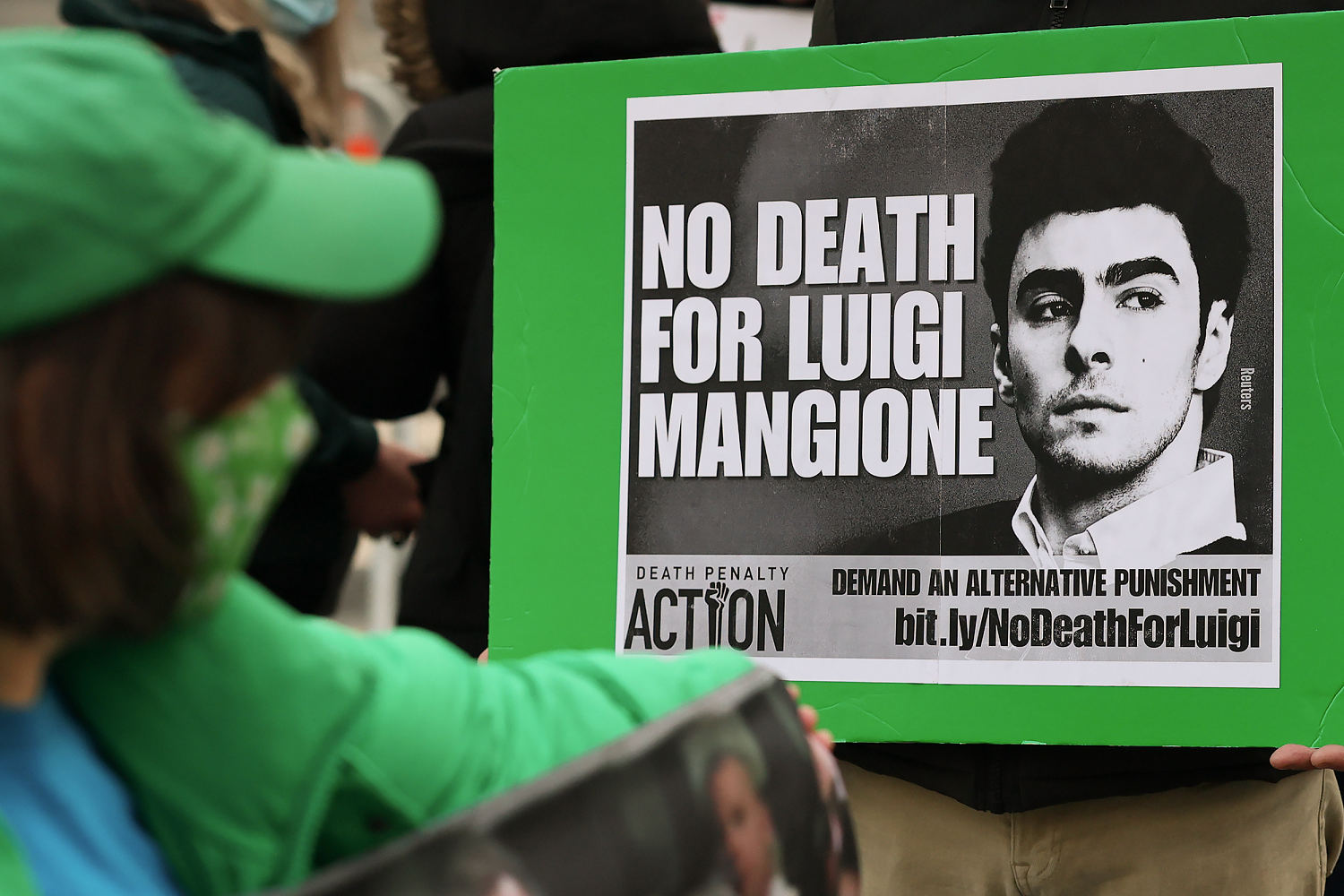
The air inside a federal courtroom has a specific, recycled weight. It tastes of old paper and suppressed anxiety. When Luigi Mangione sat there, the weight wasn't just atmospheric; it was the literal pressure of a government deciding whether or not it had the right to end him.
We often talk about the law as a grand, sweeping pillar of justice. We picture Lady Justice with her scales, blindfolded and stoic. But in the hushed corridors of power, justice is rarely a roar. It is a whisper. It is a memo. It is a tactical decision made in a wood-paneled office miles away from the person whose life is actually on the line.
For Mangione, the man whose name became a household fixture after the shocking events in midtown Manhattan, the silence from the Department of Justice was the loudest sound he would ever hear.
By declining to appeal a ruling that effectively removes the death penalty from his federal trajectory, prosecutors didn't just change a legal strategy. They shifted the very nature of the story we are telling ourselves about crime, punishment, and the value of a human pulse.
The Math of a Life
Imagine a ledger. On one side, you have the state’s desire for ultimate retribution. On the other, you have the grueling, expensive, and often politically fraught reality of pursuing an execution.
The federal government’s decision to let the ruling stand—a ruling that prevents the death penalty in this specific jurisdictional dance—is not necessarily a gesture of mercy. It is a calculation. To appeal would be to step into a quagmire of constitutional debate that could drag on for a decade.
In the eyes of the law, Mangione is a defendant. In the eyes of the public, he is a symbol. Some see a cold-blooded actor; others see a fractured mind or a desperate response to a broken system. But the prosecutors? They see a case. And right now, that case is cleaner, faster, and more certain without the shadow of the gallows hanging over it.
The death penalty is a heavy tool. It requires a level of procedural perfection that our system rarely achieves. By walking away from it, the federal team ensured that the focus stays on the conviction, not the methodology of the punishment. They traded the ultimate penalty for a guaranteed outcome.
The Ghost in the Courtroom
There is always a ghost in these proceedings. It is the person who is no longer there to speak. In this narrative, the loss is absolute. The grief of a family, the suddenness of a life extinguished on a New York sidewalk—these are the stakes that fuel the fire of the "eye for an eye" argument.
But consider the alternative. When the state pursues death, the victim’s family is often tethered to the defendant for twenty years of appeals. They are forced to relive the trauma in every new hearing, every legal brief, and every televised update. By removing death from the table, the legal system occasionally, perhaps accidentally, grants the survivors a faster path to a closed door.
The ruling centered on whether the federal charges met the specific, narrow criteria required to trigger a capital case. It was a battle of definitions. Is this "murder for hire"? Does it fit the "interstate commerce" clause of a killing? These feel like dry, academic questions until you realize they are the difference between a life behind bars and a life ended by an injection.
The Human Behind the Headline
Who is Luigi Mangione when the cameras are off?
He is a young man who once had a trajectory that looked nothing like a prison cell. He had the hallmarks of success, the education, and the privilege that usually acts as armor against the darker impulses of the world. Seeing that armor crack is what makes this story so visceral for the rest of us. It forces us to ask: how far does a person have to fall before they become unrecognizable to themselves?
The federal decision to let him live—in a legal sense—doesn't absolve him. If anything, it forces him to remain in the world he disrupted. There is a specific kind of weight to a life sentence. It is the weight of time. It is the realization that every morning for the next forty, fifty, or sixty years will begin and end within the same few square feet of concrete.
Some would argue that this is a harsher fate than the one he dodged.
The Ripple Effect
When the news broke that the death penalty was off the table, the internet did what it always does. It split.
One side cried out for justice, feeling that the ultimate crime deserved the ultimate price. They saw the decision as a sign of weakness, a softening of the moral fabric. The other side saw a pragmatic victory for a more "civilized" approach to law, one that avoids the moral hazard of the state acting as an executioner.
But beyond the shouting, there is a quieter reality. This case sets a precedent for how federal prosecutors handle high-profile, high-tension crimes in an era where the death penalty is increasingly out of favor. It shows a preference for "the sure thing."
A trial for a man's life is a circus. A trial for a man's liberty is a process. The government chose the process.
The Invisible Stakes
We often forget that the people making these decisions—the prosecutors, the judges, the defense attorneys—are human. They go home to their families. They eat dinner. They watch the same news we do.
For the prosecutor who signed off on the decision not to appeal, the stakes were professional and ethical. To appeal and lose would be a blow to the office's authority. To appeal and win would mean years of grueling work on a case that is already a lightning rod.
By stepping back, they allowed the state of New York to take the lead, or for the federal charges to proceed under the standard of "life without parole." It is a surrender of a specific weapon, but it is also a consolidation of power.
We want our justice to be cinematic. We want the gavel to fall with a thunderous sound that echoes through history. But more often, justice is the sound of a stapler. It is the sound of a file being closed and placed in a drawer.
The Long Shadow
Mangione will now face the reality of a system that no longer wants to kill him, but has no intention of ever letting him go.
The "win" for his defense team is a strange one. In the world of criminal law, saving a client from death is the highest achievement. But for the client, the "victory" is a lifetime in a cage. It is a trade-off that highlights the inherent tragedy of the entire situation. There are no winners here. There is only a reduction of further loss.
The story of Luigi Mangione isn't a story about a murder. It’s a story about the machinery of the state and how it decides who is worth the effort of an execution and who is not. It’s about the narrow margins of legal definitions and how they can shift the course of a human life in a matter of seconds.
As the sun sets over the federal courthouse, the lights stay on in the offices of the men and women who manage these ledgers. They are already onto the next case, the next memo, the next calculation.
But for Mangione, the calculation is finished. The variables have been removed. He is left with the one thing the state decided not to take: his breath. And with that breath comes the crushing, silent realization of everything else he has lost.
The law has spoken, not in a shout, but in a refusal to argue. The ledger is balanced. The door is locked.
The heavy, recycled air of the courtroom is now, for him, the only air there is.
Would you like me to look into the specific legal precedents that led to the judge's original ruling in the Mangione case?