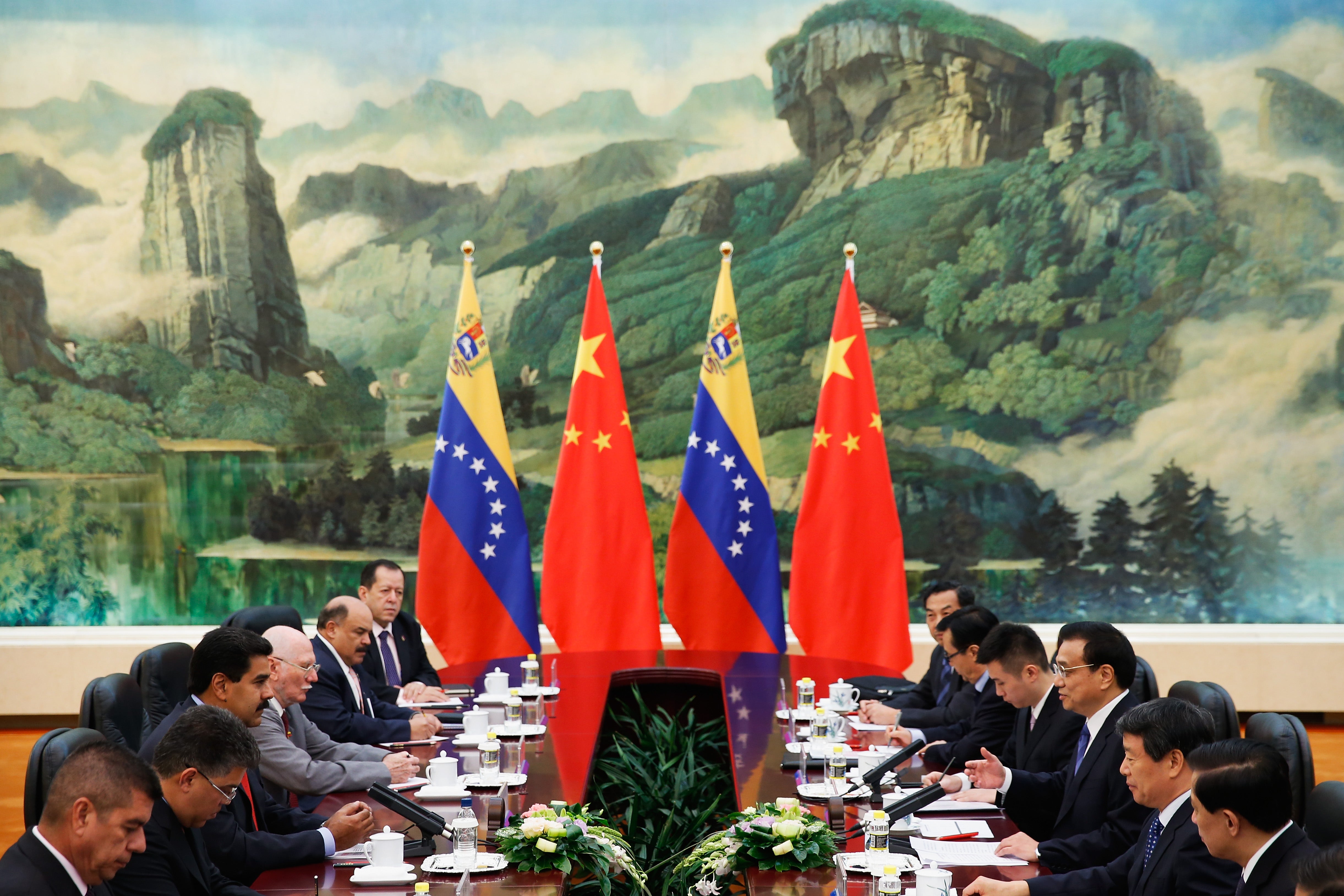
The global trade floor is shaking, and it isn't just because of a change in administration. A quiet but seismic shift in American legal doctrine has stripped the executive branch of its long-held "blank check" to impose tariffs, leaving the White House scrambling to reassure nervous allies. While the President insists that existing trade deals remain ironclad, the reality is far more precarious. Foreign capitals are no longer looking at the Oval Office for stability; they are looking at the federal courts.
For decades, the United States operated under a system where the President could invoke national security or economic emergency powers to slap duties on foreign goods with almost no oversight. That era ended when the Supreme Court reasserted the primacy of the non-delegation doctrine and narrowed the scope of agency and executive discretion. This means every tariff currently in place, and every trade barrier proposed for the future, now sits on a legal fault line. If a trade partner cannot trust that a deal signed today will survive a courtroom challenge tomorrow, the very concept of a "safe" trade agreement becomes an oxymoron.
The Illusion of Executive Permanence
Washington likes to project a facade of continuity, but the legal machinery has changed. The President’s recent assertions that trade partners have nothing to fear ignore the fundamental mechanics of how American law is now being interpreted. We are seeing a historic pivot where the judiciary is reclaiming its right to say what the law is, specifically regarding the delegation of taxing powers.
Historically, Section 232 of the Trade Expansion Act of 1962 allowed for broad interpretations of "national security." If a President decided that foreign steel or imported semiconductors threatened the domestic industrial base, the tariffs followed. Courts generally stayed out of the way. Today, that deference has evaporated.
Trade partners in Brussels, Tokyo, and Mexico City are running the numbers. They see a landscape where a single disgruntled domestic importer can file a lawsuit that freezes a multi-billion-dollar trade strategy for years. The President can promise safety, but he cannot promise that a judge in the D.C. Circuit won't strike down his next executive order as an unconstitutional overreach of power. This isn't just a political hurdle. It is a structural failure of the American trade apparatus.
Why the Supreme Court Ruling Changed Everything
To understand the current panic, one must look at the specific erosion of "Chevron deference" and the rise of the "major questions doctrine." For years, if a statute was ambiguous, the government’s interpretation won. Now, if an agency—like the Department of Commerce or the U.S. Trade Representative—tries to implement a policy with vast economic significance, they must point to a crystal-clear mandate from Congress.
Congress, however, hasn't passed a comprehensive, clear trade mandate in years. They have preferred to let the President take the heat for trade wars while they focus on local politics. This vacuum is where the danger lies.
- The Major Questions Trap: Any new tariff package targeting a major sector (like automobiles or green energy) easily meets the threshold of "vast economic significance."
- Congressional Paralysis: Without a specific new law authorizing a specific set of tariffs, the executive branch is effectively flying blind.
- The Litigation Waterfall: Law firms across the country are already drafting complaints on behalf of retailers and manufacturers who want to claw back billions in paid duties.
The President’s claim that deals are "safe" assumes that he still holds the keys to the kingdom. He doesn't. The keys have been moved to the Supreme Court building, and the Justices have signaled a deep skepticism of "government by decree."
The Quiet Exodus of Foreign Investment
Capital is a coward. It flees at the first sign of unpredictable legal environments. We are already seeing the first ripples of this uncertainty in foreign direct investment (FDI) data. When a South Korean battery manufacturer or a German automaker considers building a plant in the United States, they do so based on a 20-year projection of costs.
If the tariff structure can be upended by a court ruling at any moment, the risk premium for investing in the U.S. spikes. Our allies are not just "unsure," as some have suggested. They are actively hedging. They are diversifying their supply chains away from the American market and looking toward the European Union or the RCEP (Regional Comprehensive Economic Partnership) bloc in Asia, where trade rules—while complex—are at least consistent within their legal frameworks.
Consider the hypothetical case of a French aerospace company. Under the old rules, they might negotiate a specific exemption from aluminum tariffs directly with the White House. They would trade political capital for economic certainty. Under the new rules, that exemption is a target. A domestic competitor can sue, arguing the President had no authority to grant the exemption, and a judge could agree. The "deal" is worth less than the paper it is printed on.
The Strategic Blind Spot in the White House
The administration is operating on an outdated playbook. They believe that by projecting strength and doubling down on "America First" rhetoric, they can force partners to stay at the table. This ignores the fact that trade is a two-way street. When the U.S. becomes an unreliable partner due to its own internal legal civil war, it loses its leverage.
We have moved into an era of Legal Realism in international trade. Our partners are no longer listening to the speeches; they are reading the amicus briefs. They see that the U.S. Trade Representative is being hemmed in by a judiciary that is increasingly hostile to the administrative state.
The Hidden Risks for Domestic Manufacturers
It isn't just foreign entities that should be worried. American manufacturers who rely on imported raw materials are in a state of constant anxiety.
- Cost Spikes: If a tariff is struck down and then abruptly reinstated via a different legal mechanism, supply chains can't keep up.
- Inventory Limbo: Companies don't know whether to price their goods based on the tariff-included cost or a potential refund.
- Capital Freezes: Banks are becoming hesitant to finance large-scale imports when the duty rate is a moving target.
This creates a paradox. The very tariffs designed to protect American industry are creating a level of volatility that makes it impossible for those industries to plan for the future. The President's insistence on "safety" is actually a refusal to acknowledge that the rules of the game have changed.
Reclaiming the Trade Power
There is only one way to fix this, and it doesn't involve more executive orders. Congress must do its job. The Constitution gives the power "to regulate commerce with foreign nations" and "to lay and collect taxes, duties, imposts and excises" to the Legislative branch, not the Executive.
Until Congress passes specific, granular legislation that defines exactly when and how tariffs can be used, every trade deal is a house of cards. The President cannot fix this with a handshake or a tweet. He needs a vote on the House floor.
The reality is that we are witnessing the end of the "Imperial Presidency" in trade policy. It is a messy, painful transition that will likely involve years of litigation and economic friction. If you are waiting for a return to the "normal" trade environment of the early 2000s, stop waiting. That world is gone, buried under a stack of Supreme Court opinions that prioritize constitutional process over economic expediency.
Companies and countries alike must now prepare for a world where the U.S. President is no longer the final word on trade. You must hire more lawyers than lobbyists. You must watch the dockets as closely as the headlines. The "safety" promised by the White House is a political ghost, and those who rely on it will be the first to suffer when the next ruling drops.
Move your focus from the West Wing to the marble halls of the Supreme Court, because that is where the future of your supply chain will be decided.