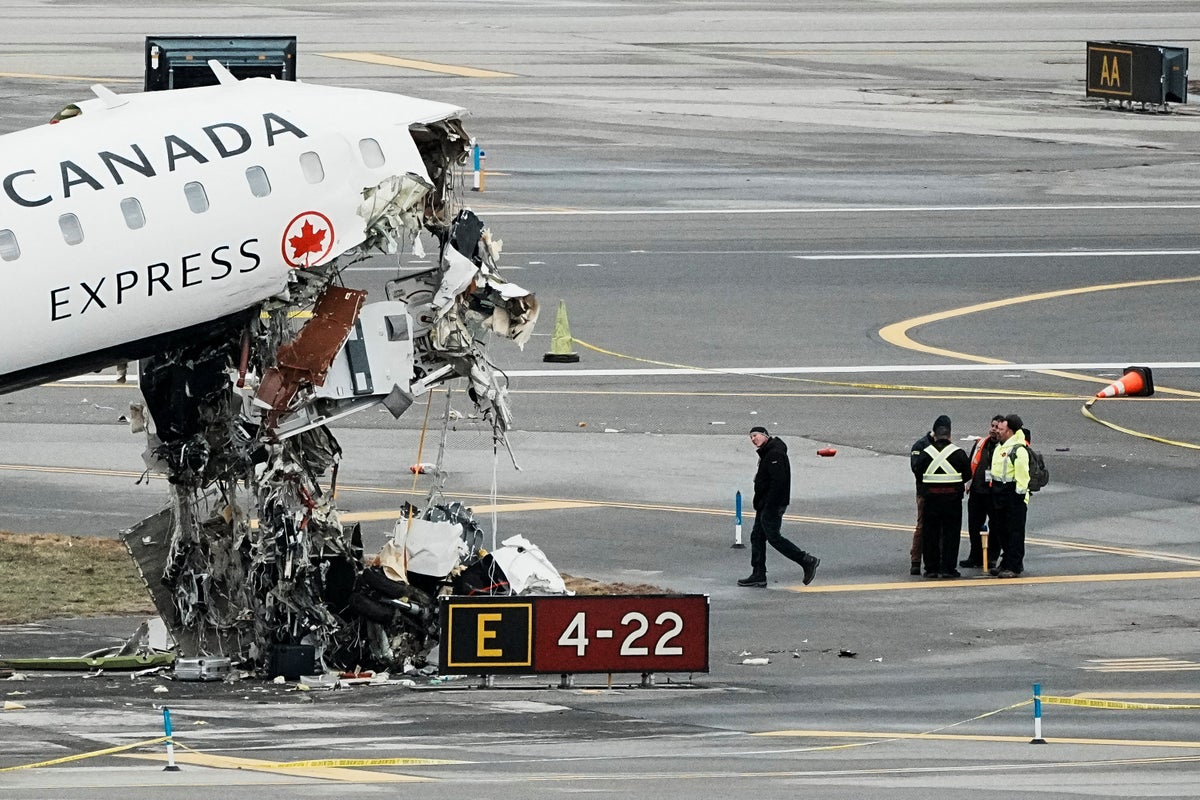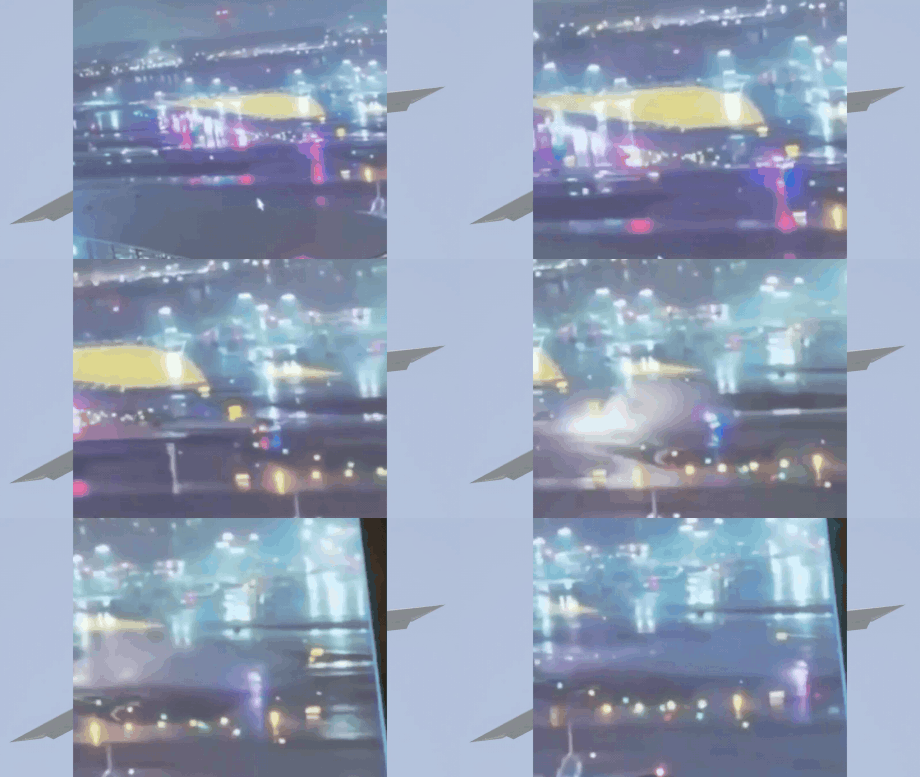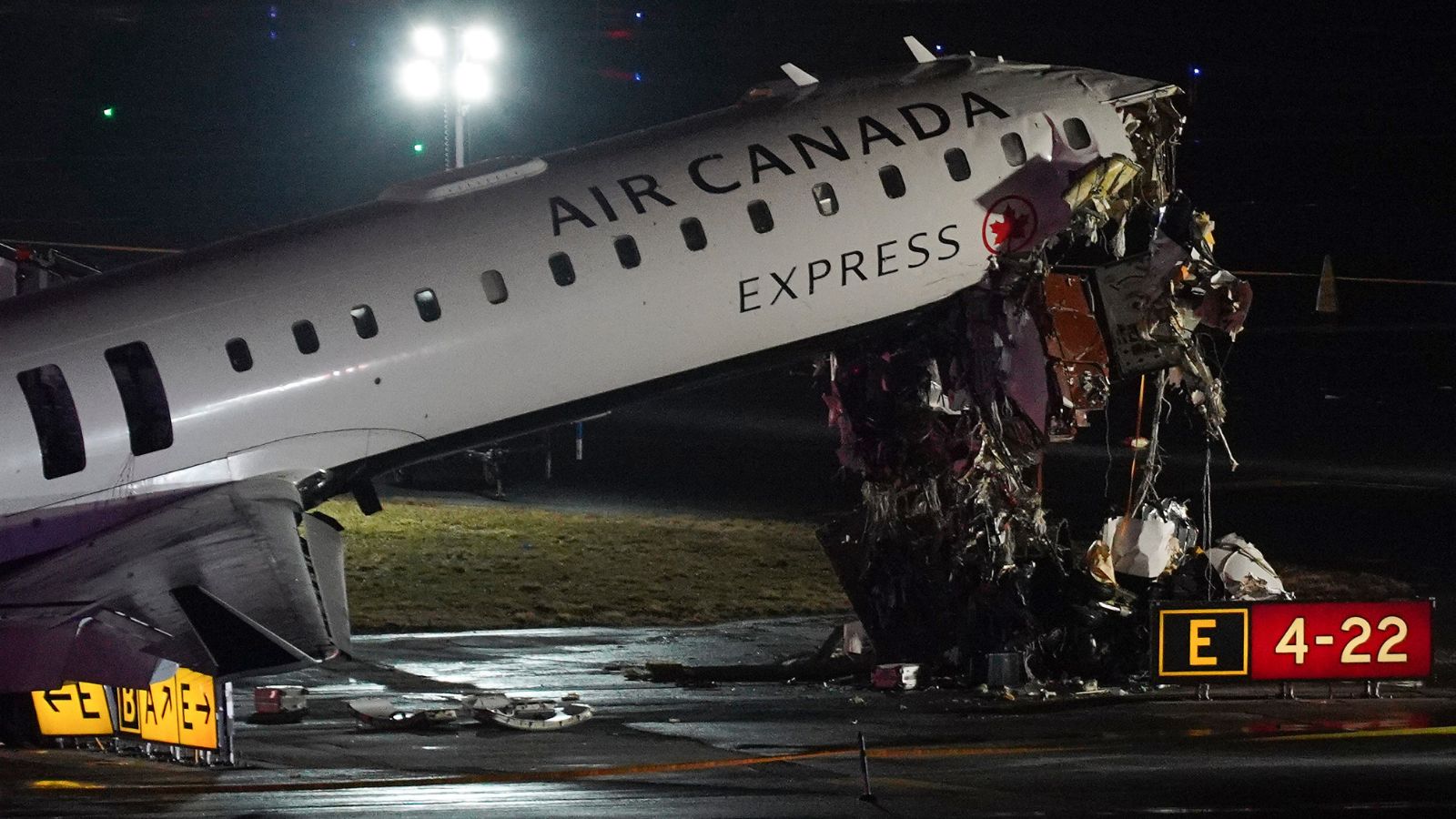
The wreckage of an Air Canada Express flight at LaGuardia Airport is not merely the result of a single pilot’s error or a momentary lapse in a control tower. It is the physical manifestation of a decade of ignored warnings. For years, federal investigators, pilots, and safety advocates have sounded the alarm on the deteriorating coordination at one of the world’s most congested transit hubs. The crash serves as a grim validation for those who argued that the airport’s operational tempo had finally outstripped its safety infrastructure.
The core of the issue lies in a toxic mix of antiquated runway layouts and a chronic breakdown in communication between Air Traffic Control (ATC) and flight crews. At LaGuardia, the margin for error is razor-thin. When miscommunications occur, they don't just result in delays; they lead to metal on the tarmac. To understand why this happened, one must look past the immediate cockpit data and examine the systemic rot within the ground-flow management systems that have been flagged as "high risk" in multiple federal reports dating back years.
The Warning Signs No One Wanted to Hear
The Federal Aviation Administration (FAA) maintains an Extensive database of "near-miss" incidents and runway incursions. A deep dive into these records reveals that LaGuardia has consistently outperformed its peers in terms of close calls. These aren't just statistics. They are narratives of pilots being given conflicting instructions and controllers struggling to manage a volume of traffic that the airport’s physical footprint was never designed to handle.
Specifically, the "taxi-into-position-and-hold" procedures and the complexity of the intersecting runways at LGA have created a environment where a five-second delay in communication can be catastrophic. Reports filed through the Aviation Safety Reporting System (ASRS) show a recurring pattern: pilots expressing confusion over taxiway designations and controllers using non-standard phrasing during peak hours. In many of these filed reports, the tone is one of exasperated desperation. One veteran captain noted that "the congestion at LGA has reached a point where safety is being sacrificed for throughput."
The Physical Constraints of a Landlocked Hub
LaGuardia is essentially a postage stamp surrounded by water. Unlike airports in Denver or Dallas, there is no room for expansion. This lack of space forces a density of operation that is unique. Every square inch of the tarmac is contested.
When you combine this physical density with an aging ATC workforce and equipment that often lags behind the latest technological standards, you get a recipe for disaster. The airport’s redesign focused heavily on the "passenger experience"—the shiny terminals and high-end retail—while the "airside" infrastructure remained fundamentally the same. We built a world-class mall on top of a 1940s-era airfield.
The Intersecting Runway Problem
LaGuardia’s primary runways, 4/22 and 13/31, intersect. This is a design philosophy from a bygone era. Modern safety standards prefer parallel runways because they eliminate the possibility of two aircraft occupying the same physical space at the same time. At LGA, every takeoff and landing is a calculated gamble on timing.
If a landing aircraft experiences a mechanical issue or a "long landing," it remains in the "box" longer than anticipated. If the controller has already cleared another aircraft for takeoff on the intersecting strip, the safety buffer evaporates. This is exactly the kind of high-stakes choreography that requires flawless communication—the very thing that reports suggested was failing.
Human Factors and the Fatigue Wall
We cannot talk about ATC errors without talking about the people behind the radar screens. The New York TRACON (Terminal Radar Approach Control) is notorious for being one of the most stressful work environments in the federal government. Staffing shortages have forced controllers into six-day workweeks and mandatory overtime for years.
Fatigue is a silent killer in aviation. A tired controller is more likely to use clipped, ambiguous language. A tired pilot is more likely to misinterpret a "hold short" instruction as a "line up and wait." When both sides of the radio are operating on fumes, the institutional safeguards designed to prevent a crash become nothing more than suggestions.
The Language of Misunderstanding
Standardized phraseology exists for a reason. It is the universal language of the skies. However, in the high-pressure environment of a New York departure push, "standard" often gives way to "expedient." Investigative files show that local controllers at LaGuardia frequently used informal shorthand to shave seconds off the departure sequence. While this might move more planes, it strips away the clarity that prevents incursions.
In the Air Canada Express incident, the preliminary data suggests a "clearance overlap." This happens when two different instructions are issued or understood in a way that creates a conflict. It is the ultimate failure of the system.
The Cost of Prioritizing Throughput
The airline industry operates on thin margins and tight schedules. At LaGuardia, the pressure to maintain "on-time" stats is immense. The Port Authority and the airlines are locked in a constant battle to squeeze as many flights as possible into a 24-hour window.
This pressure trickles down to the individual controller and the individual pilot. There is a psychological phenomenon known as "plan continuation bias," where humans are inclined to stick to a pre-determined course of action even when new data suggests it is dangerous. In a crowded environment like LGA, the "plan" is always to keep the line moving. Breaking that flow to double-check a suspicious instruction is often met with irritation from the tower or pressure from the company.
Digital Solutions vs. Analog Realities
There has been much talk about "NextGen" GPS-based tracking and automated ground surveillance systems. While these tools are being rolled out, their implementation at LaGuardia has been patchwork at best. Many older regional jets—the workhorses of the Air Canada Express fleet and others like it—often lack the most advanced cockpit displays that would give pilots a real-time "bird’s eye view" of ground traffic.
This creates a technological disparity. You have a tower trying to manage a 21st-century flow using a mix of modern radar and old-fashioned visual spotting, communicating with a fleet of aircraft that ranges from state-of-the-art to thirty-year-old regional hoppers. The synchronization isn't there.
Accountability and the Path Forward
After a crash, the typical response is to blame "human error" and move on. This is a convenient lie. Human error is a symptom, not a cause. The cause is a system that allows human error to result in a catastrophe.
If the FAA and the Port Authority are serious about preventing the next Air Canada Express-level event, they must address the following:
- Mandatory Staffing Ratios: Ending the reliance on six-day workweeks for controllers in the New York corridor.
- Physical Runway Decoupling: Re-evaluating the flight volume to ensure that intersecting runways are never used at peak capacity simultaneously.
- Ground Surveillance Mandates: Requiring all aircraft operating at high-density hubs to be equipped with active cockpit ground-collision warning systems.
- Standardization Audits: Randomly auditing ATC-to-pilot communications to ensure that shorthand and informal "New York style" radio chatter is eliminated.
The Illusion of Safety
We like to believe that aviation safety is an ever-improving upward curve. The reality is more like a plateau. We have reached the limits of what our current infrastructure can handle. The reports that flagged issues at LaGuardia weren't "noise" or "bureaucratic complaining." They were data-driven warnings that the system was redlining.
When a plane goes down, we look at the black boxes. We should be looking at the years of paper trails that preceded them. The Air Canada Express crash was not an act of God, nor was it a freak accident. It was the inevitable result of a system that valued the schedule more than the margin.
The industry must now decide if the cost of doing business at LaGuardia is worth the price of the wreckage. Until the fundamental issues of runway geometry, controller fatigue, and communication clarity are addressed, every flight into the Queens hub remains a calculated risk. The next step is not another study; it is a forced reduction in traffic volume until the infrastructure catches up to the demand.