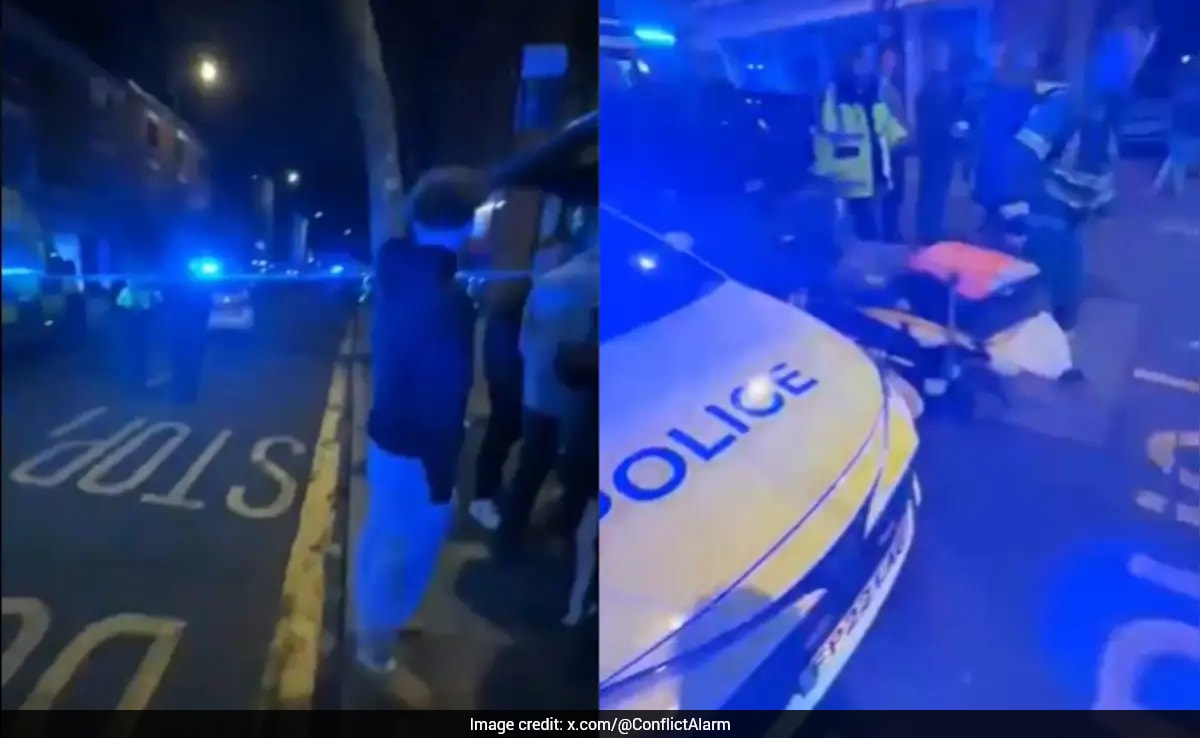
The transformation of a passenger vehicle from a transport utility into a high-mass kinetic weapon represents a fundamental failure in urban spatial design and threat detection. When a vehicle enters a pedestrian-dense zone, the window for intervention is measured in milliseconds, shifting the burden of safety from reactive policing to proactive physical and digital engineering. A driver hitting multiple pedestrians in a UK urban center is not merely a criminal event; it is a data point in the ongoing degradation of the "soft target" security model.
The Physics of Vulnerability: Mass and Velocity Metrics
The lethality of a vehicle ramming incident is governed by the transfer of kinetic energy from the vehicle to the human body. Unlike ballistic or explosive threats, which rely on fragmentation or overpressure, a vehicle utilizes mass ($m$) and velocity ($v$) to overwhelm biological structures. The energy involved follows the standard formula $KE = \frac{1}{2}mv^2$, meaning that doubling the speed of a 2,000kg sedan quadruples the destructive potential.
- The Primary Impact Phase: The initial contact point—usually the bumper or hood—determines the trajectory of the pedestrian. At lower speeds, the victim is often vaulted over the vehicle; at higher speeds, the impact force causes immediate internal structural failure before the victim is even displaced.
- The Secondary Impact Phase: This involves the victim hitting the ground or surrounding urban furniture (bollards, walls, or other vehicles). In dense UK streets, the proximity of stone buildings and metal railings creates a "pinball effect" where the environment itself becomes a secondary weapon.
- The Mechanical Persistence: Unlike a firearm, which requires reloading, a vehicle remains a continuous threat as long as the engine is operational and the driver maintains steering control.
Structural Blind Spots in UK Urban Planning
The UK’s urban architecture, characterized by narrow Victorian-era layouts and high-density high streets, creates natural "kill zones" where egress is restricted. The incident in question highlights three specific failure modes in modern street design.
The Permeability Paradox
Urban planners often prioritize "permeability"—the ease with which people and vehicles move through a space—to drive economic activity. However, high permeability correlates directly with high vulnerability. When a vehicle can transition from a high-speed roadway to a pedestrian sidewalk without meeting a physical grade change or reinforced barrier, the security of that space is theoretical rather than actual.
Bollard Efficacy and the False Sense of Hardening
Standard street furniture, such as waste bins, lamp posts, and decorative planters, offers zero resistance to a vehicle moving at speeds exceeding 30 mph. Most UK high streets rely on "deterrence-based" security rather than "stop-based" security. PAS 68 or IWA 14-1 rated bollards are engineered to stop a 7,500kg truck, yet their installation is often sporadic due to the high cost of subterranean foundation work. This creates a patchwork of safety where one block is protected and the next is an open corridor.
The Psychological and Physiological Driver Profile
An arrest following a mass casualty event initiates a forensic analysis of intent versus incapacity. The driver’s state at the moment of impact defines the legal and strategic response.
- Intentional Malice: The deliberate targeting of high-density crowds. This profile involves pre-incident reconnaissance and the selection of peak pedestrian hours to maximize the casualty count.
- Medical Emergency or Incapacity: Instances where a driver loses consciousness due to diabetic shock, cardiac arrest, or neurological failure. In these cases, the vehicle follows a path dictated by gravity and existing momentum.
- Substance-Induced Impairment: Alcohol or narcotics degrade the driver’s spatial awareness and reaction times, often leading to a "panic acceleration" where the driver attempts to flee an initial minor collision, resulting in a secondary mass casualty event.
Automated Mitigation: The Role of ADAS and AEB
The most significant technological gap in these incidents is the failure or absence of Advanced Driver Assistance Systems (ADAS). Modern vehicles are increasingly equipped with Autonomous Emergency Braking (AEB) and Pedestrian Detection. If these systems are active, the vehicle should theoretically override the driver's input when a collision is imminent.
However, several bottlenecks prevent this from being a universal solution:
- System Overrides: Many high-performance or older vehicles allow for the manual deactivation of safety features.
- Sensor Blindness: Heavy rain, fog, or specific lighting conditions common in the UK can degrade the efficacy of LiDAR and camera-based detection systems.
- Intentional Sabotage: If the incident is premeditated, a driver can intentionally disable the vehicle’s internal safety logic or use a model year that predates mandatory AEB integration.
Economic and Operational Aftermath
The ripple effect of a vehicle ramming incident extends beyond the immediate casualties. The operational cost of cordoning off a major UK thoroughfare involves significant losses in retail revenue, public transport disruption, and the deployment of specialist forensic teams.
The "Post-Incident Chill" describes the sustained reduction in foot traffic as the public recalibrates their perception of safety in that specific urban corridor. For the city, the response is a forced capital expenditure on rapid-deploy barriers, which are often unsightly and further restrict the flow of legitimate commerce, creating a feedback loop of urban decline.
Tactical Response and Forensic Reconstruction
Once the driver is arrested, the investigation shifts to the vehicle's Telematics Control Unit (TCU) and Event Data Recorder (EDR). This "Black Box" provides a second-by-second breakdown of:
- Throttle Position: Was the driver accelerating through the crowd or attempting to brake?
- Steering Angle: Was the vehicle being steered toward the highest density of people?
- Brake Pressure: The absence of brake pressure in the presence of clear obstacles is the primary indicator of intent.
CCTV coverage in the UK is among the densest in the world. The reconstruction phase uses these feeds to create a 3D model of the event, allowing investigators to determine if the driver took a path of least resistance or specifically targeted victims. This data informs future bollard placement and street-side reinforcement strategies.
Strategic Shift Toward Hardened Urbanism
The recurrence of these incidents necessitates a transition from "incident management" to "kinetic-resistant design." This involves a move away from temporary "yellow jacket" policing toward permanent, integrated architectural barriers that do not look like barriers.
Integrating crash-rated benches, reinforced concrete planters, and recessed lighting with deep-foundation steel cores allows a city to maintain aesthetic value while providing a physical guarantee against vehicle intrusion. This is a shift from monitoring behavior to controlling the physics of the environment.
The immediate strategic priority for urban administrators is the identification of "high-velocity approach lanes"—long, straight stretches of road that terminate in or run parallel to pedestrian plazas. These are the highest-risk segments because they allow a vehicle to reach the terminal velocity required to breach standard curbs and lightweight obstacles. Hardening these specific vectors provides the highest return on investment for public safety.
The arrest of the driver is the conclusion of a criminal act but the beginning of a structural audit. Every successful vehicle ramming is a signal that the physical environment is no longer synchronized with the threat profile of the modern era.
Urban security must now adopt a zero-trust architecture regarding vehicle movement. This requires the implementation of automated "geo-fencing" technology where vehicle power is electronically limited in designated high-pedestrian zones, coupled with a mandatory retrofit of crash-rated infrastructure at every high-density intersection. Waiting for human intervention or police response is a losing strategy against the laws of motion.