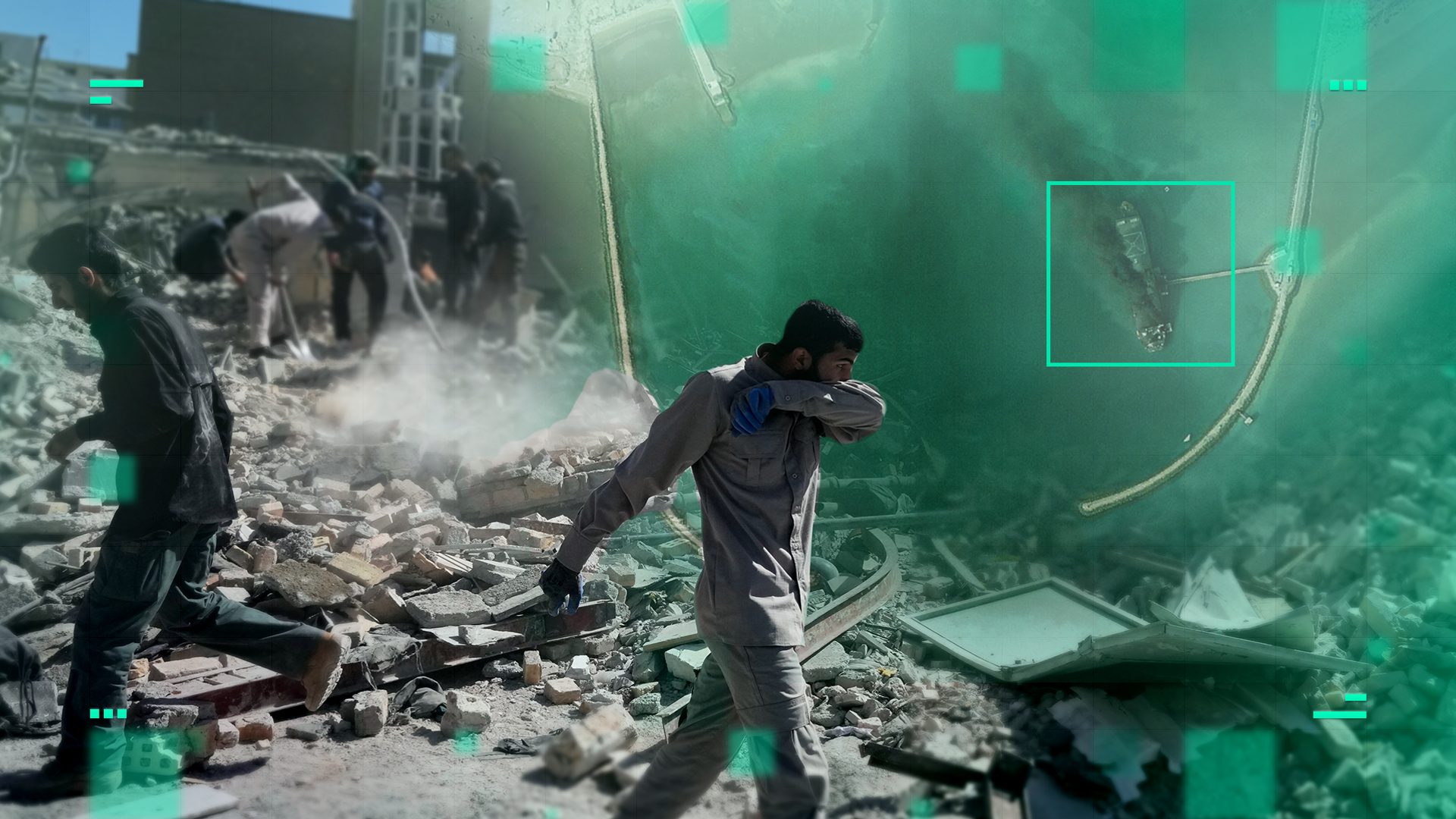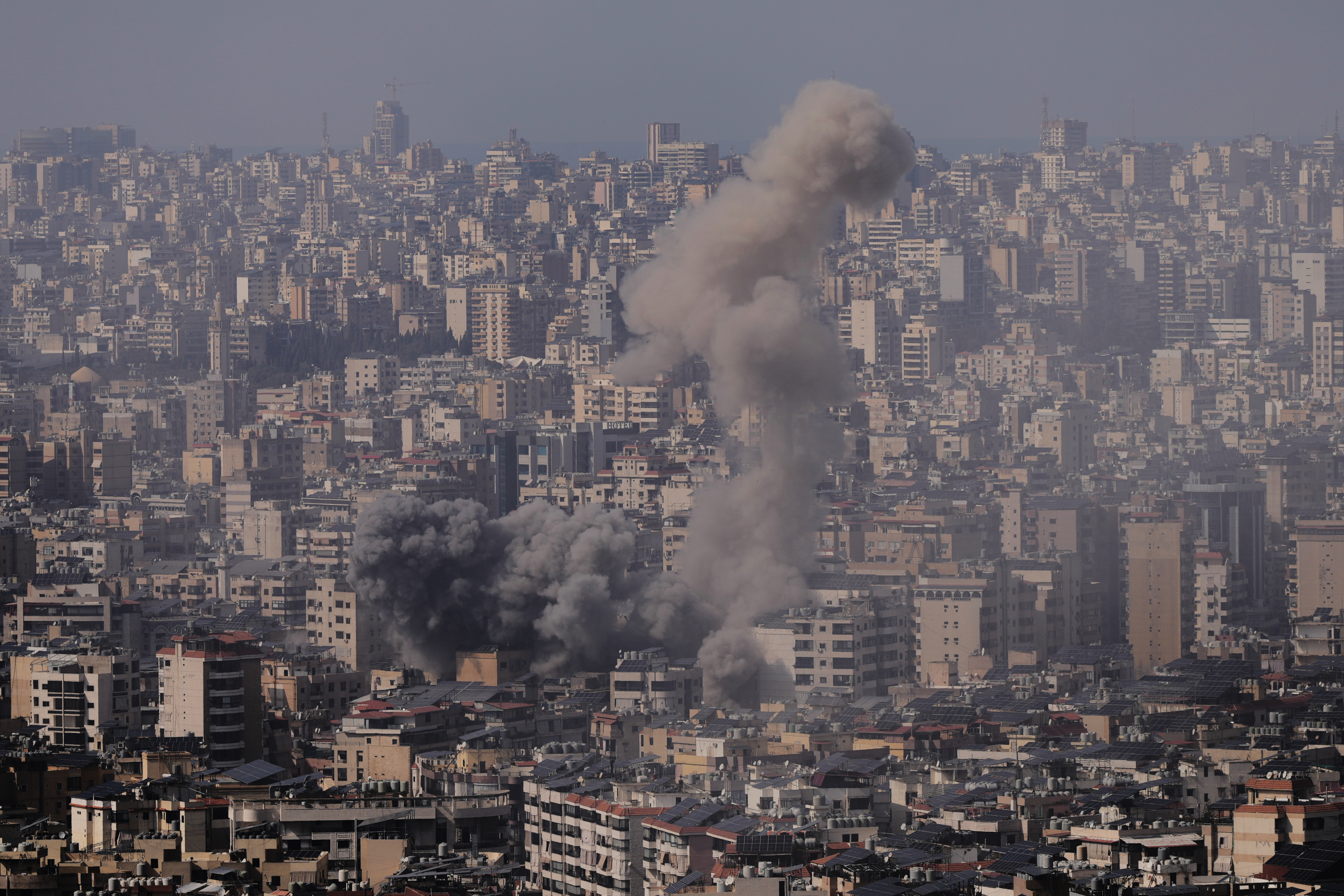
The targeted strike against the United States diplomatic facility in Saudi Arabia represents a catastrophic failure of the integrated air defense layer and a fundamental shift in the risk-reward calculus of state-sponsored kinetic action. This event is not merely an isolated act of aggression; it is a stress test of the "Integrated Deterrence" model that has underpinned Middle Eastern security for the last decade. By striking a sovereign diplomatic mission on the soil of a third-party strategic partner, the aggressor has effectively neutralized the traditional buffer zones that previously prevented direct high-intensity conflict.
The mechanics of this escalation depend on three structural vulnerabilities in the current regional security architecture: the saturation of Point Defense Systems (PDS), the erosion of "Red Line" credibility, and the asymmetrical cost of interceptor-to-missile ratios.
The Physics of Intercept Failure: Saturation and Swarming
Defending a fixed location like an embassy complex requires a tiered defense system capable of identifying, tracking, and neutralizing multiple incoming vectors simultaneously. The strike in Saudi Arabia succeeded not necessarily through superior stealth technology, but through the application of mass.
Military analysts categorize this as the Saturation Threshold. Every automated defense system, such as the C-RAM (Counter Rocket, Artillery, and Mortar) or the Patriot PAC-3, has a finite engagement capacity.
- The Sensor Bottleneck: Radar arrays have a maximum number of individual tracks they can "lock" with high precision. If the incoming volley exceeds this number by a factor of 1.5 or 2, the system must prioritize targets, often allowing smaller, low-signature drones to slip through while focusing on larger ballistic threats.
- The Magazine Depth Problem: An interceptor missile (e.g., a RIM-116) costs significantly more than a one-way "suicide" drone. In a prolonged exchange, the defender exhausts their high-cost munitions against low-cost decoys.
- Flight Profile Manipulation: By utilizing low-altitude terrain masking, the strike bypassed early warning systems that are optimized for high-arc ballistic trajectories.
This specific strike demonstrated a sophisticated "mix" of assets—likely a combination of short-range ballistic missiles (SRBMs) to draw focus and small, low-RCS (Radar Cross Section) unmanned aerial vehicles (UAVs) to deliver the kinetic payload. The result is a tactical breakthrough where the cost to the attacker is measured in thousands of dollars, while the cost to the defender (and the subsequent damage) is measured in millions.
Structural Erosion of Diplomatic Immunity as a Strategic Buffer
For decades, the "Embassy Rule" functioned as a de facto shock absorber in international relations. Violating the sanctity of a diplomatic mission was viewed as an irreversible escalation toward total war. The breach of the U.S. embassy in Riyadh indicates that the "cost of violation" has been recalculated by regional actors.
This shift can be mapped via Game Theory: The Iterated Prisoner’s Dilemma. In previous cycles, both parties benefited from keeping conflict restricted to "grey zone" activities—cyberattacks, maritime harassment, or proxy skirmishes. By moving to a direct strike on a primary diplomatic node, the aggressor is signaling that the benefits of the "cooperate" (or limited conflict) state no longer outweigh the perceived gains of a "defect" state.
The primary driver here is the perceived hesitation of the United States to commit to a ground-based or high-intensity retaliatory cycle. When red lines are drawn but not enforced with equivalent kinetic weight, they become "Green Lights" for further escalation. The aggressor is betting on a "Proportionality Trap"—the idea that the U.S. will respond with limited strikes that do not degrade the attacker’s core capabilities, thereby allowing the attacker to claim a symbolic victory at a manageable cost.
The Triad of Regional Destabilization
The escalation is fueled by three distinct pillars of institutional and military breakdown:
1. The Intelligence-Action Gap
Intelligence communities often track the movement of TEL (Transporter Erector Launcher) units or drone manufacturing components. However, the gap between "detecting a capability" and "predicting an intent" has widened. The decentralization of launch authority to smaller tactical units makes it nearly impossible to intercept the decision-making process before the launch button is pressed.
2. The Saudi-American Security Friction
The strike took place on Saudi soil, which complicates the legal and operational response. If the U.S. retaliates directly from Saudi bases, it risks pulling the Kingdom into a full-scale regional war. If it does not, it signals that the U.S. cannot protect its assets even within the borders of its most heavily armed partners. This creates a "security decoupling" where partners begin to doubt the efficacy of the U.S. security umbrella, potentially leading them to seek independent nuclear capabilities or alternative alliances with eastern powers.
3. Energy Market Weaponization
While the target was diplomatic, the geographic proximity to critical energy infrastructure (Abqaiq and Khurais) ensures that every explosion in the region adds a "risk premium" to global oil prices.
$P_{risk} = P_{market} + \int (v \cdot i) , dt$
Where $P_{risk}$ is the adjusted price, $v$ is the volatility index, and $i$ is the intensity of kinetic events over time. Even if oil flows are not physically disrupted, the psychological impact on the Brent Crude futures market serves as a secondary front in this war.
Assessing the Kinetic Response Options
The United States military command faces a limited menu of responses, each with a specific "Degradation Coefficient."
- Symmetric Retaliation: Striking the launch sites. This is the lowest-risk option but rarely prevents future attacks, as launch sites are often mobile and easily replaced.
- Targeted Leadership Attrition: Utilizing high-precision UAVs to remove decision-makers. While effective in the short term, this often leads to "decapitation paradoxes" where more radical, less predictable actors fill the power vacuum.
- Economic Total War: Implementing secondary sanctions that target the entire supply chain of the missile program. This is a long-term play that does nothing to address the immediate kinetic threat on the ground.
The failure of these traditional levers suggests that a new doctrine is required. The concept of "Left of Launch"—intercepting the threat before it ever leaves the ground via cyber-electronic warfare—is the only viable path forward in an era of cheap, mass-produced precision munitions.
The Logic of the "Forever Proxy" Breakdown
We are witnessing the end of the proxy era. In the past, Iran could use Houthi or Hezbollah elements to maintain plausible deniability. The direct nature of recent escalations suggests that deniability is no longer a priority. The goal is now overt dominance. By removing the mask, the aggressor forces the international community to either accept a new status quo where U.S. bases and embassies are permanent targets or commit to a regional reconfiguration that would require a massive influx of troops and capital—something the current U.S. political climate is unlikely to support.
This creates a Deterrence Deficit. When the cost of an attack is lower than the cost of a defense, and the political will to retaliate is perceived as low, the frequency of attacks will increase exponentially. This is the "Broken Windows Theory" applied to international geopolitics: if the first major strike on an embassy goes without a decisive, regime-altering response, the next ten strikes are virtually guaranteed.
Strategic Forecast: The Shift to Hardened Autonomy
The immediate tactical shift will involve the "hardening" of all diplomatic and military nodes in the Middle East. We will see the deployment of Directed Energy Weapons (DEW), such as high-energy lasers, which offer a "near-zero" cost per shot and can engage swarms more effectively than traditional missiles.
$E = P \cdot t$
(Where Energy equals Power times Time; the efficiency of a laser system depends on its ability to hold a beam on a single point of a moving drone for a sufficient duration to cause structural failure).
However, technology alone cannot solve a breakdown in strategic signaling. The United States must decide if it is willing to maintain its footprint in the Middle East at the cost of regular kinetic exchanges. If the decision is to stay, the response must move beyond "proportionality" and toward "functional overmatch." This means targeting not just the launchers, but the industrial and financial hubs that make the production of those launchers possible.
The geopolitical landscape has shifted from a state of "managed tension" to "active attrition." Organizations operating in this corridor must re-evaluate their supply chain resilience and personnel safety protocols under the assumption that the "Embassy Buffer" is dead. The next 72 hours of retaliatory targeting will determine whether this conflict remains a localized escalation or triggers a systemic regional realignment.
Move all non-essential personnel to "Hardened Tier 1" facilities immediately and shift data redundancy to off-site servers outside the kinetic radius of the Riyadh-Dahran axis. The theater is now live, and the previous rules of engagement are obsolete.