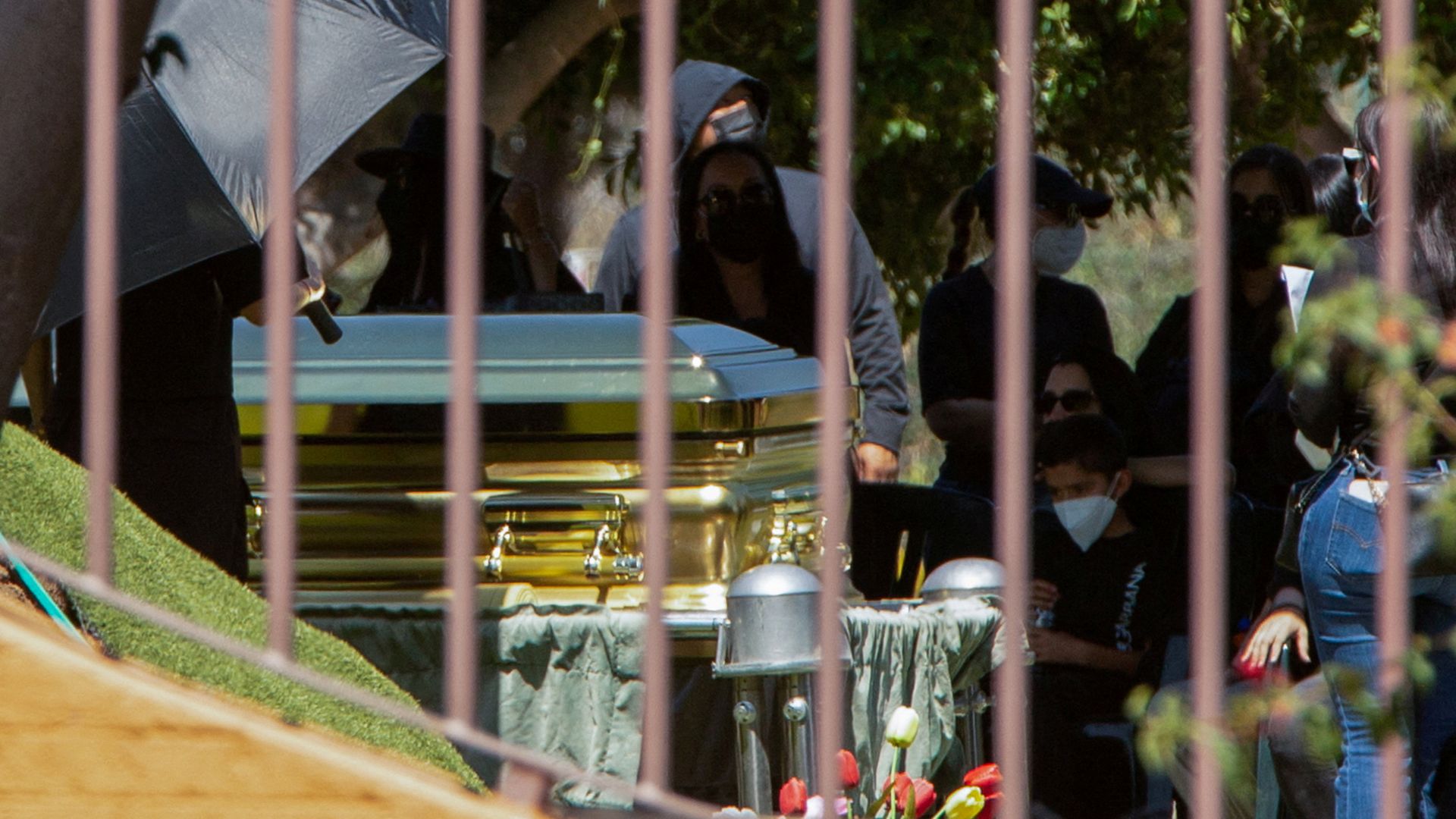
Reports of a golden casket and a clandestine funeral for Nemesio Oseguera Cervantes, the elusive leader of the Jalisco New Generation Cartel (CJNG), have flooded the intelligence circuits of North America. These accounts suggest that "El Mencho," a man who redefined narco-militancy, has finally succumbed to the chronic kidney disease that has dogged him for years. While the image of a billionaire warlord being lowered into the earth in a literal box of gold makes for a gripping headline, the burial signifies something far more dangerous than the end of a single man's life. It marks the formal transition of the CJNG from a charismatic autocracy into a decentralized, corporate paramilitary machine that no longer requires its founder to function.
For over a decade, El Mencho has been the most wanted man in Mexico. Unlike his predecessor, Joaquín "El Chapo" Guzmán, Oseguera Cervantes avoided the limelight, preferring the rugged isolation of the Sierra Madre del Sur to the glitz of Culiacán. His reported death and the subsequent "golden funeral" serve as a theatrical bookend to an era of expansion that saw the CJNG grow from a small wing of the Sinaloa Cartel into a global logistics powerhouse with tentacles in five continents.
If the reports are accurate, the funeral was not just a mourning period but a strategic summit. In the world of high-level organized crime, a vacuum is a death sentence. The display of wealth—the gold, the security cordons, the gathering of lieutenants—is a signal of continuity. It tells rivals and the Mexican state that the treasury is full and the chain of command remains unbroken.
The Logistics of a Ghost Funeral
Organizing a funeral for a high-value target requires a level of coordination that rivals a state visit. You cannot simply roll a golden casket into a local cemetery when there is a $10 million bounty on your head. Intelligence sources suggest the ceremony likely took place in a private stronghold within the "Triángulo del Terror," a region spanning parts of Jalisco, Michoacán, and Colima where the cartel’s word is law.
The casket itself is a symbol. In the narco-culture of the Michoacán and Jalisco regions, gold is the ultimate validator of "pueblo" success—a middle finger to the aristocratic elites of Mexico City. But the logistical reality of burying a man who technically does not exist in the eyes of the law is a nightmare. It requires the complicity of local doctors to sign death certificates under false names, the silence of specialized artisans, and a security perimeter that can detect drones or federal incursions miles before they arrive.
This wasn't just about burying a body. It was about burying the evidence of his physical decline. For years, the CJNG has managed the narrative of Mencho’s health with the precision of a Fortune 500 PR firm. They built a private hospital for him in El Alcíhuatl to treat his renal failure, ensuring he never had to step foot in a public facility where he could be sold out. If he is indeed in that casket, the CJNG has successfully completed the rarest feat in the underworld: allowing a kingpin to die of natural causes while still in power.
The Evolution of the CJNG Architecture
The CJNG is not the Sinaloa Cartel. While the boys from Culiacán focus on bribery and long-term infiltration, Mencho’s organization operates like a private army. They were the first to use Rocket-Propelled Grenades (RPGs) to down a military helicopter. They pioneered the use of "monstruos"—home-armored tanks—and commercial drones rigged with C4 explosives.
This military-first mindset changed the math for the Mexican government. By the time the "golden funeral" rumors surfaced, the CJNG had already diversified its revenue streams. They are no longer just drug traffickers; they are a diversified criminal conglomerate. They control the avocado trade in Michoacán, the illicit mining of iron ore for export to China, and the fuel siphoning networks that bleed the state-owned Pemex dry.
The Menchito Factor and the Succession Crisis
Succession in a cartel is usually a bloodbath. When a leader falls, the lieutenants usually start carving out their own fiefdoms, leading to the "splintering" effect that has plagued Mexican security for twenty years. However, the CJNG has been preparing for this.
The capture and extradition of El Mencho’s son, Rubén Oseguera González (known as "Menchito"), and his daughter, Jessica Johanna Oseguera, were supposed to be the killing blows. The U.S. Department of Justice banked on the idea that by removing the bloodline, the empire would crumble. They were wrong. The CJNG’s structure is horizontal. Mencho’s "Regional Commanders" operate with significant autonomy. They have their own budgets, their own hit squads, and their own supply chains. This means that even if the golden casket contains the founder, the "franchises" remain open for business.
Why the Death of a Drug Lord Changes Nothing
There is a recurring delusion in international drug policy that cutting off the head of the snake kills the body. History proves the opposite. When the head is removed, the body grows three more, and they are usually hungrier and more violent than the original.
We saw it with the death of Pablo Escobar, which paved the way for the more efficient Cali Cartel. We saw it with the arrest of El Chapo, which allowed the CJNG to seize the fentanyl market. If Mencho is dead, we are entering the era of the "Warring States." The lieutenants who attended that funeral—men like "El Jardinero" or "El Sapo"—are not old-school traffickers. They are young, tech-savvy, and have no interest in the "pax mafiosa" that the older generation occasionally honored.
- Market Share: The CJNG currently controls the port of Manzanillo, the most important entry point for chemical precursors from Asia.
- Tactical Superiority: Their use of social media for psychological warfare remains unmatched, often filming executions with high-definition cameras and professional editing.
- Political Infiltration: They don't just bribe mayors; they execute those who don't comply and replace them with their own operatives.
The golden casket is a distraction. While the media focuses on the opulence of a criminal’s end, the reality is that the fentanyl crisis in the United States continues to accelerate. The chemicals are still flowing, the labs are still cooking, and the distribution networks in American cities are untouched by the death of a man in the mountains of Jalisco.
The Fentanyl Pivot and Global Reach
The CJNG’s true legacy isn't the gold in the ground; it’s the synthetic revolution. Mencho realized early on that relying on poppy fields and marijuana harvests was inefficient. Weather, eradication programs, and labor costs made "natural" drugs a liability.
By shifting to fentanyl and methamphetamine, the cartel eliminated the need for land and farmers. All they need is a laboratory and a chemist. This shift has made them more profitable than any criminal organization in history. A single kilogram of fentanyl, purchased as precursor chemicals for a few thousand dollars, can be turned into millions of pills with a street value in the millions.
This economic engine is what paid for that golden casket. It is what pays for the armored convoys that patrol the streets of Guadalajara. And it is what ensures that whoever takes Mencho’s place will be even more powerful. The "Kingpin Strategy" favored by the DEA has reached a point of diminishing returns. You can arrest the man, you can bury the man, but you cannot arrest a supply chain that has become essential to the global underground economy.
The Myth of the Sierra Madre
There is a romanticized version of the Mexican drug war that involves grizzled men in cowboy hats hiding in caves. That world is gone. The modern CJNG operative is more likely to be found in a high-rise in Zapopan, managing a network of shell companies and crypto-wallets.
The golden funeral reports represent the final transition of the narco-leader from a person into a myth. By dying in private, El Mencho achieves a sort of immortality. He becomes a figure of folklore, a "santo" for the dispossessed, and a ghost that the authorities can never truly claim to have defeated. The Mexican government has not officially confirmed the death, likely because they know that doing so without a body or a DNA sample only serves to strengthen the cartel’s legend.
The silence from the Palacio Nacional is telling. To acknowledge the death and the funeral is to acknowledge that a criminal organization held a massive, high-profile event on Mexican soil and the state was either unable or unwilling to stop it.
The Institutionalization of the Cartel
The CJNG has moved beyond the "gang" phase. They are now an institution. They provide social services in areas where the government is absent. During the COVID-19 pandemic, they distributed "Mencho-branded" aid packages to the poor. They build roads and churches. This isn't out of the goodness of their hearts; it’s a sophisticated hearts-and-minds campaign that creates a human shield of civilian loyalty.
When a leader like Mencho dies, this social contract doesn't expire. The local populations don't see a criminal being buried; they see a benefactor. This makes the task of dismantling the CJNG nearly impossible through military means alone. The golden casket isn't just a sign of greed; it’s a symbol of the wealth that the state failed to provide to its own people.
The reality of the Mexican security situation is that the "war" is over, and the cartels have won a seat at the table. They are part of the economic fabric of the country. Remittances, real estate, and agriculture are all intertwined with the billions of dollars laundered by the CJNG and their rivals.
Whether Nemesio Oseguera Cervantes is in that golden box or still breathing in a mountain hideout is almost irrelevant to the trajectory of the conflict. The machine he built is self-sustaining. It has its own culture, its own economy, and its own rules of engagement. The era of the individual drug lord is ending, replaced by the era of the narco-corporation—a shift that the world is woefully unprepared to face.
The golden casket is a tomb for a man, but it is a monument to a system that has outgrown its creator. If you want to understand the future of organized crime, stop looking for the man in the Sierra and start looking at the logistics of the ports, the balance sheets of the shell companies, and the silence of the officials who allowed a funeral of that magnitude to happen in the first place.
Contact your local representative to ask why the "Kingpin Strategy" is still the primary tool of foreign policy when it clearly fails to address the institutionalized nature of modern syndicates.


