The initial thirty days of direct kinetic engagement between Israel, the United States, and Iran have fundamentally altered the doctrine of strategic depth in the Middle East. While traditional analysis focuses on missile counts and casualty figures, the true delta lies in the exhaustion of interceptor inventories and the permanent degradation of "threshold" deterrence. The conflict has transitioned from a shadow war to a high-frequency exchange where the cost-exchange ratio favors the side capable of sustained, low-cost saturation.
The Asymmetric Cost-Exchange Function
The financial and logistical viability of current defense architectures is under extreme stress. The primary mechanism of this stress is the radical disparity between the cost of offensive delivery systems and the cost of kinetic interception.
- The Interceptor Sink: Israeli and American defense layers rely on high-precision effectors such as the Arrow-3 and SM-3. Each unit carries a price tag between $2 million and $9 million. In contrast, Iranian medium-range ballistic missiles (MRBMs) like the Kheibar Shekan or Fattah-1 are estimated to cost between $100,000 and $300,000 to produce at scale.
- Inventory Depletion Rates: Modern manufacturing cannot replace interceptors at the rate they are consumed during a saturation attack. A single 200-missile salvo forces the defender to commit roughly 25% of its immediate theater-ready high-altitude stock to ensure a high probability of kill ($P_k$).
- Economic Attrition: The defender incurs a "defense tax" where every dollar spent on a successful intercept represents a 20:1 or 30:1 loss in capital efficiency compared to the attacker's investment.
Degradation of the Integrated Air Defense System (IADS)
The last month has revealed specific vulnerabilities in the Integrated Air Defense System (IADS) previously considered impenetrable. The failure is not one of technology, but of physics and data processing limits.
Saturation Thresholds
Every radar array has a maximum number of concurrent targets it can track and hand off to interceptors. By utilizing a "mixed-modal" attack—combining slow-moving Shahed-series loitering munitions with high-velocity ballistic missiles—Iran forces the IADS to prioritize targets. This creates a "processor bottleneck" where the system may ignore a high-threat ballistic missile because it is occupied with ten low-cost drones.
The Sensor-to-Shooter Gap
The geographic distance between launch sites in western Iran and targets in central Israel provides a flight time of approximately 12 minutes for ballistic assets. While this allows for early warning, it also provides the attacker with a window to utilize maneuverable reentry vehicles (MaRVs). These vehicles change their trajectory in the terminal phase, forcing the interceptor to recalculate in real-time, often exceeding the G-force tolerances of the interceptor’s control surfaces.
The Three Pillars of Regional Escalation
The conflict is currently sustained by three distinct structural pillars. If any of these pillars shift, the theater moves from "controlled exchange" to "total systemic failure."
- Pillar I: The Proxy Buffer: Historically, Hezbollah and the Houthis acted as the primary kinetic interface. The direct Iranian involvement signifies that the proxy buffer has been bypassed, removing the "plausible deniability" that previously prevented direct strikes on Iranian soil.
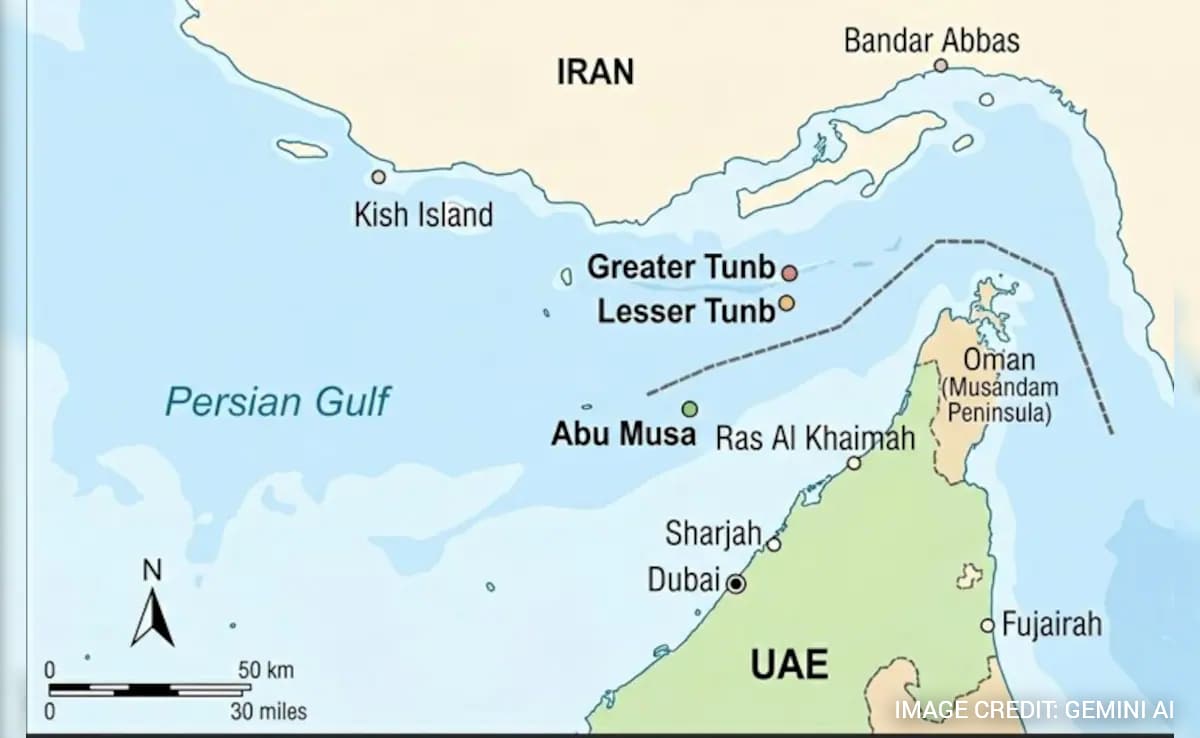
- Pillar II: Energy Market Elasticity: Despite the proximity of the conflict to the Strait of Hormuz, global oil prices have remained relatively stable. This stability is precarious and relies on the assumption that neither side will target "hard energy infrastructure" (refineries and loading terminals). A shift toward economic warfare would immediately introduce a global inflationary shock.
- Pillar III: The Nuclear Threshold: The conventional escalation has reached a point where Iran’s "breakout time" becomes a tactical variable. If conventional assets are neutralized by Israeli or US strikes, the incentive for Iran to finalize a nuclear deterrent increases as a survival mechanism.
Quantifying the Strategic Attrition of the US Navy
The United States Navy (USN) has maintained a continuous presence in the Eastern Mediterranean and the Red Sea, but this deployment is unsustainable under current operational tempos. The "Red Sea Tax" on the USN includes:
- Barrel Wear and Maintenance: High-frequency firing of Vertical Launch Systems (VLS) requires port-side reloading, which cannot be done at sea for most heavy interceptors. This forces capital ships to leave the combat zone for days or weeks.
- Personnel Fatigue: Operational stress for crews in high-threat environments leads to a decline in decision-making speed, a critical factor when dealing with hypersonic or high-supersonic threats.
- Opportunity Cost: The concentration of carrier strike groups in the Middle East creates a power vacuum in the Indo-Pacific, shifting the global maritime balance.
The Failure of Conventional Deterrence
The central hypothesis of Western strategy—that "overwhelming force capability" prevents conflict—has failed in this thirty-day window. Deterrence requires three components: Capability, Communication, and Credibility.
While the US and Israel possess the Capability, the Communication has become muddled by domestic political constraints, and the Credibility of "red lines" has been eroded by repeated, unpunished provocations from both sides. When an actor demonstrates a willingness to absorb significant damage to achieve a symbolic or psychological blow, conventional deterrence logic collapses.
The current state is a "Degenerative Equilibrium." Both sides are losing resources, but neither side is losing enough to force a cessation of hostilities. This is a war of industrial capacity disguised as a war of ideology.
Tactical Shift to Electronic Warfare and Cyber-Kinetic Integration
As physical interceptor stocks dwindle, the conflict is pivoting toward the electromagnetic spectrum.
- GPS Spoofing and Meaconing: Large-scale disruption of GNSS signals has become a standard defensive measure. However, this also affects civilian aviation and precision-guided munitions used by the defender.
- Cyber-Kinetic Loops: We are seeing the first instances of "soft kills" where cyber attacks on command-and-control (C2) nodes occur seconds before a physical missile strike to blind the target. The integration of these two domains represents the highest level of modern warfare sophistication.
The Logistics of a Long-Term Attrition War
A sustained conflict of this nature favors the actor with the shortest supply lines and the most robust domestic manufacturing base for low-tech components.
- Israel's Geographic Constraint: Israel lacks strategic depth. Every successful hit on a civilian or industrial center has a disproportionate impact on national morale and economic output.
- Iran’s Geographic Depth: Iran’s decentralized missile bases are buried deep within mountainous terrain, making them resistant to anything short of a massive, sustained aerial campaign involving bunker-buster munitions.
- The US Logistical Tail: The US must transport every spare part and every gallon of specialized fuel across thousands of miles. The "cost of presence" for the US is an order of magnitude higher than the "cost of resistance" for Iran.
Strategic Requirement for Defense Autonomy
The reliance on US-made interceptors creates a sovereign risk for Israel. If US domestic politics shifts or if the US military needs to pivot its inventory to another theater, Israel’s "Iron Dome" and "David’s Sling" systems become finite assets with an expiration date.
The move toward laser-based defense systems (such as Iron Beam) is a logical necessity. Laser systems offer a "zero-cost" per shot (excluding energy and maintenance) and an unlimited magazine, provided the power supply remains intact. However, laser technology is currently limited by atmospheric conditions (dust, rain, smoke) and cannot yet handle high-altitude ballistic threats.
The conflict has entered a phase where the "winner" is not the side with the most advanced technology, but the side that can most effectively manage its depletion rates while forcing the opponent into a state of permanent mobilization. The strategic goal must shift from "winning the exchange" to "collapsing the exchange's cost-efficiency."
This requires a transition from reactive defense to preemptive neutralisation of launch platforms. If the cost of intercepting a missile remains higher than the cost of destroying it on the ground, the defender will eventually reach a point of bankruptcy—either financial or logistical. The immediate strategic play is the aggressive expansion of deep-penetration intelligence to enable left-of-launch strikes, coupled with an accelerated deployment of directed-energy weapons to break the current ruinous cost-exchange cycle.
Would you like me to analyze the specific impact of laser-based defense systems on the cost-exchange ratio over the next twelve months?