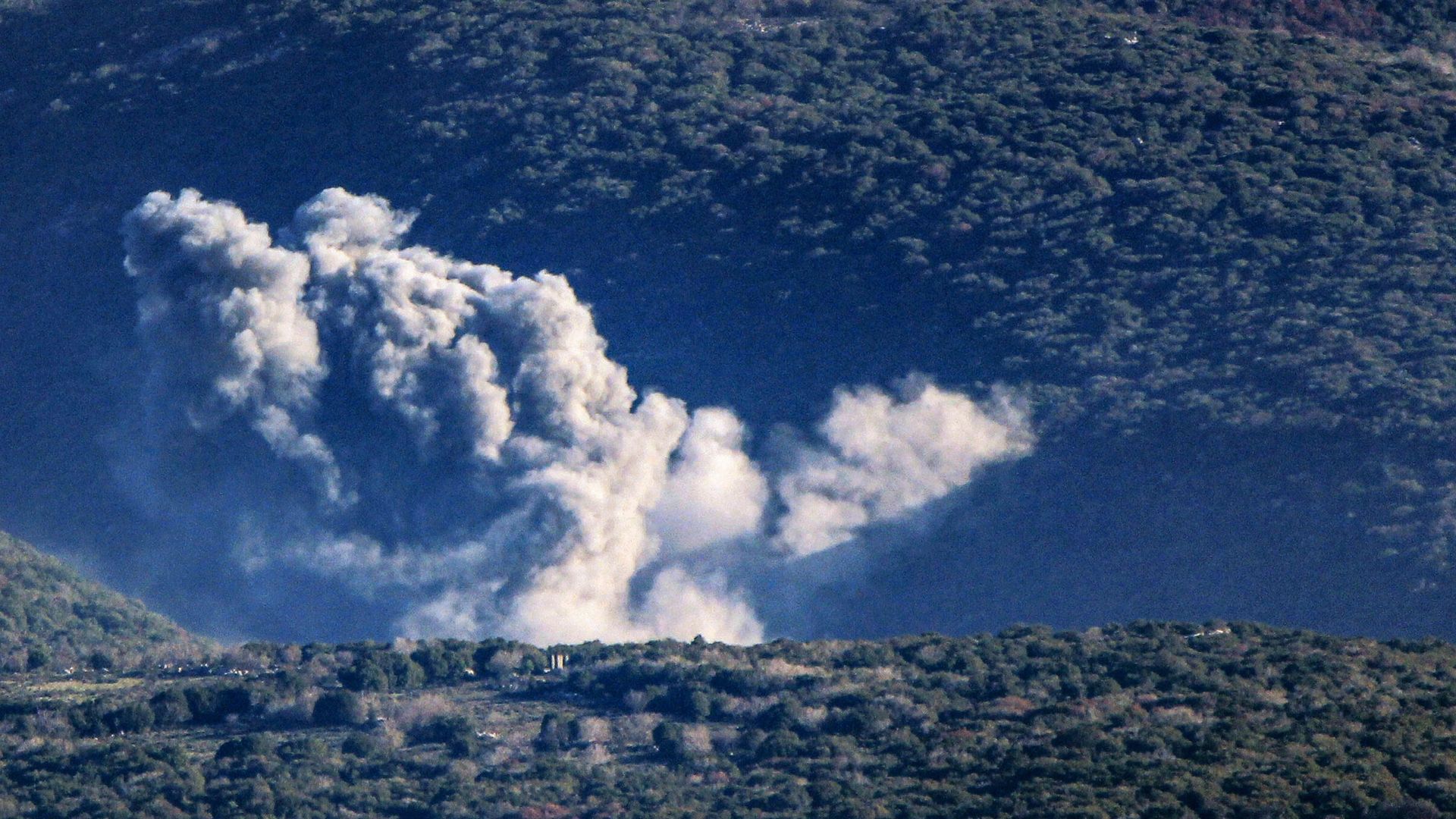
The current escalatory cycle between Israel and the Islamic Republic of Iran has transitioned from a decades-long "shadow war" of proxy attrition into a direct, state-on-state kinetic exchange. This shift represents a fundamental breakdown in traditional deterrence. When analyzing the mechanics of these strikes, the primary objective is not merely to assess immediate physical damage, but to decode the underlying strategic signaling and the technical constraints of the "Triad"—the interplay between Israeli strike capabilities, Iranian integrated air defense systems (IADS), and the United States' role as a logistical and intelligence force multiplier.
The Geometry of Strike Operations
Any direct engagement between Israel and Iran must overcome a "Geography Tax." The distance between the two nations—approximately 1,000 to 1,500 kilometers depending on the flight path—dictates every tactical decision. For Israel to execute a precision strike, it must solve a three-variable equation: fuel, payload, and overflight permission.
- The Fuel-Payload Tradeoff: To reach Iran, Israeli F-35I Adir and F-15I Ra'am aircraft must operate at the extreme edge of their combat radius. This necessitates aerial refueling or the use of external fuel tanks, which increase the aircraft's Radar Cross Section (RCS). If an aircraft carries more fuel to ensure a safe return, it carries fewer munitions, reducing the lethality of the individual sortie.
- The Sovereign Airspace Variable: A direct line to Iran requires traversing Jordanian, Syrian, or Saudi airspace. The diplomatic cost of these overflights is a significant component of the U.S. role. Washington provides the "diplomatic top cover" and electronic warfare (EW) support necessary to mask these movements or suppress regional detection systems.
- The Stand-off vs. Penetration Choice: To mitigate the risk of losing advanced airframes, Israel often employs stand-off munitions like the "Rocks" or "Blue Sparrow" missiles. These are launched from outside Iranian airspace, shifting the burden of penetration from the aircraft to the missile.
Iranian Defensive Architecture and the Attrition Logic
Iran’s defense strategy is built on the principle of "Layered Deniability" and high-volume, low-cost interceptors. Their IADS is an amalgam of domestic systems (Bavar-373, Khordad-15) and Russian-made hardware (S-300 PMU2).
The technical objective of an Iranian defense during an Israeli strike is not necessarily to achieve a 100% intercept rate—which is statistically impossible against a sophisticated adversary—but to force an "Economic Inversion." If Iran can force Israel to use a $2 million stand-off missile to hit a decoy or a hardened site that costs only $50,000 to repair, Iran wins the war of attrition.
The Iranian response mechanism relies on two primary vectors:
- Ballistic Saturation: Utilizing medium-range ballistic missiles (MRBMs) like the Fattah or Kheibar Shekan to overwhelm Israeli missile defense (Arrow 2, Arrow 3, and David’s Sling). The goal is to saturate the "fire control" capacity of the interceptor batteries.
- The Drone Swarm as an EW Tool: One-way attack drones (Shahed series) are slow and easily intercepted, yet they serve as essential "clutter." They force Israeli radars to remain active, allowing Iranian signals intelligence (SIGINT) to map the location of defense batteries for subsequent ballistic targeting.
The United States as the Structural Pivot
The U.S. involvement in these exchanges is often characterized as "de-escalatory," but a technical analysis reveals it is actually "foundational." Without U.S. integration, the Israeli defense and offense cycles would be significantly degraded.
The U.S. operates the AN/TPY-2 X-band radar in the Negev desert. This system provides early warning data that is superior to indigenous Israeli systems because it is integrated into the global U.S. satellite-based Space-Based Infrared System (SBIRS). This creates a "Detection Buffer" of several minutes—critical when dealing with hypersonic or high-velocity ballistic threats.
Furthermore, the U.S. Central Command (CENTCOM) acts as the "Traffic Controller" for the region. By coordinating the "Red Dot" (hostile) and "Blue Dot" (friendly) tracking across multiple Arab nations, the U.S. prevents accidental fratricide and ensures that Israeli retaliatory strikes do not inadvertently trigger a wider regional conflict by hitting third-party assets.
Quantifying the Strategic Impact of Cyber-Kinetic Integration
A missing element in many superficial analyses is the role of Non-Kinetic Effects (NKE). Before the first physical munition is dropped, a "Cyber Preparation of the Environment" occurs.
- Logic Bombs in IADS: Israel has demonstrated the ability to temporarily "blind" Iranian radar sectors without firing a shot. This suggests deep-seated vulnerabilities in the industrial control systems (ICS) that manage Iranian military infrastructure.
- Psychological Operations (PSYOPS) via Connectivity: The targeting of Iranian fuel distribution networks or financial switches during a kinetic strike serves to decouple the Iranian populace from the regime's military narrative. This creates an internal friction point that the Iranian leadership must manage simultaneously with the external threat.
The Missile Defense Bottleneck
The primary limitation of the current Israeli-U.S. posture is the "Interceptor Inventory Gap." Each Arrow 3 interceptor costs roughly $3.5 million. In a mass saturation event where Iran launches 200+ projectiles, the cost-to-kill ratio is heavily skewed in Iran's favor.
$$Cost Ratio = \frac{n(I_c)}{m(M_c)}$$
Where $n$ is the number of interceptors, $I_c$ is the cost per interceptor, $m$ is the number of incoming missiles, and $M_c$ is the manufacturing cost of the hostile missile. If $Cost Ratio > 10$, the defender faces long-term economic exhaustion. This mathematical reality explains why Israel is aggressively pursuing the "Iron Beam" laser defense system; it moves the cost-per-intercept from millions of dollars to the cost of the electricity used (approximately $2 per shot).
Structural Vulnerabilities in the Current Equilibrium
The "tit-for-tat" nature of these exchanges assumes both parties are rational actors looking to maintain a status quo just below the threshold of total war. This is a fragile assumption. Three specific triggers could collapse this framework:
- The Intelligence Failure Paradox: If Israel underestimates the hardening of a nuclear site and fails to destroy it, or if Iran underestimates the lethality of a strike and accidentally causes high civilian casualties in Tel Aviv, the "controlled escalation" model fails.
- The Third-Party Wildcard: Hezbollah’s arsenal of 150,000+ rockets acts as a "dead man's switch." If Israel degrades Iran's internal defenses too severely, Iran may feel compelled to "use or lose" the Hezbollah asset, leading to a full-scale ground invasion of Southern Lebanon.
- The Transition to Nuclear Ambiguity: Every direct strike on Iranian soil provides the Iranian hardliners with a justification for "Final Breakout"—the rapid enrichment of uranium to 90% and the weaponization of a warhead.
Strategic Optimization and Resource Allocation
To maintain dominance in this exchange, the focus must shift from "Point Defense" to "Systemic Neutralization."
The military objective should prioritize the destruction of Iranian "Transporter Erector Launchers" (TELs) rather than the interception of the missiles themselves. Intercepting a missile in the terminal phase is a reactive, expensive strategy. Destroying a TEL on the ground is a proactive, asymmetrical move that removes the threat's source. This requires "Persistence Surveillance"—the ability to keep high-altitude, long-endurance (HALE) drones over Iranian launch zones for extended periods, a feat that is currently difficult due to Iranian surface-to-air missile (SAM) threats.
The second priority is the "Hardening of the Home Front." The U.S. deployment of THAAD (Terminal High Altitude Area Defense) batteries to Israel is a temporary patch. A sustainable strategy requires the rapid industrialization of laser-based interception to break the economic cycle of ballistic attrition.
Investors and geopolitical analysts must monitor the "Breakout Time" and the "Cost-Per-Intercept" metrics above all others. If the cost of defense remains orders of magnitude higher than the cost of offense, the current Israeli-U.S. posture is mathematically unsustainable over a multi-year horizon. The strategic play is not to win a single exchange, but to fundamentally alter the cost-function of Iranian aggression through technological disruption and the selective neutralization of launch infrastructure.
Advance the deployment of the Iron Beam system to the northern and southern frontiers immediately to decouple the defense budget from the Iranian "cheap saturation" strategy. Shift intelligence assets toward real-time TEL tracking to move the engagement from the "Terminal Phase" to the "Boost/Pre-Launch Phase."