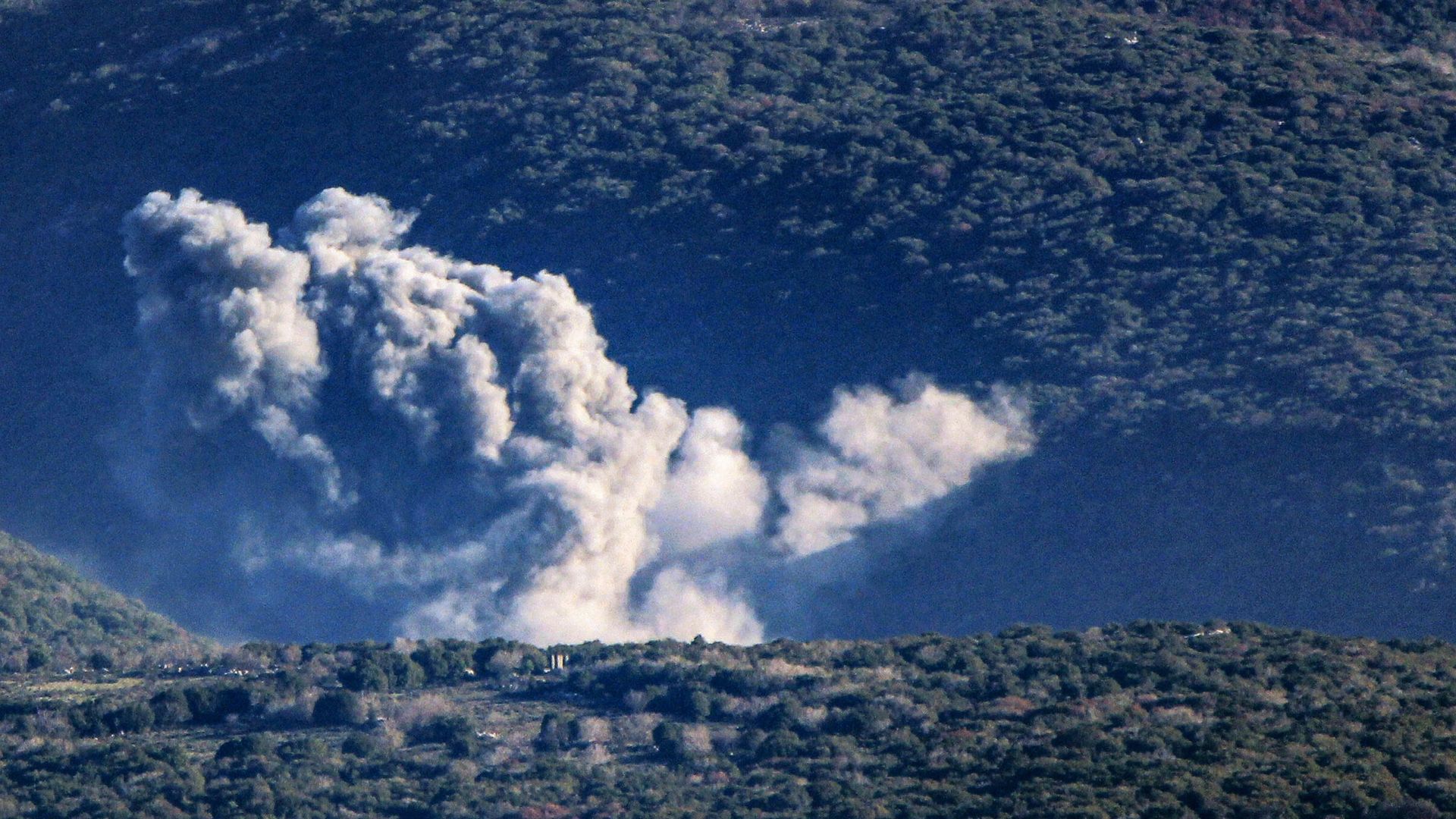
The transition from localized skirmishes to a regional theater of war is rarely the result of a single executive decision, but rather the culmination of eroded deterrence thresholds and the removal of "fail-safe" diplomatic buffers. When the United States shifts its posture from a primary stabilizer to a disruptive agent, it alters the cost-benefit calculus of every regional actor simultaneously. This creates a state of Kinetic Friction, where the historical boundaries of "acceptable" provocation are erased, leaving actors to test new limits through direct military application.
The current destabilization in the Middle East is not a temporary spike in tension; it is a fundamental reconfiguration of the regional security architecture. To understand the trajectory of this conflict, we must deconstruct the mechanics of escalation through three specific lenses: the Deterrence Decay Function, the Proxy Autonomy Variable, and the Infrastructure Attrition Model.
The Deterrence Decay Function
Deterrence relies on the credible threat of disproportionate response. For decades, the presence of U.S. military assets acted as a ceiling on escalation. By signaling a willingness to strike high-value targets without a traditional lead-up—exemplified by the elimination of key military leadership—the Trump administration replaced a policy of managed friction with one of strategic unpredictability.
This shift creates a Deterrence Decay. When an adversary can no longer predict the threshold for a kinetic response, they face two choices: total retreat or maximalist positioning.
- Threshold Ambiguity: Traditional "red lines" are replaced by a fluid spectrum of risk. This forces regional powers like Iran and Israel to operate in a state of constant high-readiness, which increases the probability of accidental engagement or "trigger-finger" responses.
- Sunk Cost Escalation: Once a state has been hit with high-level assassinations or direct strikes, the internal political cost of de-escalation becomes higher than the cost of continued combat. The state must prove it has not been neutralized, leading to a mandatory retaliatory cycle.
The current conflict is the physical manifestation of this decay. The "weeks" of war suggested by observers are not a timeline of intent, but rather the minimum duration required for the involved parties to re-establish a new equilibrium of fear.
The Proxy Autonomy Variable
A critical error in standard political analysis is the assumption that non-state actors (proxies) are perfectly synchronized with their state sponsors. In a high-kinetic environment, the "Command and Control" (C2) lag increases. Groups such as Hezbollah, the Houthis, and various PMFs (Popular Mobilization Forces) operate with a degree of local autonomy that becomes dangerous when the central state sponsor is under direct pressure.
Decentralized Escalation Cycles
When the central authority—in this case, Tehran—is forced to focus on its own territorial defense and survival, the "leash" on proxy groups slackens. This creates a fragmented front. A local commander on the Lebanon-Israel border might initiate a strike based on local tactical advantages, inadvertently dragging their state sponsor into a total war they were not yet prepared to fight.
The risk here is a Horizontal Escalation Loop. Unlike vertical escalation, where two actors increase the intensity of their hits, horizontal escalation involves the rapid spread of conflict to new geographies. This is governed by the availability of low-cost, high-impact technology:
- Loitering Munitions (Suicide Drones): These have lowered the "entry fee" for regional disruption. A group with a $20,000 drone can now force a state to expend a $2 million interceptor missile.
- Asymmetric Maritime Denial: The use of anti-ship missiles in narrow straits (like the Bab al-Mandab) turns a regional land war into a global economic crisis by inflating insurance premiums and rerouting shipping lanes.
The Infrastructure Attrition Model
War is a process of converting economic energy into kinetic destruction. The longevity of a "massive war" in the Middle East is dictated by the Infrastructure Attrition Model. Modern warfare in this region focuses on "Critical Node Targeting"—striking power grids, desalination plants, and oil refineries rather than just military formations.
The Fragility of Desalination and Power
In the Gulf and the Levant, survival is tied to complex, centralized infrastructure.
- Water Scarcity as a Weapon: Most major cities in the region rely on desalination. These plants are stationary, high-signature targets. Disruption of a single plant can displace millions within 72 hours, creating a refugee crisis that serves as a force multiplier for chaos.
- Energy Interdependence: Even oil-rich nations rely on a stable power grid to extract and refine that oil. If the energy infrastructure is degraded, the ability to fund the war effort vanishes.
This creates a paradox: the war can only last "weeks" in its high-intensity phase because the physical requirements for modern life will collapse. Once the power and water are gone, the conflict shifts from a state-on-state conventional war to a decade-long insurgency characterized by failed-state dynamics.
The Miscalculation of the "Quick Victory"
Strategy often fails when it ignores the Elasticity of Ideological Resistance. Hardline policies intended to break the "will" of an adversary often have the opposite effect in the Middle East. High-pressure campaigns provide the necessary domestic justification for authoritarian regimes to suppress internal dissent and pivot the national narrative toward "existential survival."
The removal of the JCPOA (Joint Comprehensive Plan of Action) and the subsequent "Maximum Pressure" campaign succeeded in de-capitalizing the Iranian economy, but it failed to account for the Autarkic Pivot. When a nation is completely isolated from the global financial system, the threat of further sanctions loses its teeth. The actor has nothing left to lose, making them more likely to engage in high-risk military gambles to force a change in the status quo.
The Logistics of a Multi-Front Engagement
A regional war involves the simultaneous management of at least four major fronts:
- The Northern Front (Lebanon/Syria): High-density missile exchanges and subterranean warfare.
- The Maritime Front (Red Sea/Persian Gulf): Denial of transit and energy export disruption.
- The Cyber Front: Attacks on financial systems and civilian utility controls.
- The Internal Front: Civil unrest and proxy-led sabotage within neighboring "neutral" states.
The United States, while possessing superior firepower, faces a Deployment Bottleneck. Moving the necessary carrier strike groups and ground assets into position takes weeks. During this window, regional actors have a "use it or lose it" incentive to deploy their most potent assets before American reinforcements arrive. This window is the most dangerous period for rapid, uncontrolled escalation.
Strategic Calculation: The Zero-Sum Trap
The current trajectory indicates a shift toward a zero-sum security environment. In previous decades, the goal was "managed instability." The current objective for several regional players has shifted to "Permanent Neutralization" of their rivals.
When "Permanent Neutralization" becomes the goal, the war does not end with a treaty. It ends when one side's infrastructure is so thoroughly degraded that they can no longer function as a coherent state. This is the "massive war" that observers fear—not a war of conquest, but a war of systemic erasure.
The kinetic phase of this conflict is currently governed by the availability of precision-guided munitions (PGMs). Regional stockpiles are deep, but not bottomless. We are witnessing a Rate-of-Fire Race. Whichever side can saturate the other’s defense systems (like the Iron Dome or Aegis) first gains a temporary window of absolute air superiority. This window is when the most "irreversible" damage to national infrastructure occurs.
Tactical Requirements for Stability
To move away from the brink, the security architecture requires a re-introduction of Buffer Zones and Backchannels. The current crisis was accelerated by the collapse of indirect communication lines. Without a way to "climb down" without losing face, leaders are forced to continue the ascent.
The logic of "maximum pressure" only works if there is a "maximum relief" option clearly defined on the other side. Without the relief option, you aren't negotiating; you are simply waiting for the inevitable explosion.
The immediate tactical priority for any stabilizing force is the separation of the maritime conflict from the terrestrial conflict. If the global energy supply remains tied to the local land war, the economic pressure to end the war through overwhelming force becomes irresistible, leading to the very "massive war" the international community seeks to avoid.
The structural reality is that the Middle East has moved beyond the point where simple diplomatic "engagement" can reset the clock. The new equilibrium will be defined by who survives the current attrition cycle with their critical infrastructure intact. The next 21 to 45 days will determine if the region settles into a "Cold War 2.0" or collapses into a fragmented series of high-intensity zones with no central governing authority.
To mitigate total systemic failure, stakeholders must prioritize the hardening of civilian life-support systems—water and power—above purely military defensive postures. Decoupling civilian survival from military outcomes is the only way to prevent a humanitarian catastrophe that would render any military victory moot. Would you like me to analyze the specific economic impact on global energy futures based on the closure of the Strait of Hormuz?