The recent cycle of kinetic exchanges between United States forces and Iranian-aligned proxies is not a chaotic sequence of events, but a highly calibrated signaling mechanism designed to manage risk while recalibrating regional deterrence. Traditional media often characterizes these events through the lens of "impending war," yet a structural analysis of the targeting logic and the timing of responses suggests a mutual adherence to a defined escalation ladder. To understand the current security environment, one must move beyond the headlines and quantify the tactical variables—geographic proximity, payload density, and the latency of response—that govern the modern proxy-state conflict.
The Triad of Proxy Attrition
The conflict operates within three distinct operational layers. Each layer possesses its own cost function and threshold for escalation.
- The Gray Zone Layer: This involves non-attributable cyber operations, electromagnetic interference, and low-yield harassment of maritime logistics. The goal is friction without a formal casus belli.
- The Kinetic Proxy Layer: This is characterized by the use of Unmanned Aerial Systems (UAS) and short-range ballistic missiles (SRBMs) by non-state actors like the Islamic Resistance in Iraq or the Houthis.
- The Direct Sovereign Layer: This is the rarest and most volatile tier, involving direct strikes from the soil of one sovereign nation onto the assets of another.
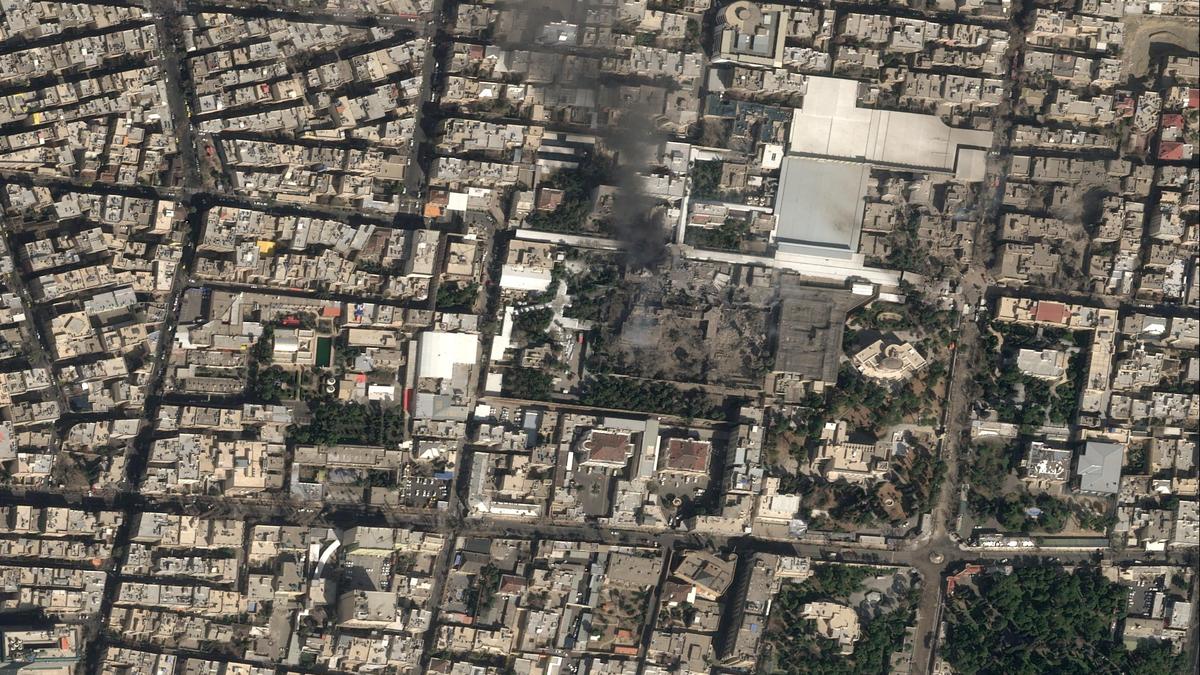
The transition from the Kinetic Proxy Layer to the Direct Sovereign Layer represents a critical failure of deterrence. When the U.S. conducts strikes in Baghdad or eastern Syria, it is not merely destroying hardware; it is attempting to reset the "Proxy Tax"—the price Iran must pay in terms of regional influence and military assets for the actions of its affiliates.
The Calculus of Proportionality and Target Selection
The U.S. response strategy typically follows a pattern of Iterative Calibration. This involves selecting targets that represent a high value to the IRGC (Islamic Revolutionary Guard Corps) but offer low risk of immediate civilian "collateral" that could trigger a populist uprising.
Target Classification Logic
- Command and Control (C2) Nodes: Targeted to degrade the decision-making loop between Tehran and local militias.
- Logistical Arteries: Striking weapons caches and transfer points along the "land bridge" from Iran through Iraq to Lebanon.
- Human Capital: High-value individual targets (HVT) are selected to create a leadership vacuum, though this often results in a short-term "Martyrdom Effect" where recruitment spikes before operational effectiveness declines.
The efficiency of these strikes is measured not by the body count, but by the Regeneration Time—how long it takes for the proxy to restore the specific capability lost. If a drone assembly facility is destroyed, the regeneration time is months. If a launch site is struck, the regeneration time is hours. Current U.S. strategy focuses on high-regeneration-time targets to ensure a long-term degradation of proxy power.
Technical Variables in the Missile-Drone Interplay
The technological disparity between U.S. defensive systems and Iranian-designed UAS is the primary driver of the current casualty rates. The "One-Way Attack" (OWA) drone has fundamentally changed the cost-exchange ratio of regional defense.
- The Interception Paradox: A single Iranian Shahed-series drone may cost between $20,000 and $50,000. To intercept it, the U.S. often utilizes an SM-2 or an AIM-9X missile, costing between $400,000 and $2 million. This creates a sustainable economic attrition model for the attacker.
- Saturation Thresholds: Air defense systems like the Patriot (MIM-104) or C-RAM have finite "channels of fire." By launching a swarm of low-cost drones followed by a single high-velocity ballistic missile, proxies attempt to saturate the radar processing capacity, allowing the lethal payload to penetrate.
The effectiveness of the U.S. strikes in Iraq and Syria is limited by the Mobile Launcher Problem. Unlike fixed silos, the launch platforms for these drones are often modified civilian trucks. By the time a strike is authorized through the legal and military chain of command, the "Origin of Launch" (OoL) is usually vacant. This necessitates a shift toward "Pre-emptive Degradation"—hitting the warehouses where the components are stored rather than the trucks that fire them.
The Intelligence-Action Gap
Strategic friction is often the result of an "Intelligence-Action Gap." This is the time elapsed between the acquisition of a target and the execution of the strike. In a digital theater, this gap must be near-zero.
- SIGINT (Signals Intelligence): Intercepting the digital handshakes between a drone controller and the satellite.
- GEOINT (Geospatial Intelligence): Using synthetic aperture radar (SAR) to see through cloud cover and identify movements in the desert.
- HUMAN (Human Intelligence): Local assets providing ground-truth verification of target occupancy.
When the U.S. delays a response for "political signaling," the military value of the strike diminishes. A delayed response allows the adversary to move high-value assets to "safe houses" or embed them within civilian infrastructure, effectively using human shields to negate U.S. precision advantages.
Economic and Energy Choke Points
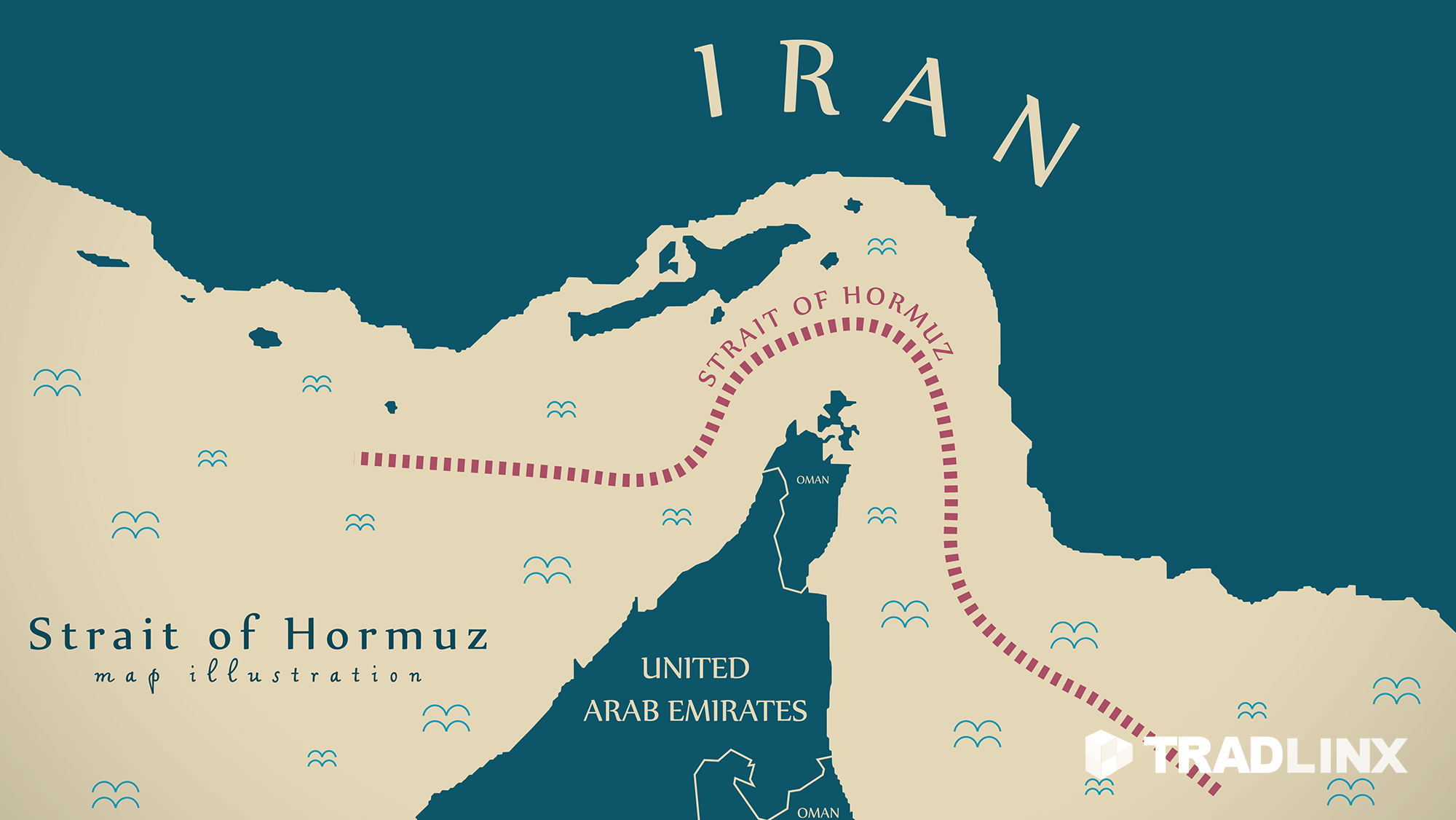
The geopolitical dimension of this month-long exchange centers on the Bab al-Mandab Strait and the Strait of Hormuz. Iran’s strategy utilizes its proxies to create an "Insecurity Premium" on global oil prices.
| Metric | Impact of Kinetic Exchange |
|---|---|
| Insurance Premiums | Maritime hull insurance for Red Sea transit increased by 200-500%. |
| Freight Rates | Diversion around the Cape of Good Hope adds 10-14 days and ~$1M in fuel costs per voyage. |
| Energy Volatility | Every major strike adds a "fear surcharge" of $2-$5 per barrel of Brent Crude. |
The U.S. must balance the need for military retaliation with the risk of triggering a global inflationary spike. This "Economic Tethering" is Iran’s most potent weapon. It ensures that any U.S. response remains "proportional" because a total war would lead to a global economic depression—a price no Western administration is willing to pay.
The Failure of "Integrated Deterrence"
The current escalation proves that the doctrine of "Integrated Deterrence"—the idea that economic sanctions and diplomatic isolation would prevent kinetic action—has hit a ceiling. The Iranian "Forward Defense" doctrine operates on a different logic. It views the presence of U.S. bases in Iraq and Syria as an inherent provocation. Therefore, strikes are not seen by Tehran as "escalation," but as "counter-encirclement."
The lack of a direct de-confliction channel (a "Red Phone") increases the risk of a Type II Error: a strike that was meant to be symbolic accidentally kills a high-ranking official or hits a sensitive site, triggering a full-scale retaliatory cycle that neither side initially intended.
Structural Requirements for Regional Stabilization
To move beyond the current cycle of "Tit-for-Tat" kinetic exchanges, the operational framework must shift toward Asymmetric Disruption.
The U.S. must prioritize the neutralization of the "Middlemen"—the financial and logistical networks that exist outside the immediate battlefield. This includes the seizure of "Shadow Fleet" tankers and the aggressive disruption of dual-use technology supply chains that allow proxy groups to manufacture precision-guided munitions.
Military planners must also acknowledge the Diminishing Returns of Airpower. Air strikes alone have never successfully ended a proxy insurgency. Without a corresponding political strategy that addresses the governance vacuum in eastern Syria and western Iraq, the "month of war" will simply become a "year of attrition."
The strategic objective should be the creation of a Hardened Defense Architecture. This involves the proliferation of Directed Energy Weapons (lasers) to solve the "Interception Paradox" by lowering the cost-per-kill of incoming drones to nearly zero. Once the economic incentive for proxy drone strikes is removed, the escalation ladder loses its bottom rungs, forcing the adversary to either escalate to a direct (and suicidal) conflict or retreat to the diplomatic table.
The immediate tactical play is the deployment of high-altitude, long-endurance (HALE) reconnaissance platforms to establish persistent custody over launch corridors. By maintaining a continuous "Kill Web" rather than a series of disconnected "Kill Chains," the U.S. can transition from a reactive posture to one of pre-emptive denial. This requires a shift in resource allocation from traditional carrier strike groups to distributed, autonomous sensor-effector networks capable of operating under the threshold of full-scale war while maintaining a lethal deterrent.