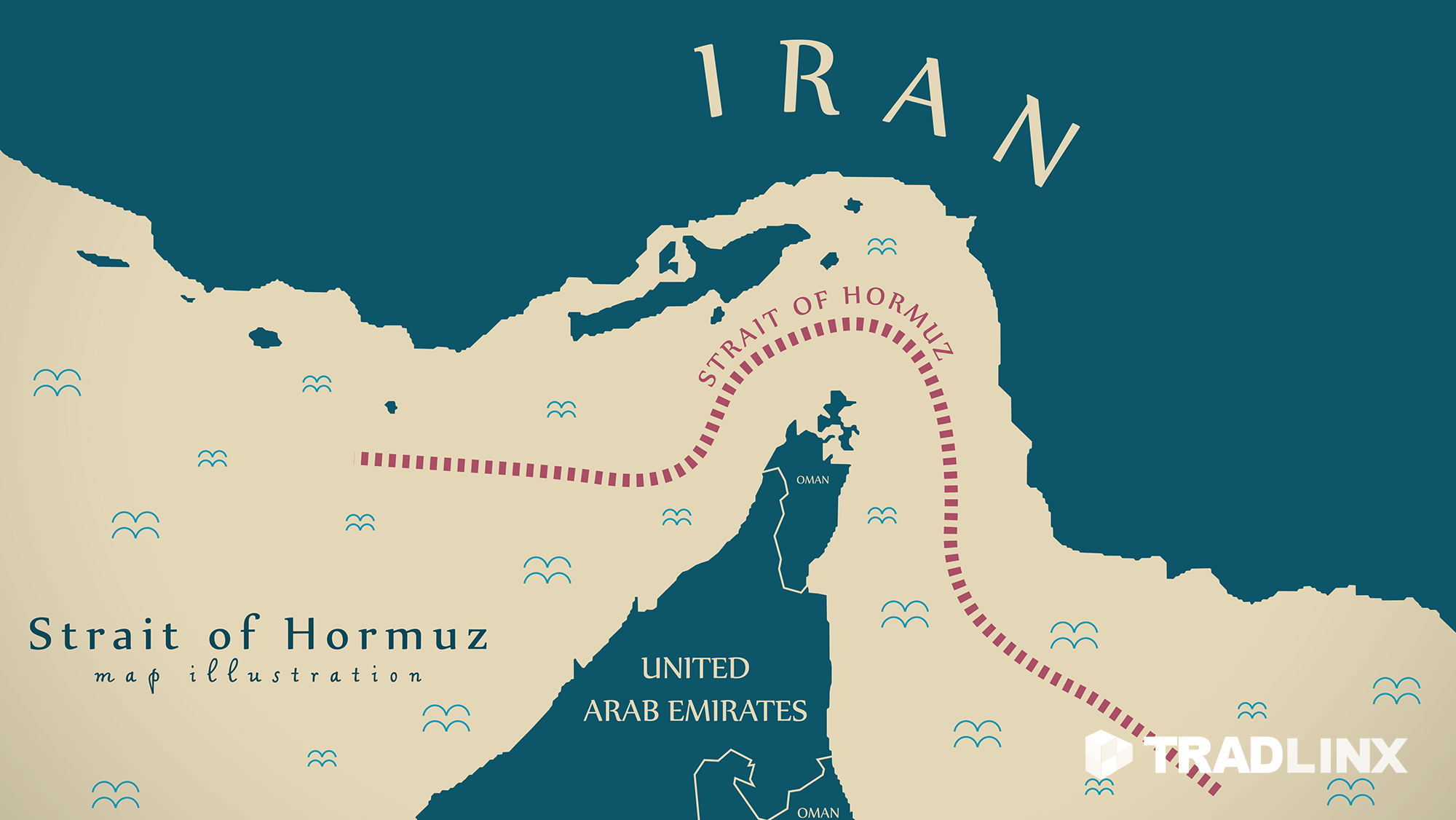
You’ve probably seen the maps where a tiny sliver of blue water separates Iran from Oman. It looks insignificant. It’s not. That narrow stretch is the Strait of Hormuz, and it's the single most important pulse point for the global economy. If that pulse stops, the world stops.
Roughly 21 million barrels of oil move through this passage every single day. That's about 20% of the world’s daily consumption. Think about that. One out of every five cars, planes, and factories on the planet stays running because of this specific 21-mile-wide gap. It’s the definition of a bottleneck. When tensions rise in the Middle East, the price you pay at the pump in Ohio or Lyon is decided right here.
The Geography of a Global Crisis
The Strait of Hormuz isn't just a random shipping lane. It's the only way out for oil from the biggest producers in the world. Saudi Arabia, the UAE, Kuwait, Iraq, and Iran all rely on this exit.
At its narrowest point, the shipping lanes are only two miles wide in each direction. You have a two-mile strip of water carrying the lifeblood of modern civilization. To make matters more tense, these lanes pass through Omani and Iranian territorial waters. While international law allows for "transit passage," it’s a fragile arrangement.
Iran sits on the northern coast. They know exactly how much power this geography gives them. They’ve threatened to close the strait multiple times over the last few decades. Usually, it's a response to sanctions or military pressure. Could they actually do it? Probably not for long. But they don't need to close it for a month to wreck the economy. A week of uncertainty would send oil prices into a vertical climb.
Why Pipelines Aren't the Easy Answer
People often ask why we don't just build more pipelines to bypass the water. It sounds simple. It’s actually a logistical nightmare.
Some pipelines do exist. Saudi Arabia has the East-West Pipeline that can move oil to the Red Sea. The UAE has a line that goes to Fujairah, bypassing the strait entirely. But these are small fixes for a massive problem. Even if every existing bypass pipeline ran at 100% capacity, over 15 million barrels of oil would still be stuck behind the Strait of Hormuz every day. There is no plan B that matches the scale of the Persian Gulf tankers.
Shipping by sea is cheap. It’s efficient. It’s also incredibly vulnerable. Unlike a pipeline that stays in one country's territory, a tanker is a slow-moving target in international waters. During the "Tanker War" in the 1980s, hundreds of ships were attacked. The world watched as the energy market nearly collapsed. We haven't forgotten that lesson.
The Massive Impact on Global Markets
When a single tanker gets harassed or a drone hits a facility near the coast, the markets react instantly. Traders don't wait for a war to start. They price in the risk immediately.
In 2019, when several tankers were attacked near the strait, insurance premiums for shipping companies skyrocketed. We’re talking about a 10% jump in costs just for the "war risk" coverage. Those costs don't get absorbed by the shipping giants. They get passed down to you.
- China's Dependence: China is the world's largest crude oil importer. A huge chunk of their supply comes through Hormuz.
- Japan and South Korea: These nations get nearly 80% of their oil via this route. They don't have local reserves.
- The US Shift: While the US produces more of its own oil now, it still can't ignore Hormuz. Global prices are linked. If the price of Brent crude spikes because of a naval blockade, American gas prices go up too, regardless of where the oil was pumped.
Military Reality and the Shadow War
The US Fifth Fleet is stationed in Bahrain for one reason: to keep this water open. It’s a constant cat-and-mouse game.
Iran uses "asymmetric" tactics. They don't try to match the US Navy ship-for-ship. Instead, they use fast-attack boats, sea mines, and shore-based missiles. It’s a strategy designed to make the cost of intervention too high. Even a "minor" incident—like a stray mine hitting a commercial vessel—creates a ripple effect that can be felt in the New York Stock Exchange within minutes.
Most of the conflict here happens in the "gray zone." It’s not full-scale war, but it’s not peace either. It’s a state of constant, high-stakes friction. One mistake by a young naval officer on either side could trigger a chain reaction that closes the strait and triggers a global recession.
The Significance of Maritime Routes Beyond Energy
We talk about oil because that’s the big money, but Hormuz is also a major corridor for Liquefied Natural Gas (LNG). Qatar is one of the world's top LNG exporters. Almost all of their gas goes through this strait.
As the world tries to move away from coal, natural gas has become the "bridge fuel." If the strait closes, the lights could literally go out in parts of Europe and Asia that have swapped coal plants for gas turbines. This makes the strait a dual threat to both transportation and the electrical grid.
What Happens if the Strait Actually Closes
If the Strait of Hormuz were blocked today, analysts at Goldman Sachs and other institutions have predicted oil could hit $150 or even $200 a barrel.
At $200 a barrel, the global airline industry collapses. Shipping costs for food and consumer goods double or triple. Inflation, which we’ve all been struggling with lately, would look like a minor inconvenience compared to the shockwaves of a Hormuz shutdown.
The "Significance of Maritime Routes" isn't an academic topic for history books. It's a live-wire issue. We live in a world that’s physically connected by these thin threads of water. The Strait of Hormuz is the thinnest and most fragile of them all.
How to Track This Yourself
If you want to understand where the world is headed, stop looking at political speeches and start looking at tanker tracking data.
Watch the "crack spread"—the difference between the price of crude oil and the products made from it. Watch the insurance rates for Suezmax and VLCC (Very Large Crude Carrier) vessels. When those numbers start moving, something is happening in the strait.
Don't wait for the mainstream news to tell you there's a crisis. The shipping markets always know first. If you're an investor or just someone who cares about the cost of living, keep an eye on the Gulf of Oman. The geography hasn't changed in thousands of years, and it's not going to change now. The world's economy will continue to live and die by what happens in those 21 miles of water.
Monitor the daily reports from the Energy Information Administration (EIA) regarding transit volumes. They provide the most objective data on how much "oil on water" is currently at risk. If that number drops or stalls, prepare for a very different economic reality.


