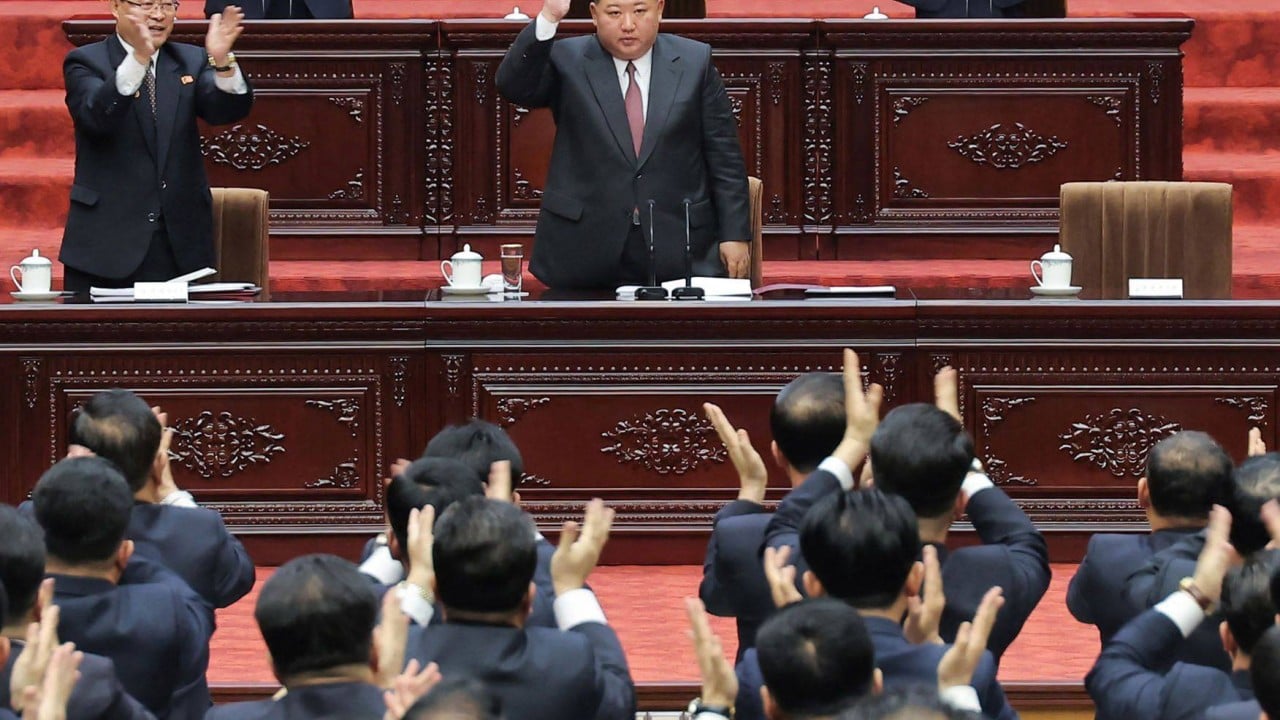
North Korea just went through the motions of reappointing Kim Jong Un as the chairman of the State Affairs Commission. To most of the world, this looks like a redundant piece of political theater. Why vote on a man who already holds absolute power? If you think it's just a hollow ceremony, you're missing the point of how Pyongyang operates. This wasn't about giving him power he didn't have. It was about codifying his status as a "normal" head of state on the international stage.
The Supreme People’s Assembly (SPA) gathered in Pyongyang to make it official. They didn't just re-elect him; they practically deified his role further within the constitution. This matters because it signals a shift from the "military-first" era of his father toward a more centralized, state-led bureaucracy. He's not just a warlord or a party boss anymore. He's the legal, constitutional face of a nuclear-armed nation.
The Strategy Behind the Ceremony
Most people assume North Korean politics are just chaotic whim. That’s a mistake. Every session of the SPA is a choreographed message to two audiences: the hungry citizens at home and the wary diplomats in Washington and Seoul. By reappointing Kim, the regime is screaming "stability."
When the state media reports a 100% turnout and a 100% "yes" vote, they aren't trying to trick you into thinking it's a real democracy. They're demonstrating total control. If there’s no dissent in the tally, the message is that there’s no room for dissent in the streets. It's a show of force dressed up in a suit and tie.
Kim has spent the last few years moving away from the shadow of his grandfather, Kim Il Sung. For a long time, he relied on the "Eternal President" title to justify his rule. Now, he's carving out his own specific brand of "Kimjongunism." This reappointment is a brick in that wall. He wants the world to treat him like any other president or prime minister, albeit one with an ICBM program.
Why the Timing is Critical
The world is currently distracted by conflicts in Europe and the Middle East. Pyongyang knows this. Reasserting Kim's domestic authority right now ensures that whenever the next round of "grand diplomacy" starts, he sits at the table as an established, permanent fixture. You don't negotiate with a transitionary figure; you negotiate with a Supreme Leader who just got a fresh "mandate."
We’ve seen a massive uptick in missile tests and aggressive rhetoric toward South Korea recently. Kim officially labeled the South as a "primary foe" and "invariable principal enemy." That's a huge departure from the decades-old goal of "peaceful reunification." By getting reappointed under this new, more aggressive ideological framework, he's locking the country into a path of permanent confrontation.
A New Era of State Governance
For years, the Korean Workers' Party was the only thing that mattered. While it's still the heart of the country, Kim is leaning harder into state institutions like the State Affairs Commission. This makes the government look more "legitimate" to foreign observers. It’s a rebranding effort.
The reshuffle that usually accompanies these reappointments tells us who's in and who's out. Watch the names of the people sitting on either side of him. Those are the technocrats running the economy and the scientists building the warheads. If the faces stay the same, the policy stays the same. Right now, the faces are hardened loyalists.
Don't buy the idea that these meetings are just for show. They serve as a massive HR review for the entire country. Officials who underperformed in agriculture or construction are often purged or demoted during these sessions. It’s a high-stakes corporate restructuring where the CEO is also the judge, jury, and executioner.
What This Means for Your Security
A "Supreme Leader" with a fresh title and a modernized constitution is a confident leader. And a confident Kim Jong Un usually means more trouble for the Pacific. He’s no longer seeking validation from the West. He’s built his nuclear "sword" and now he’s making sure the legal paperwork at home is filed correctly.
The US and its allies have tried sanctions. They've tried summits. Neither stopped the clock. This reappointment confirms that the "denuclearization" conversation is effectively dead in Pyongyang’s eyes. They are a nuclear state, and Kim is their permanent head.
If you're tracking global risk, you shouldn't look for signs of Kim losing power. Look at how he's formalizing it. The more "normal" he makes his dictatorship look through these reappointments, the harder it becomes for the international community to demand radical change. He’s digging in for the long haul.
Keep an eye on the state's budget announcements that usually follow these SPA meetings. If the percentage of spending on the "defense industry" keeps climbing while the "people's economy" gets flowery prose but no cash, we know exactly where his head is at. He's betting the house on being too dangerous to ignore.
Stop waiting for a collapse that isn't coming. Start watching how the regime builds its own version of "legitimacy." This isn't just a news headline about a foreign dictator; it's a blueprint for how a small nation holds the world hostage through bureaucratic consistency and nuclear persistence.
If you want to understand the next move, look at the trade numbers between Pyongyang and Moscow. The military cooperation there is the real engine behind Kim's current confidence. The reappointment is just the victory lap.