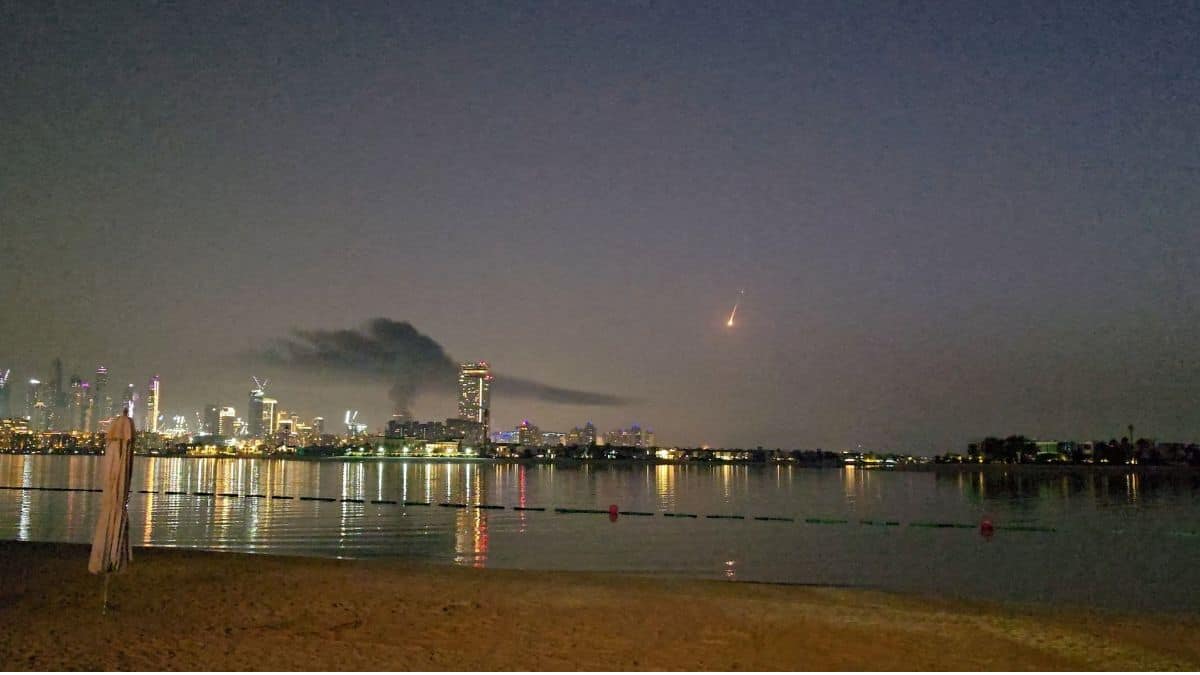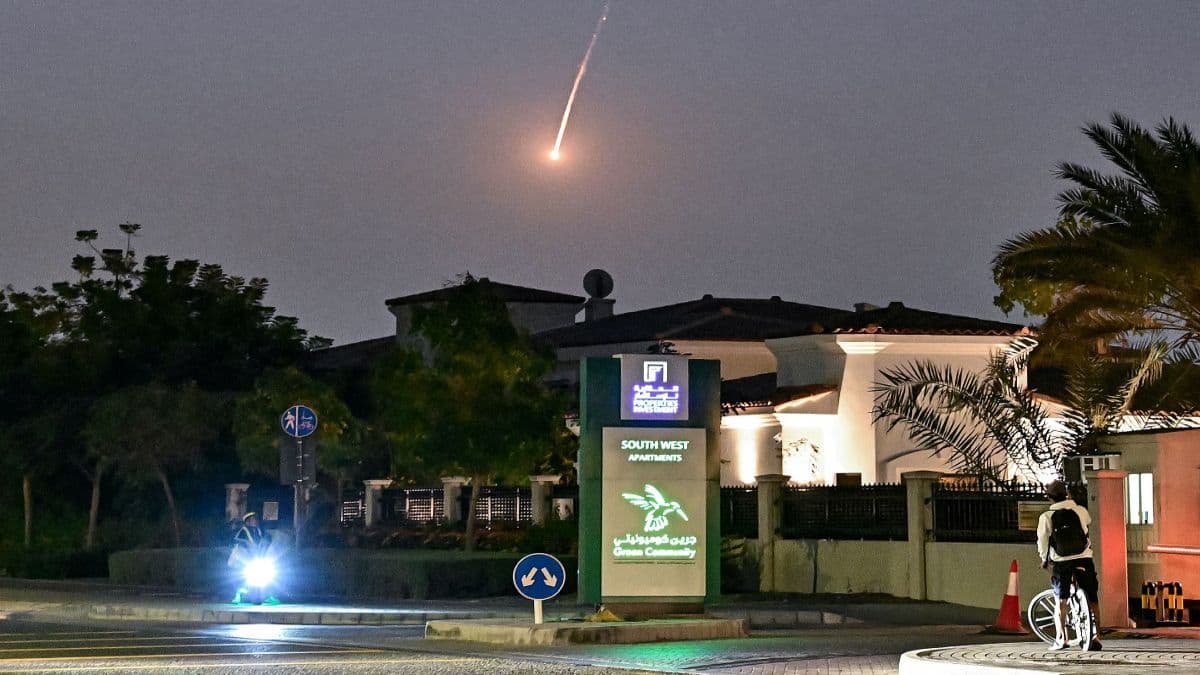
The anti-aircraft batteries positioned in the heart of Kabul didn’t just signal a military engagement; they signaled the definitive collapse of the "brotherly" facade between the Taliban and Islamabad. When tracer rounds lit up the Afghan capital’s sky, the official line from the Taliban’s Ministry of Defense was uncharacteristically blunt. They were targeting Pakistani aircraft. This wasn't a skirmish in a remote border province. This was a direct kinetic response to a perceived violation of sovereignty at the highest level, marking a dangerous new chapter in a relationship that has shifted from covert patronage to overt hostility.
For decades, the narrative surrounding the Durand Line was one of strategic depth for Pakistan. That theory is now dead. The Taliban, once viewed as a proxy that would provide Islamabad with a friendly western flank, have instead asserted a fierce, nationalist autonomy that rejects the borders drawn by colonial powers and defended by modern neighbors. The recent exchange of fire reveals a fundamental miscalculation by regional intelligence services who believed religious affinity would trump territorial integrity.
The End of Strategic Depth
The tension currently boiling over in Kabul is the result of a long-simmering dispute regarding the Tehrik-i-Taliban Pakistan (TTP). Islamabad maintains that the Afghan Taliban provides a safe haven for these militants to launch attacks into Pakistani territory. Conversely, the Taliban government in Kabul views these accusations as an excuse for Pakistan to violate Afghan airspace and conduct extrajudicial strikes.
When those guns opened fire in central Kabul, they were responding to more than just a radar blip. They were responding to a history of perceived interference. The Taliban leadership is currently under immense internal pressure to prove they are not "puppets" of the Inter-Services Intelligence (ISI). By firing on Pakistani assets over the capital, they are communicating to their own rank-and-file—and to the world—that the old rules of the relationship are buried.
This isn't just about security. It is about the definition of a nation-state. Pakistan’s military establishment is finding that the group they supported for twenty years is far more difficult to manage as a sovereign government than as an insurgency. The transition from a mountain-based militia to a metropolitan administration has forced the Taliban to adopt the traditional trappings of nationalism, which inherently includes the defense of the sky.
A Broken Border and the TTP Factor
The TTP acts as the primary friction point. To understand the "why" behind the recent gunfire, one must look at the geography of the borderlands. Pakistan has spent billions fencing the Durand Line, a 2,640-kilometer boundary that the Taliban has never formally recognized. For the militants on the ground, this fence is an artificial scar through Pashtun lands.
Recent escalations have seen Pakistan conduct airstrikes in Khost and Paktika provinces, claiming to target TTP hideouts. The Taliban’s response has shifted from diplomatic protests to active military deterrence. The decision to engage aircraft over Kabul suggests that the Taliban's air defense capabilities, while primitive compared to regional powers, are being positioned specifically to challenge Pakistani flight paths.
The "how" of this engagement is equally telling. The Taliban are utilizing a mix of captured Soviet-era hardware and abandoned American equipment. While they lack a modern air force, their ground-based anti-aircraft systems are enough to make any low-flying reconnaissance or strike mission a high-risk gamble. This creates a "denial of ease" strategy. They don't need to win a dogfight; they just need to make the cost of violating their airspace unacceptably high for Islamabad.
The Internal Power Struggle
Behind the smoke in the Kabul sky lies a fractured leadership within the Taliban itself. There are the pragmatists, often associated with the political office in Doha, who understand that Afghanistan needs trade routes through Pakistan to survive economically. Then there are the hardliners and the field commanders who view any concession to Pakistan as a betrayal of their jihad.
The orders to fire likely came from a faction eager to project strength. If the Taliban appears weak against Pakistani incursions, they risk losing the loyalty of more radical elements within their movement who might then defect to even more extreme groups like ISKP (Islamic State Khorasan Province). This makes every Pakistani drone or jet a political liability for the Kabul administration.
The Economic Consequences of Kinetic Friction
While the military commanders trade shots, the merchants at the Torkham and Chaman border crossings pay the price. Every time a round is fired over Kabul, the border closes. Thousands of trucks carrying perishable goods—fruit, vegetables, and cement—sit idling in the heat.
Pakistan remains Afghanistan’s largest trading partner, but this dependence is being weaponized. Islamabad uses border closures as a lever to pressure the Taliban into cracking down on militants. The Taliban, in turn, is looking toward Central Asia and Iran to diversify its trade dependencies, attempting to break the Pakistani stranglehold on its economy. This economic divorce is messy, expensive, and fueling the desperation that leads to further military posturing.
The reality of the situation is that neither side can afford a full-scale war, yet neither side can afford to back down. For Pakistan, the rise in domestic terror attacks linked to the TTP is a political firestorm. For the Taliban, defending their "Islamic Emirate" against all foreign actors—including former allies—is the cornerstone of their legitimacy.
A Neighborhood on Edge
China and Russia are watching this breakdown with increasing anxiety. Both nations have gambled on the idea that a Taliban-led Afghanistan could be stabilized through regional investment and "quiet diplomacy." The sight of anti-aircraft fire over the capital shatters the illusion of a stable, managed transition.
If the Kabul-Islamabad axis continues to degrade, the vacuum created will be filled by chaos. China's "Belt and Road" ambitions in the region require a level of security that currently does not exist. They are finding that the "iron brotherhood" between Pakistan and the Taliban was made of sand.
The sophisticated radar and surveillance equipment that Pakistan once used to monitor the border is now being used to track the very men they once sheltered. It is a classic case of blowback, refined and accelerated by the sudden collapse of the previous Afghan government in 2021.
The Myth of the Controlled Proxy
The most significant takeaway for any analyst following this crisis is the death of the proxy myth. For years, Western intelligence agencies operated under the assumption that the Taliban were a cohesive unit that could be turned on and off like a faucet by the ISI. The gunfire over Kabul proves the faucet is broken.
The Taliban are now a government with a budget, a standing army, and a desperate need for popular support. That support is largely built on a platform of "Afghanistan First." They cannot allow a foreign air force to operate with impunity over their capital without appearing as weak as the government they replaced.
We are seeing the birth of a localized Cold War. It features all the hallmarks: border skirmishes, proxy support, economic sanctions, and the constant threat of miscalculation. The difference here is that the actors involved share a massive, porous border and a deep, tangled history of mutual resentment.
Technology and the New Border War
The use of drones has changed the calculus. Pakistan’s increasing reliance on unmanned aerial vehicles (UAVs) to conduct surveillance and targeted strikes allows them to project power without putting pilots at risk. However, the Taliban’s response—using heavy machine guns and aging ZU-23-2 cannons—is a low-tech solution to a high-tech problem.
It creates a visual spectacle that serves as powerful propaganda. A video of Taliban fighters firing into the clouds at an "invader" is worth more in the villages of Helmand and Kandahar than a dozen diplomatic cables. It reinforces their narrative of resistance.
The Fragility of Modern Kabul
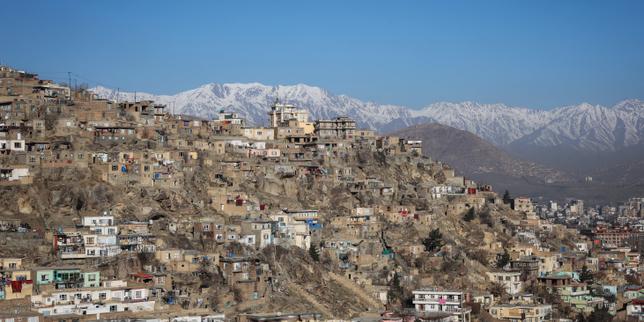
Kabul is a city of scars. The sound of heavy caliber fire does not just alarm the military; it terrifies a population that has known nothing but conflict for four decades. The psychological impact of anti-aircraft fire in a city center cannot be overstated. It tells the residents that the peace promised by the Taliban is conditional and fragile.
The international community, largely disengaged since the 2021 withdrawal, must now reckon with the fact that the primary threat to regional stability is no longer just "terrorism" in the abstract, but a conventional state-to-state conflict between two nuclear-adjacent powers.
There is no easy de-escalation path. If Pakistan stops the flights, they leave their border wide open to TTP incursions. If the Taliban stops firing, they lose their nationalist credibility. Both sides are trapped in a cycle of "defensive aggression."
The gunners in Kabul are not just aiming at planes; they are aiming at the very idea that Afghanistan can be managed from the outside. Whether those rounds hit their targets or fall harmlessly back to earth, the message has been delivered. The era of the subservient Afghan neighbor is over. The sky over Kabul is no longer a free pass; it is a battleground.
Monitor the frequency of these "sovereignty engagements" in the coming months. If the caliber of the weapons used shifts from heavy machine guns to surface-to-air missiles, the regional containment strategy has failed. The next time the sirens go off in Kabul, the world won't be able to look away.