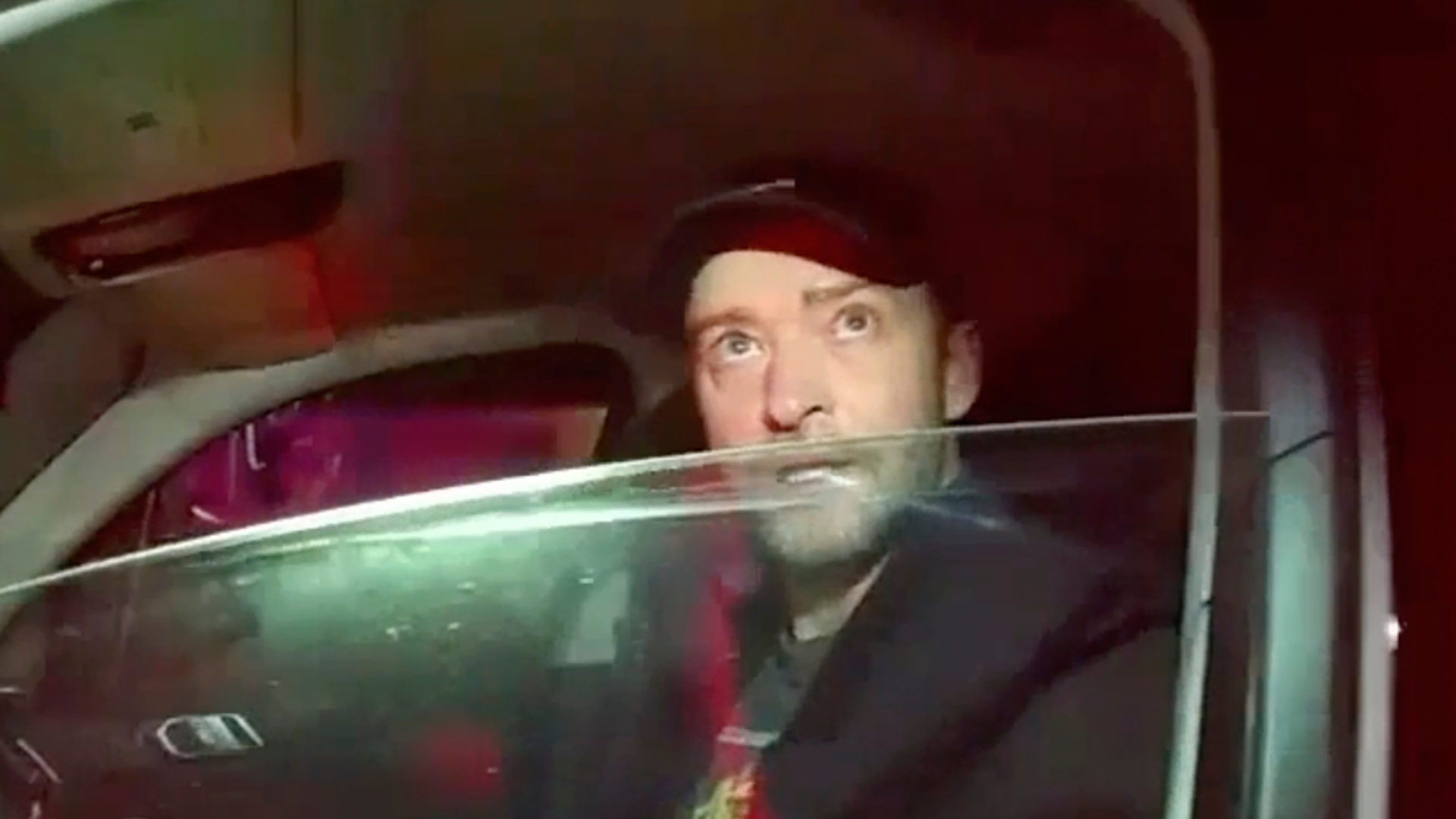
The media is obsessed with the "downfall" of Justin Timberlake. They treat the release of his DWI arrest video like a definitive nail in a coffin made of mid-2000s nostalgia and modern-day schadenfreude. But here is the reality: the outrage is a product, the "crisis" is a calculation, and the video itself is the most honest piece of marketing the man has released in a decade.
We are told that Timberlake’s team fought tooth and nail to block this footage to "save his image." That is the lazy consensus. In reality, the legal fight to suppress evidence is a standard procedural dance, but the public release of the video is actually a pressure valve. It transforms a nebulous, whispered-about scandal into a finite, three-minute digital artifact. Once the video is out, the mystery dies. The anticipation ends. The story begins its rapid descent into the archives of the internet.
The Illusion of the Irredeemable Error
Public relations experts love to talk about "brand damage" as if a celebrity is a fine china vase that can never be glued back together. I have watched high-level fixers spend millions trying to "sanitize" a client, only to realize that the public doesn't actually want a saint. They want a narrative arc.
The competitor articles focus on the embarrassment of the footage—the glassy eyes, the slurred cooperation, the "this is going to ruin the tour" comment that became an instant meme. They frame it as a catastrophic failure of ego. They are wrong. This is the "relatability" trap. By fighting the video and losing, Timberlake accidentally achieved the only thing a legacy pop star needs to survive in 2026: human fallibility.
In the attention economy, being mocked is infinitely better than being ignored. Before the Sag Harbor incident, Timberlake was drifting into the "legacy act" lane—respected but increasingly irrelevant to the Gen Z demographic that dictates cultural velocity. The arrest video didn't destroy his brand; it re-indexed it. It gave the internet a reason to talk about him with an intensity that his latest album failed to trigger.
Why "Blocking the Video" Was Never the Goal
Let’s dismantle the legal theater. When a high-profile attorney like Edward Burke Jr. makes a spectacle of challenging the "over-medicated" narrative or the validity of the arrest, he isn't just talking to a judge. He is talking to the shareholders of Timberlake’s career—the promoters, the sponsors, and the fans.
The goal of a celebrity DWI defense isn't always an acquittal; it’s the dilution of the narrative. By creating a loud, public fight over the video's release, the defense team ensures that by the time the public actually sees the footage, they are already bored of the topic. It’s a classic saturation tactic.
- Step 1: Create a "will they or won't they" saga regarding the footage.
- Step 2: Let the tabloids speculate on how "damaging" it is.
- Step 3: Release it when the outrage cycle is already pivoting to the next political scandal or TikTok trend.
By the time the video hit the wires, the "ruin the tour" meme had already peaked. The reality of the video—a tired man performing a balance test—could never live up to the monstrous version the public had imagined.
The Economics of the Mugshot
We live in an era where the mugshot is the new headshot. From Martha Stewart to Donald Trump, the "criminal" aesthetic has been co-opted as a badge of authenticity or, at the very least, a signal of being "in the arena."
Timberlake’s polished, "Man of the Woods" persona was suffocating. It felt manufactured. The arrest video, in all its grainy, unflattering glory, is the first time in years the public has seen him without a filter, a stylist, or a choreographed dance routine.
"There is no such thing as a PR disaster for a person whose entire business model relies on being known." — A mantra shared by the most cynical (and successful) agents in Hollywood.
If you think this prevents him from selling out arenas, you haven't been paying attention to the history of rock and roll. Alcohol-related offenses are the "bread and butter" of celebrity scandals. They are perceived as "lifestyle crimes"—vices that the general public finds reckless but ultimately forgivable, unlike financial fraud or violent assault.
Dismantling the "People Also Ask" Delusions
The search engines are flooded with people asking: "Will Justin Timberlake be canceled?"
This is the wrong question. Cancellation is a myth for the ultra-wealthy. You cannot cancel someone who owns their masters, has a global touring infrastructure, and possesses a core fan base that grew up with him. The real question is: "How does this change his market positioning?"
The answer: It moves him from "Clean-Cut Disney Alum" to "Flawed Icon." It’s a necessary transition for any male star hitting their 40s. It provides the "darkness" required for a comeback narrative later. Without the fall, the redemption story is just a press release.
The False Correlation Between Arrests and Revenue
Check the data. Historically, celebrity arrests for non-violent offenses often correlate with a spike in streaming numbers.
- Curiosity Streams: People who haven't listened to "Cry Me a River" in five years suddenly find themselves on his Spotify page.
- Defensive Consumption: Die-hard fans buy tickets and merch as a show of loyalty against the "haters."
- Algorithmic Favor: The sheer volume of "Justin Timberlake" mentions pushes his entire catalog back into the trending feeds.
The Dangerous Nuance: The Road Safety Reality
Here is where I'll be blunt: The contrarian take isn't that DWI is "fine." It isn't. It’s a selfish, dangerous act that destroys lives. But the media's focus isn't on road safety; it’s on the aesthetic of the fall.
If the media cared about the crime, they would be reporting on the systemic issues of drinking culture in wealthy enclaves like the Hamptons. Instead, they are dissecting the puffiness of his face in the bodycam footage. They are commodifying the crime for clicks while pretending to hold him to a moral standard. This hypocrisy is why the public eventually stops caring. When everything is a "shocking scandal," nothing is.
The Reality of Professional Fixers
I have been in rooms where "unflattering" footage was discussed. The conversation is never about "How do we hide this?" It’s always "How do we frame the apology that follows it?"
The release of the video actually helps Timberlake’s team because it provides a "Ground Zero" for the apology tour. They can now point to the footage and say, "I saw myself, I didn't recognize that person, and I've grown." You can't apologize for a rumor. You can apologize for a video.
Stop Looking for a Downfall
The competitor articles want you to believe this is the end. They want to sell you a tragedy. But in the machinery of Hollywood, this is just another Tuesday. The video isn't a smoking gun; it’s a prop in a long-form drama that will end with a sold-out Madison Square Garden show and a "raw, vulnerable" interview with a major network.
The public's desire to see the "block" fail is just a desire to feel a momentary sense of power over a millionaire. Once that itch is scratched, the audience moves on. Timberlake knows this. His lawyers know this. The only people who don't seem to get it are the journalists writing his career obituaries.
The video is out. The "damage" is done. And Justin Timberlake is more relevant today than he was the day before his arrest.
Stop waiting for the crash. You’re watching the rebrand.
Would you like me to analyze the specific streaming data shifts that occurred for Timberlake's catalog in the weeks following the arrest?