Japan just changed the math on surviving a massive tremor while traveling at 300 kilometers per hour. If you’ve ever sat on a Shinkansen—those sleek, needle-nosed bullet trains—you know the feeling of effortless speed. It feels untouchable. But Japan is the most seismically active country on earth. The ground isn't just a suggestion there; it’s a moving target.
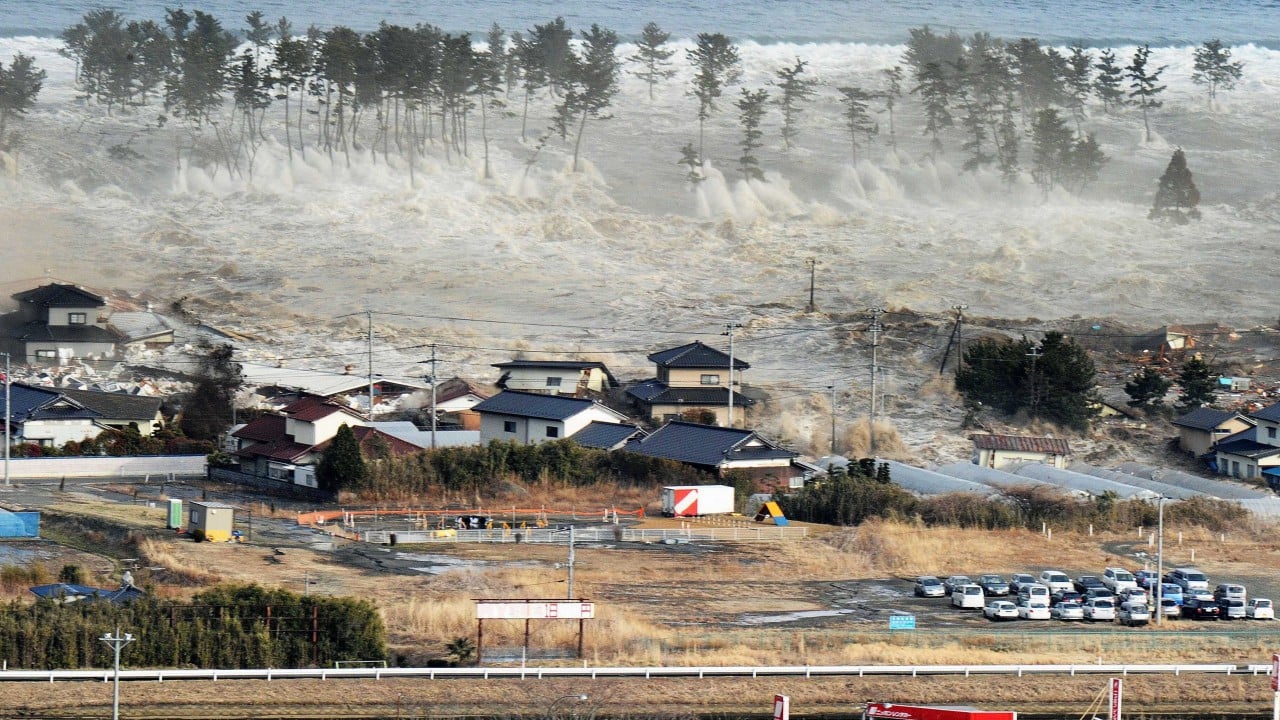
For decades, the Japanese railway system relied on a network of coastal and trackside sensors to trigger emergency brakes. It worked well. During the 2011 Tohoku earthquake, every single commercial bullet train stopped safely without a single derailment-related fatality. But "well" isn't enough when you're dealing with the Nankai Trough or a potential capital-centered quake. The East Japan Railway Company (JR East) and its partners are rolling out an upgrade that slashes the response time of their early warning systems. We’re talking about shaving off seconds that actually determine whether a train stays on the tracks or becomes a multi-ton projectile.
The race against the P-wave
Earthquakes send out two main types of waves. First come the P-waves (Primary). These are fast, longitudinal waves that don't usually cause much damage but carry the "signature" of what’s coming. Then come the S-waves (Secondary). These are the monsters. They’re slower, they shear the ground, and they’re what knock down buildings and twist rails.
The old system was reactive. It waited for sensors to feel the shaking, processed the data, and then cut the power to the overhead lines, which automatically engaged the emergency brakes. The new upgrade changes the logic. By integrating data directly from the Japan Meteorological Agency’s (JMA) beefed-up ocean-floor network—specifically the S-net and N-net systems—trains now "know" an earthquake is happening before the ground beneath the tracks even flinches.
This isn't just a software patch. It’s a total reimagining of how transit infrastructure talks to geophysical monitoring tools. They’ve managed to cut the time between the first detection of a P-wave and the activation of the brakes by up to two seconds. That sounds tiny. It isn’t. At full cruise speed, a bullet train travels about 80 to 90 meters per second. A two-second head start means the train starts slowing down nearly 200 meters earlier than it used to. In a world of physics and momentum, 200 meters is the difference between a controlled stop and a catastrophe.
Ocean floor sensors are the real heroes
Most of Japan’s truly terrifying quakes start underwater. The Japan Trench and the Nankai Trough are subduction zones where plates are constantly grinding. If you wait for the shaking to reach a land-based sensor, you’ve already lost the most valuable lead time.
The S-net system is a massive web of fiber-optic cables and pressure sensors sitting on the seafloor off the eastern coast. By tapping directly into this, JR East gets a "front-row seat" to the rupture. The data travels at the speed of light through the cables, hitting the railway control centers long before the seismic waves crawl through the earth’s crust.
I’ve looked at the technical specs of these upgrades, and the brilliance lies in the decentralized nature of the trigger. You don't want a system that has to "think" too much. You want a system that sees a specific threshold of pressure or acceleration and hits the kill switch instantly. The new integration allows for more precise estimates of the earthquake’s epicenter and magnitude. This prevents "false alarms" that might stop trains unnecessarily while ensuring that when the big one hits, the response is violent and immediate.
Why this isn't just about Japan
If you think this is only relevant to people commuting between Tokyo and Osaka, you’re missing the bigger picture. High-speed rail is expanding globally. California is struggling to build its system. Texas has plans. Europe is densifying its network.
The "Japan model" of earthquake safety is the gold standard, but it’s often criticized for being too expensive or too specific to Japanese geography. That’s a lazy argument. The integration of "external" seismic data into "internal" transit braking systems is a blueprint for any region near a fault line.
What other systems get wrong
Most transit agencies around the world still rely on "on-site" detection. They put an accelerometer on a bridge or a section of track. If it shakes, the train stops. This is primitive. It ignores the fact that we now have the capability to predict the arrival of destructive energy with startling accuracy.
Japan is showing that you shouldn't treat the railway as an island. It’s part of the earth’s moving parts. By linking the JMA’s seismic observations with the Shinkansen’s Power Operation Control System, they’ve created a biological-style reflex. It’s like pulling your hand back before you even touch the hot stove because you felt the heat radiating off it.
The mechanical reality of stopping a bullet
Stopping a train isn't like slamming on the brakes in a Honda Civic. You have immense kinetic energy. If you lock the wheels, they’ll flat-spot or, worse, weld themselves to the rail. The Shinkansen uses a mix of aerodynamic brakes (those little "cat ears" that pop up on some test models), disc brakes, and motor braking.
The goal of the early warning isn't necessarily to bring the train to a dead halt before the shaking starts. That’s often impossible. The goal is to get the speed down to a "safe" threshold—usually below 70 km/h—where the train’s derailment prevention guards can do their job.
These guards are basically L-shaped brackets attached to the bogies (the wheel assemblies). If the train starts to jump the track, these brackets catch the rail and keep the train from sliding off the bed. But these guards have a limit. They can handle a certain amount of lateral force. If the train is still doing 300 km/h when the ground moves two meters to the left, those guards are going to snap. The two seconds saved by the new seafloor sensor integration makes it much more likely the train will be at a manageable speed when the S-waves arrive.
The cost of safety and the price of failure
Skeptics love to point out the cost. Maintaining thousands of kilometers of seafloor cable isn't cheap. Neither is retrofitting the logic controllers on hundreds of train sets. But look at the alternative. The 2011 quake caused billions in damage, but the fact that no trains derailed at high speed saved the country from a psychological and economic blow it might not have recovered from.
The reliability of the Shinkansen is the only reason the Japanese economy functions as a cohesive unit. If people don't trust the train to stay on the tracks during a quake, the whole system collapses. This upgrade is an insurance policy for the nation’s heartbeat.
How to track these developments
If you’re a tech nerd or a transit advocate, don't just take my word for it. You can actually see the real-time data that these systems use. The JMA provides public feeds for its seismic activity, and JR East frequently publishes technical papers on its "Safety Research Laboratory" portal.
Keep an eye on the Nankai Trough projects specifically. That’s where the next "Big One" is expected. The sensors being laid there right now are even more advanced than the ones used for the current upgrade. They’re using laser interferometry to detect minute changes in the earth's crust. It’s wild stuff.
If you live in a seismic zone, start asking your local transit authorities why they aren't tapping into USGS or regional sensor networks for their own braking systems. The tech exists. The data is there. Japan just proved that the only thing stopping us is the will to connect the dots.
Check the seismic safety ratings of any high-speed rail project in your area. Look for "active P-wave detection" and "external sensor integration" in their environmental impact reports. If those aren't there, they're building a system that's already obsolete. Stay informed on the JMA’s S-net expansion, as it’s the literal backbone of this entire safety revolution. Don't settle for "good enough" when the tech to save thousands of lives is already sitting on the bottom of the ocean.