The era of just "chatting" with an AI is effectively over. In Hong Kong, the conversation has shifted from asking a bot to write an email to deploying autonomous AI agents that actually execute the work. These aren't just toys; they're digital employees handling everything from high-frequency trading to complex supply chain logistics without a human holding their hand every step of the way.
This shift has triggered a massive, high-stakes scramble for computing power. Hong Kong’s infrastructure is currently being pushed to its absolute limit because running an army of AI agents is infinitely more demanding than serving a few text prompts. If you're a business leader in the city, you're likely feeling the squeeze. You aren't just competing for talent anymore; you're competing for the raw silicon needed to stay relevant.
The Brutal Reality of the Computing Crunch
Let’s be honest: the demand for AI agents has caught many off guard. Unlike standard LLMs, agents require sustained, "always-on" inference. They don't just "think" once; they browse, use tools, verify their own work, and loop through tasks. This creates a massive spike in power density.
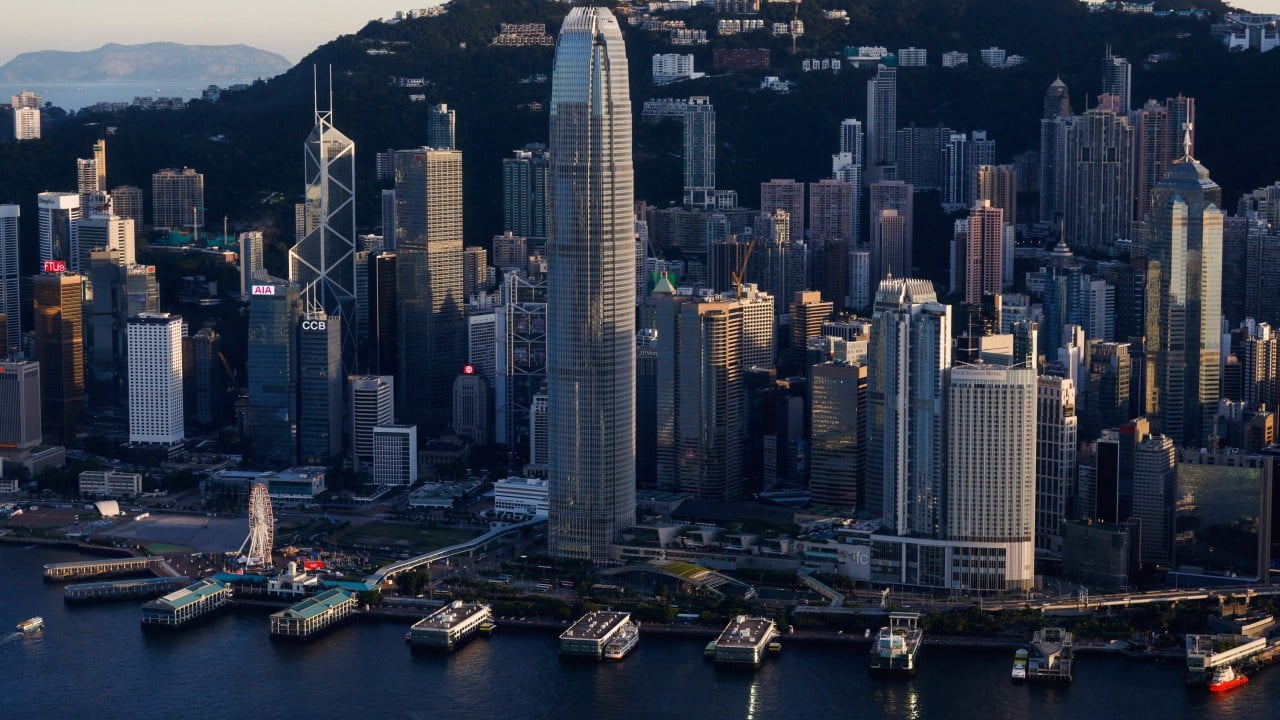
By early 2026, Hong Kong’s overall computing power reached a significant milestone of 5,000 petaFLOPS. To put that in perspective, that’s roughly the capacity to process billions of images every hour. But even that isn't enough. The local government is already eyeing the Sandy Ridge data facility cluster to further bolster this foundation.
The math is simple but painful. As agents multiply across networks, the "inference inflection" point has arrived. This means we’ve moved from a world where we spend most our energy training models to a world where using them (inference) is the primary resource hog.
Why Agents are Different for Hong Kong Businesses
Hong Kong is a city of middlemen, financiers, and logistics experts. These are exactly the sectors where AI agents shine—and where they consume the most resources.
- Finance: We’re seeing a surge in "agentic" algorithmic traders and risk management specialists. These aren't just static programs; they're agents that monitor global news, analyze datasets in real-time, and execute trades autonomously.
- Logistics: Supply chain agents are now managing "demand sensing." They don't just report a delay; they autonomously find a new shipping route, negotiate the price, and update the manifest.
- Legal & Professional Services: AI legal analysts are moving beyond document review into active contract automation, which requires constant back-and-forth processing that drains local server capacity.
The growth is staggering. The generative AI market in the region is projected to grow at a 35.5% CAGR through 2033. For a city that thrives on efficiency, the pressure to automate is inescapable.
The Geopolitical Tightrope and the Chip Dilemma
You can't talk about computing power in Hong Kong without addressing the elephant in the room: the "chip war." The landscape in 2026 is messy.
While the U.S. recently revised some export policies—allowing specific chips like the Nvidia H200 to reach approved customers under strict conditions (including a 25% revenue cut for the U.S. government)—the latest "Blackwell" generation (B200 and B300) remains largely out of reach.
This has forced Hong Kong into a strategic pivot. We're seeing a "bipolar" tech stack emerging. Local firms are increasingly looking at:
- Domestic Champions: Greater reliance on hardware from companies like Huawei and Moore Threads.
- Model Compression: A massive push into R&D at places like the University of Hong Kong to make AI models "smaller" so they can run on edge devices—phones and PCs—rather than massive server farms.
- Government-Backed Supercomputing: Cyberport’s AI Supercomputing Centre (AISC) has become the lifeblood for local startups.
How to Get Your Hands on the Power
If you're waiting for Nvidia chips to just show up at your door, you're going to lose. The smart money in Hong Kong is currently doing three things to survive the computing race.
1. The AI Subsidy Scheme
The government didn't just build a supercomputer; they put HK$3 billion into a three-year subsidy scheme. If you're a local enterprise or research body, you can get up to 70% of the service price covered at Cyberport’s AISC. Honestly, if you aren't applying for this, you're leaving money—and more importantly, compute cycles—on the table.
2. The "Upskill Hong Kong" Pivot
The Employees Retraining Board has been rebranded as Upskill Hong Kong. This isn't just a name change; it's a signal that the government is subsidizing the move toward AI-literate workforces. They've also allocated HK$100 million specifically to push "digital intelligence" across government departments, creating a massive trickle-down demand for private-sector AI solutions.
3. Hedging with Hybrid Infrastructure
Don't put all your eggs in one cloud basket. Local leaders are increasingly using a mix of local supercomputing for sensitive tasks and international cloud providers for non-regulated workloads. This hybrid approach is the only way to bypass the "power grabbing" era where electricity and silicon are becoming the most scarce resources in the world.
Stop Waiting and Start Scaling
The race for computing power isn't some distant future problem; it's happening right now at the data centers in Cyberport and the trading floors in Central.
Your next steps are clear:
- Audit your AI usage: Are you still using "dumb" bots, or are you ready for agents? If it's the latter, calculate your inference needs now.
- Apply for the AISC Subsidy: Visit the Digital Policy Office and get your application in for the AI Subsidy Scheme. The utilization rate is already at 80%—the window is closing.
- Invest in Edge-First Development: If you can't get more GPUs, make your models more efficient. Focus on developers who understand quantization and model compression.
Hong Kong has always been a city that survives by its wits and its speed. In 2026, speed is measured in FLOPS, and the winners will be the ones who secured their computing power yesterday.