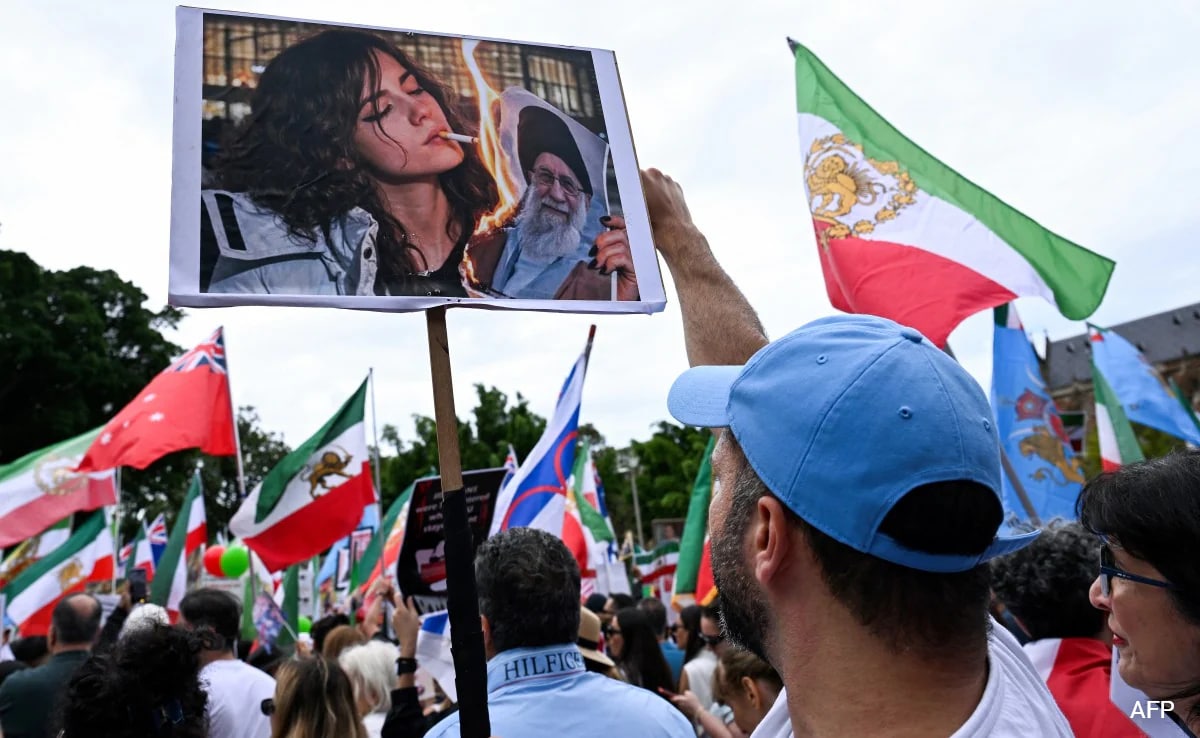
Israel is currently engaged in a high-stakes gamble that publicly encourages the Iranian people to overthrow their government while privately acknowledging that such a move would likely lead to a domestic bloodbath. This dual-track strategy aims to decapitate the Islamic Republic's military command while simultaneously testing the breaking point of its internal security apparatus. Recent diplomatic cables and intelligence briefings suggest that while Jerusalem is dismantling the regime’s hardware from the air, it remains deeply skeptical that the "Persian street" can survive the software of state repression without being decimated.
The Decapitation Doctrine
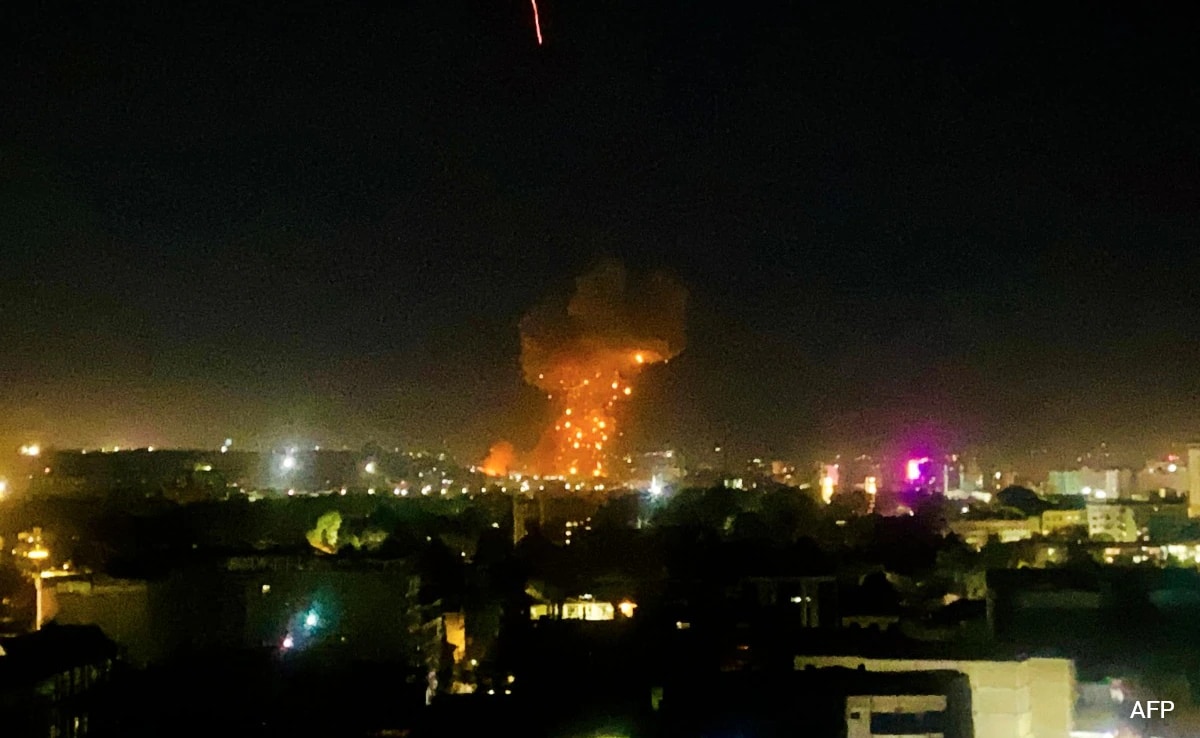
On February 28, 2026, the nature of the long-standing shadow war between Jerusalem and Tehran shifted irrevocably. A series of precision strikes, colloquially dubbed Operation Roaring Lion, targeted a high-level leadership summit in Tehran. The resulting blasts killed Supreme Leader Ali Khamenei and several top-tier commanders of the Islamic Revolutionary Guard Corps (IRGC).
In the immediate aftermath, Prime Minister Benjamin Netanyahu released a video message directly addressing the Iranian public. He claimed that "help has arrived" and urged citizens to "take their fate into their own hands." However, internal assessments shared with U.S. diplomats paint a far grimmer picture. According to a leaked cable from the U.S. Embassy in Jerusalem, senior Israeli officials admitted that any civilian uprising at this stage would result in protesters being "slaughtered."
This creates a glaring paradox: a public call to arms issued by a government that knows the targets of that call are effectively walking into a meat grinder. The Israeli calculation is not based on immediate democratic success, but on the systematic degradation of the regime's "coercive capacity." By forcing the IRGC and the Basij paramilitary to focus on domestic suppression during an active air campaign, Israel aims to overstretch the regime’s remaining resources.
Degrading the Tools of Terror
The strategy is not merely rhetorical. It is supported by a shift in kinetic targeting. Since early March 2026, Israeli and U.S. air assets have moved beyond nuclear sites and missile silos to target the infrastructure of internal repression.
Primary Targets in the Suppression Infrastructure
- Unit 4000 (IRGC Intelligence): This specialized division, responsible for identifying and neutralizing domestic dissidents, has seen its headquarters in southeastern Tehran repeatedly struck.
- Basij Command Hubs: Paramilitary centers in provinces like Ilam and Kurdistan have been targeted to disrupt the "local" response to protests.
- Digital Choke Points: Cyber operations have focused on neutralizing the Ministry of Information and Communications Technology, attempting to prevent the regime from implementing its "de facto curfews" through internet blackouts.
The goal here is to create a vacuum where the regime’s "muscle memory" for violence is physically interrupted. If a local Basij commander cannot communicate with Tehran, or if a regional police headquarters is smoking rubble, the theory is that the threshold for civilian bravery lowers. Yet, as seen in the brutal crackdown of mid-January 2026, the Iranian security state is deeply institutionalized. Even with its head cut off, the body continues to strike.
The Succession Crisis and the Mojtaba Factor
The death of Ali Khamenei has not triggered the immediate collapse many in the West hoped for. Instead, it has accelerated the rise of his son, Mojtaba Khamenei, who is currently operating under a "managed vacuum" strategy. While his father’s death was a symbolic blow, the younger Khamenei has long been the architect of the regime’s intelligence and financial networks.
Israel’s intelligence community, particularly the Mossad, is banking on the idea that Mojtaba lacks his father’s religious legitimacy. By keeping the military pressure high, Israel hopes to trigger "rapid internal fracture"—specifically, defections within the regular Artesh (the traditional military) who may be unwilling to slaughter their own people to protect a hereditary clerical succession.
So far, this fracture is largely theoretical. The IRGC remains the primary beneficiary of the regime’s remaining wealth and is ideologically committed to survival. For the average Iranian in Tehran or Isfahan, the choice is between the "certain death" of a protest square and the "slow death" of life under a crumbling, paranoiac state.
The Risks of Peripheral Destabilization
A more dangerous facet of the current strategy involves the "periphery." Reports indicate that Kurdish groups and other ethnic minorities in the border regions are being encouraged—and potentially armed—to launch ground operations.
Destabilizing the border regions serves to pull IRGC Ground Forces away from the capital. However, this risks a fragmented civil war rather than a unified democratic revolution. If Iran breaks along ethnic lines—Kurds in the west, Baloch in the southeast, Azeris in the north—the resulting chaos could make the Syrian Civil War look like a minor skirmish.
Critics within the U.S. State Department have warned that Israel may be "arsoning the house to kill the termites." While the nuclear threat might be neutralized by the current air campaign, the resulting "black hole" of a collapsed Iranian state would create a refugee crisis and a power vacuum that no regional actor is prepared to fill.
The Economic Endgame
Parallel to the kinetic strikes is an absolute economic strangulation. With the Strait of Hormuz effectively contested and Iran’s oil export hubs like Kharg Island in ruins, inflation in Iran is projected to hit 60% by the end of March 2026.
The Israeli-U.S. alliance is betting that the "stomach" will eventually override "fear." When the state can no longer pay the salaries of the low-level security officers, the wall of repression may finally crack. Until that point, the "slaughter" that Israeli officials privately fear remains the most likely outcome for any Iranian brave enough to answer the call for revolution.
Jerusalem is not waiting for a clean transition to democracy. It is pursuing a policy of Overt Strategic Degradation. Whether the Iranian people survive the process seems to be a secondary concern to the primary objective: ensuring that whoever sits in the ruins of Tehran is too weak to threaten the region.
Would you like me to analyze the specific cyber-warfare tools currently being deployed to bypass the Iranian National Information Network?