General Asim Munir’s recent pilgrimage to Riyadh wasn't about a grand "Islamic NATO." It wasn't about a "strategic pivot" or "regional security architecture." Those are the words used by analysts who get their information from press releases and diplomatic tea ceremonies.
The reality is much more transactional. Much more desperate. And much more honest if you know how to read a balance sheet. Meanwhile, you can read similar stories here: The Cold Truth About Russias Crumbling Power Grid.
The media is obsessed with the ghost of the Islamic Military Counter Terrorism Coalition (IMCTC). They want to believe we are seeing the birth of a Sunni version of the North Atlantic Treaty Organization. They are wrong. You cannot build a NATO-style alliance when one partner is a gas station with a sovereign wealth fund and the other is a nuclear-armed state trying to avoid a sovereign default.
Pakistan isn't offering leadership to an "Islamic NATO." It is offering a "Protection-as-a-Service" (PaaS) model to the House of Saud. To see the full picture, check out the excellent article by Associated Press.
The Broken Premise of Collective Defense
The "Islamic NATO" concept fails because it assumes a shared enemy. NATO worked because everyone agreed the Soviet Union was the problem. In the Middle East, the "enemy" is a moving target. For Riyadh, it’s Iran—until a Chinese-brokered deal makes it "complicated." For Islamabad, the enemy is centered on its eastern border and internal instability.
Pakistan cannot afford to alienate Tehran. It shares a border, a restive Balochistan province, and a pipeline dream with Iran. To think Munir is in Riyadh to sign up for a sectarian crusade is to ignore the basic geography of survival.
The Liquidity Trap
Let’s talk about the money. Pakistan’s economy is currently a series of holes being filled by smaller, more expensive shovels. The IMF is a demanding creditor. China is becoming a cautious one. That leaves the Gulf.
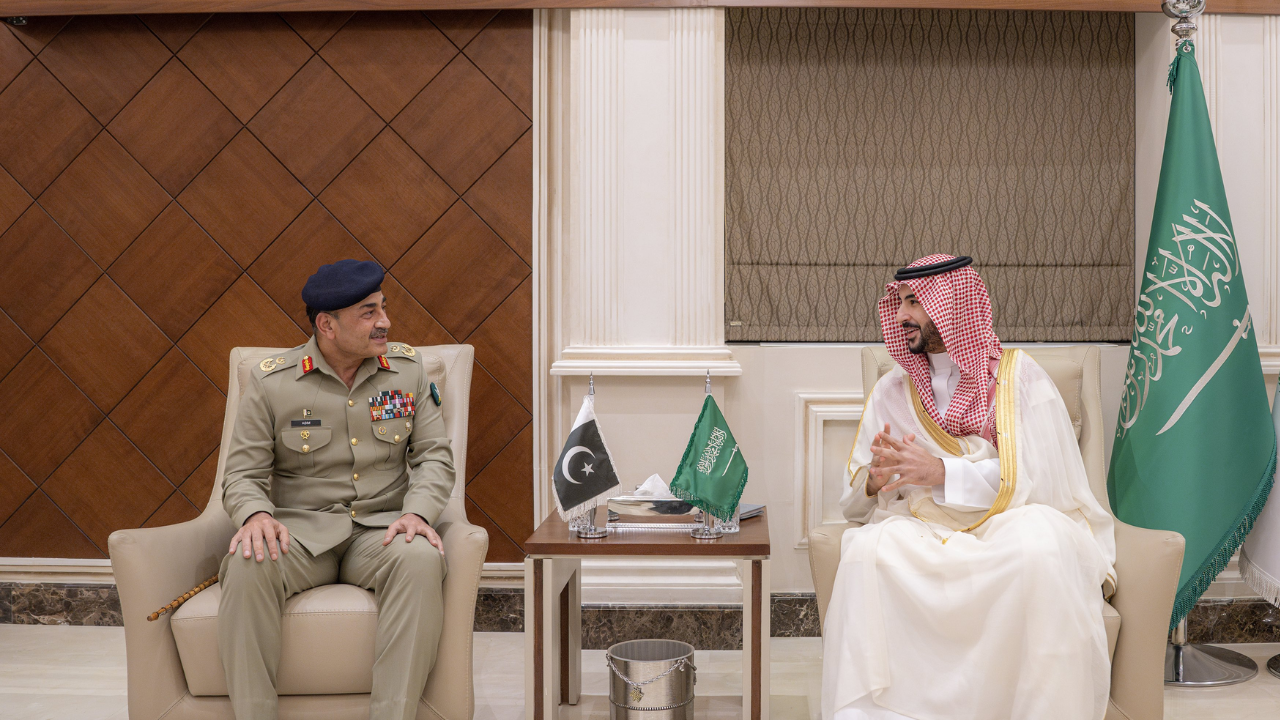
When Munir meets Prince Khalid bin Salman, he isn't discussing troop deployments in the Red Sea. He is discussing the SIFC—the Special Investment Facilitation Council. This is the military’s hand-picked vehicle to bypass the country’s sluggish bureaucracy and sell off state assets.
We are seeing the commoditization of national sovereignty.
- Mineral Rights: Reko Diq and other gold/copper mines are on the table.
- Agricultural Land: Millions of acres for "corporate farming" to solve Saudi food security.
- State Enterprises: Ports, airports, and energy infrastructure.
The "Islamic NATO" talk is the shiny wrapper. The investment deals are the bitter pill inside. Riyadh doesn't want Pakistan’s aging tanks; it wants Pakistan’s resources at a steep discount, backed by the only institution in Pakistan that can guarantee a contract: the Army.
Boots for Billions
I have watched these cycles for decades. Every time a Pakistani general lands in Riyadh, the speculation machine goes into overdrive. People ask, "Will Pakistan send troops to Yemen?" or "Will they station a brigade on the border?"
They are asking the wrong question.
The question is: "What is the price of a Pakistani soldier today versus five years ago?"
The Saudi military is one of the most expensive in the world, yet it struggles with operational efficacy. Pakistan, conversely, has a battle-hardened infantry and a desperate need for foreign exchange. This isn't a military alliance; it's a labor contract. Pakistan exports manpower—doctors, laborers, and yes, soldiers—to keep the remittances flowing.
The Nuclear Elephant in the Room
There is a persistent, lazy rumor that Pakistan is the "Sunni Nuclear Umbrella" for Saudi Arabia. This is the ultimate "insider" trope that collapses under the slightest pressure.
- US Oversight: The US doesn't just "let" nuclear technology walk across borders, even between allies.
- Sanctions: Pakistan’s economy would vanish overnight if a single warhead moved.
- Deterrence: A nuclear weapon is only useful if you can use it. Pakistan’s nukes are tailored for a specific, short-range conflict with India. Moving them to the Gulf changes the math in a way that helps no one in Islamabad.
Munir knows this. MBS knows this. The only people who don't seem to know this are the pundits writing about a "Nuclear Islamic Alliance."
The Pivot to "Non-Alignment" (The Real Contradiction)
The most fascinating part of this "Islamic NATO" delusion is that it ignores Pakistan’s current trajectory with China and Russia. Pakistan is trying to join BRICS. It is deeply embedded in the Belt and Road Initiative.
A formal, Saudi-led military alliance is a Western-aligned construct. You cannot be a Chinese client state and a Saudi mercenary at the same time without something breaking.
Munir’s job is a balancing act that would make a tightrope walker vomit. He has to convince the Saudis he is their sword, convince the Chinese he is their gateway to the Arabian Sea, and convince the IMF he is a responsible fiscal manager.
The Mirage of Unity
The IMCTC, headed by former Pakistani Army Chief Raheel Sharif, has been around since 2015. What has it actually done? It has held conferences. It has released "joint statements." It has done exactly nothing to stop the wars in Sudan, Yemen, or Syria.
A military alliance without a unified command structure, shared equipment, or a common legal framework is just a very expensive social club.
Pakistan's involvement is a PR exercise designed to show the domestic audience that "Brotherly Muslim Nations" still care. It’s a sedative for a population struggling with 30% inflation. It says: "Don't worry, the General is getting us a check."
Stop Asking About Alliances
If you want to understand what happened in that meeting, stop looking at the uniforms. Look at the delegation. Who was there? Finance experts. Investment chiefs. Land management officers.
The "Islamic NATO" is a ghost story told to keep geopolitical analysts busy. The real story is the liquidation of a state’s assets to keep the lights on for another six months.
Pakistan isn't joining a league of superheroes. It's looking for a payday. And in the high-stakes world of Gulf diplomacy, there is no such thing as a free lunch—only a very expensive lease on your own backyard.
The next time you hear a "source" talk about a joint military strike force, ask yourself: Who is paying for the fuel? Because right now, the Pakistani military is wondering if they can afford the electricity bill at GHQ.
If you’re waiting for a grand Islamic military resurgence, you’re going to be waiting a long time. The only thing being mobilized is capital, and it’s all flowing one way.
Stop looking for a NATO. Start looking for the bill of sale.
Would you like me to analyze the specific investment clauses in the SIFC agreements to see which Pakistani sectors are being targeted for Saudi acquisition first?