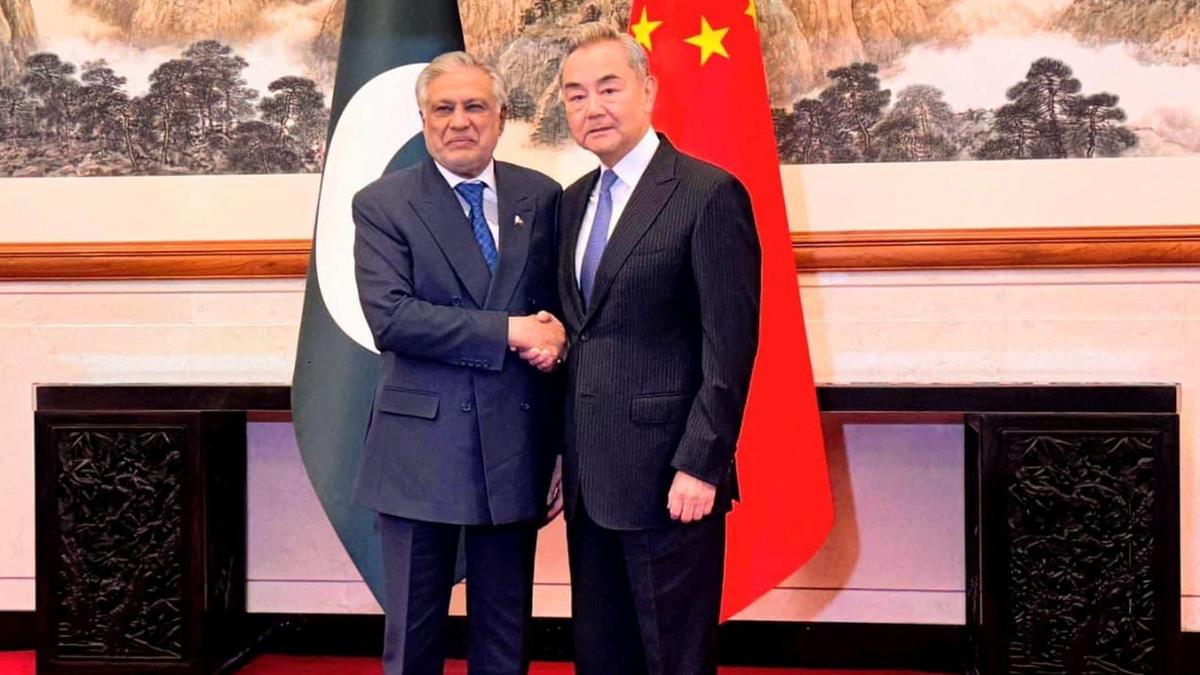
In a small, windowless office in Islamabad, the tea has gone cold. The steam that once rose from the porcelain cups has vanished, leaving only a dark, bitter film. Across from the Pakistani officials, their Chinese counterparts sit with the stoic patience of a civilization that measures time in centuries rather than news cycles. Outside, the world is screaming. But in here, there is only the rustle of paper and the heavy weight of a joint statement that intends to shift the axis of the earth.
They are looking at West Asia—a region we often call the Middle East—through the lens of a "comprehensive ceasefire." It sounds clinical. It sounds like something written by a committee of people who have never had to shake dust from their hair after a ceiling collapsed. Yet, behind the sterile language of the China-Pakistan proposal lies a desperate, calculated attempt to stop a house from burning down before the embers catch their own curtains.
Consider a woman named Amina. She is hypothetical, but she is real in every way that matters. She lives in a place where the sky no longer belongs to birds, but to the hum of drones. When she hears about "diplomatic frameworks" or "immediate cessation of hostilities," she doesn't think of a podium in Beijing. She thinks of the silence. She dreams of a day where the silence isn't a precursor to a blast, but a return to normalcy. For Amina, the joint proposal by China and Pakistan isn't a geopolitical maneuver. It is the slim, fragile hope that she might finally be able to hang laundry on her balcony without checking the horizon for a flash of light.
The document signed by these two nations is more than a polite request for peace. It is a mirror held up to the West. For decades, the blueprints for peace in West Asia were drafted in Washington or London. Those blueprints are now soaked in blood and oil, tattered beyond recognition. By stepping forward together, China and Pakistan are signaling a transition. They are suggesting that the old architects have failed and that a new, Eastern perspective might be the only thing left to prevent a total regional collapse.
This isn't just about altruism. To understand why this matters, you have to understand the stakes for the men sitting in that Islamabad office. Pakistan shares a border with Iran. China has invested billions into the Belt and Road Initiative, a massive web of trade routes that depends entirely on a world that isn't on fire. If West Asia dissolves into a wider war, the smoke will blow straight into their faces. Their concern is born of proximity and pragmatism. It is the realization that in a globalized world, there is no such thing as a "faraway" war.
The proposal calls for a two-state solution. It’s a phrase that has been repeated so often it has almost lost its meaning, like a word said over and over until it becomes a nonsense sound. But China and Pakistan are trying to put the bone back in the socket. They are arguing that the current violence isn't a fluke; it's a symptom of a decades-old wound that was never allowed to heal. They are calling for an immediate, unconditional end to the fighting in Gaza and Lebanon, a demand that puts them in direct ideological conflict with those who believe the only way to peace is through total destruction.
Blood is expensive. Not just in the way a mother mourns a son, but in the way a country mourns its future. Every missile fired is a school that won't be built. Every day of "hostilities" is a generation of children whose brains are being rewired by trauma, making them less likely to become the doctors and engineers the world needs. China and Pakistan see this ledger. They are looking at the math of misery and realizing the interest is becoming unsustainable.
There is a specific kind of arrogance in thinking that peace can only be brokered by the same hands that provided the weapons. The China-Pakistan plan challenges this. It suggests that perhaps the solution should come from those who have more to lose from the chaos than they have to gain from the arms sales. It is a plea for a "just and lasting" settlement, words that carry a different weight when they come from the Global South.
But can a piece of paper stop a tank?
History is littered with "peace plans" that served as nothing more than bookmarks in a chronicle of slaughter. The skepticism is justified. You can feel it in the way the international community reacted—a mix of cautious nods and dismissive shrugs. To many, this is just posturing, a way for Beijing to flex its muscles as a global mediator while the U.S. is distracted by its own internal fractures.
Yet, if you look closer, the desperation is what makes this attempt different. Pakistan is grappling with an economic crisis that leaves no room for regional instability. China is looking at its energy security, which flows through the very waters currently being patrolled by warships. They aren't doing this because they are "good." They are doing this because they are scared. And in the world of high-stakes diplomacy, fear is a far more reliable motivator than morality.
Think of the "invisible stakes." It’s easy to focus on the numbers: the death tolls, the square footage of territory, the billions of dollars in aid. What we miss is the psychological erosion. We are witnessing the death of the idea of international law. If the world watches a region disintegrate and does nothing but draft memos, then the rules we all pretend to live by are revealed as a fiction. China and Pakistan are trying to save the fiction, because the alternative is a world where might is the only right, and even the strongest eventually find someone stronger.
The proposal emphasizes the role of the United Nations. It’s a move that feels almost nostalgic, a callback to a time when we believed a global body could actually keep the peace. By tethering their plan to the UN, China and Pakistan are trying to resurrect a ghost. They are betting that the world still wants an arbiter, even if that arbiter has been sidelined and silenced for years.
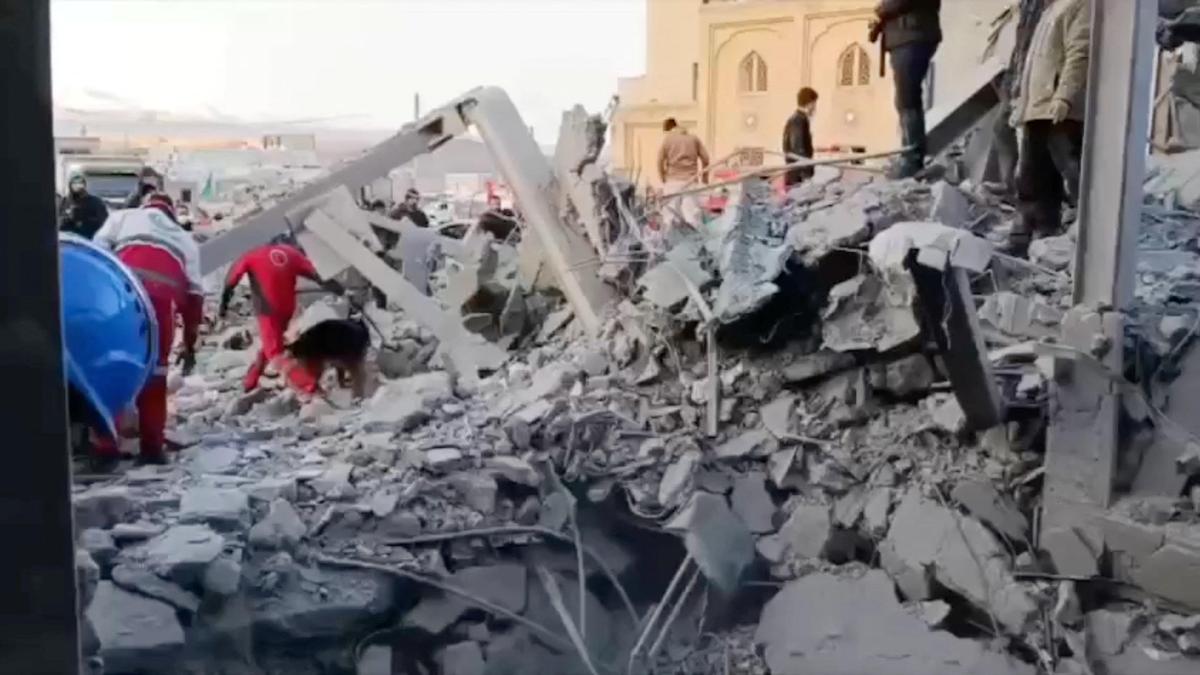
The path forward is blocked by rubble. Literally and figuratively. You cannot build a two-state solution on top of mass graves. You cannot talk about "regional stability" while families are living in tents, wondering if the next sound they hear will be a siren or a heartbeat. The gap between the high-flown language of the joint statement and the gritty, agonizing reality on the ground is vast.
A diplomat's pen is a strange tool. It is light, almost weightless. But when it moves, it can move mountains, or it can sign a death warrant. The pens in Islamabad moved with a sense of urgency that we haven't seen in a long time. They weren't just writing a proposal; they were writing an exit strategy for a world that has lost its way.
We are at a point where the traditional power structures are no longer holding. The old guards are tired, or compromised, or both. Into this vacuum step two nations with a shared border and a shared anxiety. Their plan isn't perfect. It isn't a magic wand. But it is a different voice in a room that has been shouting the same slogans for seventy years.
The cold tea in that office was eventually cleared away. The delegates shook hands and walked out into the light. The document they left behind is now circulating through the halls of power, being dissected by analysts and dismissed by cynics. But somewhere, perhaps in a place like the one where Amina lives, someone is looking at the sky and waiting. They aren't waiting for a miracle. They are just waiting for the screaming to stop so they can finally hear themselves think.
The maps are being redrawn. Not with ink, but with the quiet, persistent pressure of nations that realize the fire next door is already licking at their own porch. If this peace plan fails, it won't just be a diplomatic setback. It will be a confirmation that we have forgotten how to speak the language of compromise, leaving us with nothing but the vocabulary of the void.
The sun sets over the Karakoram mountains, casting long, jagged shadows that stretch toward the west. It is a reminder that everything is connected. The mountains don't care about borders, and neither does the fallout of a failed peace. We are all huddled around the same flickering flame, watching the shadows grow longer, wondering if the dawn will bring a new map or just more rubble.