The lights in Havana do not just go out; they surrender. When the grid fails in the humid grip of a Caribbean evening, the transition from the vibrant, crumbling grandeur of the city to a suffocating, ink-black silence is instantaneous. It is a silence punctuated only by the rhythmic creak of rocking chairs on darkened porches and the distant, frantic buzz of a mosquito. In these moments, the geopolitics of the world stage—the sanctions, the blockades, the diplomatic posturing—cease to be headlines. They become the sweat cooling on a child’s forehead because the fan has stopped. They become the smell of meat spoiling in a dead refrigerator.
For weeks, Cuba has been a nation holding its breath. The "blockade," a word used by the government to describe the tightening web of American sanctions and logistical failures, had moved from a political grievance to a physical weight. The island was running dry. Not of water, but of the crude lifeblood that keeps the heart of its infrastructure beating. Meanwhile, you can explore similar stories here: The Calculated Silence Behind the June Strikes on Iran.
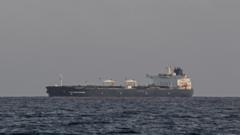
Then, a shape appeared on the horizon of Matanzas bay.
It was the Pechenga, a Russian tanker carrying 700,000 barrels of oil. To a casual observer, it was merely a rusted industrial vessel. To the millions living in the shadow of a near-total energy collapse, it was a floating cathedral. To explore the full picture, check out the excellent analysis by Al Jazeera.
The Anatomy of a Blackout
To understand why a single ship matters, you have to understand the fragility of the Cuban day. Imagine a woman named Elena. She lives in a fourth-floor apartment in Centro Habana. Elena is a composite of a thousand stories I have heard in the doorways of that city, where the peeling paint tells the history of better days.
When the oil runs out, Elena’s world shrinks. The elevators stop. The pumps that push water to her rooftop tank go silent. The buses—the "camellos" and the aging Yutongs—disappear from the streets, leaving thousands to walk miles in the oppressive heat. This isn't just an inconvenience. It is a systematic dismantling of modern life.
Cuba’s energy crisis isn't a new phenomenon, but the recent months reached a fever pitch of desperation. The country requires about 8 million tons of fuel annually, but it produces only a fraction of that locally. For decades, it leaned on the ideological fraternalism of the Soviet Union, then the oil-rich generosity of Venezuela. But Venezuela is a ghost of its former self, and the Russian shipments that once flowed like water became intermittent, hampered by the logistical nightmare of a global banking system that treats any transaction involving Cuba like a contagion.
The statistics are sobering. Cuba’s thermoelectric plants are aging relics, some over forty years old, requiring constant maintenance they rarely receive. When the fuel supply drops below a critical threshold, the plants are forced into "scheduled" outages that last eighteen hours a day.
Then the Pechenga docked.
The Invisible Bridge from Moscow
The arrival of the Russian tanker represents more than just a refill of the tanks at the Antonio Guiteras power plant. It is a signal. It is a reminder that in the grand, messy game of global influence, Cuba remains a vital square on the board.
For Russia, the shipment is a chess move. In a world where Moscow is increasingly isolated by Western sanctions following the conflict in Ukraine, maintaining a foothold in the Western Hemisphere is a matter of strategic pride. For Cuba, it is survival. The relationship is a strange, symbiotic ghost of the Cold War, revived by the shared experience of being outsiders to the dollar-dominated global market.
Consider the mechanics of this arrival. This wasn't a simple commercial transaction. To get that oil to Matanzas, the ship had to navigate a minefield of maritime insurance hurdles and financial sanctions that seek to block the Cuban government from accessing the global economy. Every barrel of that 700,000-barrel cargo represents a calculated risk. It is a middle finger to the embargo, written in the black ink of crude oil.
But the "near-total blockade" isn't just about ships being stopped at sea. It is a financial suffocation. When a bank in Europe or Asia refuses to process a payment for a shipment of medicine or fuel because they fear the long arm of the U.S. Treasury, that is the blockade in action. It is invisible. It is paper-based. But its results are made of concrete and iron.
The Cost of Cold Iron
There is a specific sound a city makes when the power returns. It begins with a collective, distant cheer—a "¡Ya llegó!" that ripples through the neighborhoods. Then comes the cacophony of a thousand appliances surging back to life. The refrigerators groan. The televisions blare. The streetlights flicker and then hold, casting a sickly yellow glow over the potholes and the vintage Chevrolets.
The arrival of the Russian oil provides a reprieve, but it is a fragile one. The 700,000 barrels are a bandage on a gaping wound. It will keep the lights on for a few weeks. It will allow the bakeries to produce bread and the hospitals to run their air conditioning in the surgical wards. But it does not fix the underlying rot of the infrastructure.
The tragedy of the Cuban energy crisis is that it is a cycle. The relief brought by the Pechenga is temporary, a brief inhalation before the next long, suffocating exhale. The people know this. They celebrate the arrival of the ship, but they do so with a weary cynicism. They have seen tankers come and go before. They have seen the "Special Period" of the 90s, and they see the echoes of it now.
The stakes are not just about light and dark. They are about the migration of the young. When the power goes out, the ambition of the youth often goes with it. Why stay in a city where you cannot charge a laptop to learn a trade, or where your business closes because you cannot keep the beer cold? The oil in the hold of that Russian ship is, in a very real sense, an attempt to keep a generation from fleeing.
Beyond the Horizon
The story of the Russian tanker is a story of a world that is fracturing into blocks. It is a story of how the struggles of a superpower thousands of miles away can dictate whether a grandmother in Matanzas can cook her rice on an electric stove.
We often talk about "geopolitics" as if it is an abstract science, a map in a war room with pins and strings. We forget that the strings are tied to the ankles of real people. The "near-total blockade" is not a wall of ships; it is a wall of rules that makes the simple act of buying fuel a feat of international espionage.
As the Pechenga began to pump its cargo into the storage tanks, the pressure in the national grid began to stabilize. The engineers at the power plants, men with grease-stained jumpsuits and eyes red from lack of sleep, watched the gauges climb. For a moment, the crisis recedes.
But out in the Florida Straits, the water remains choppy. The political winds show no sign of shifting. The blockade, in its many forms, remains. And back in Havana, Elena plugs in her fan, feeling the first stirrings of artificial air against her skin, knowing that the ship will eventually leave, the tanks will eventually empty, and the darkness is always waiting just beyond the horizon.
The lights are on for now.
But in Cuba, "now" is the only time that has ever truly mattered.
The ship is in the harbor, the oil is in the pipes, and for one more night, the silence is kept at bay.