The activation of the Endangered Species Committee (ESC)—colloquially termed the "God Squad"—to bypass the Endangered Species Act (ESA) in the Gulf of Mexico represents a calculated prioritization of energy security over biological preservation. This legal mechanism is not a loophole; it is a high-threshold administrative bypass designed to resolve irreconcilable conflicts between federal mandates and national interests. When the ESC waives ESA protections to permit oil and gas drilling, it effectively revalues the biological "existence value" of a species against the "functional utility" of energy infrastructure.
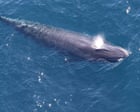
The current tension in the Gulf of Mexico centers on the Rice’s whale, a critically endangered baleen whale whose habitat overlaps with high-yield hydrocarbon blocks. By invoking the ESC, the executive branch acknowledges that standard mitigation measures—such as vessel speed restrictions or seismic survey bans—have reached a point of diminishing returns where the marginal cost of protection exceeds the perceived national benefit of the resource extraction. For a different view, see: this related article.
The ESC Statutory Framework and High-Bar Thresholds
The Endangered Species Committee was established by the 1978 amendments to the ESA. Its existence provides a safety valve for projects of regional or national significance. The committee is comprised of seven high-level officials, including the Secretaries of Agriculture, Army, and Interior, the Administrators of the EPA and NOAA, the Chairman of the Council of Economic Advisers, and a presidential appointee from the affected state.
For the ESC to grant an exemption, the project must meet three rigorous criteria: Related coverage on this trend has been published by Reuters.
- No reasonable and prudent alternative exists.
- The action is in the public interest and carries regional or national significance.
- The benefits of the action clearly outweigh the benefits of alternative courses of action consistent with conserving the species or its critical habitat.
The third criterion is the fulcrum of the entire debate. It requires a quantification of "benefits" that often pits quantifiable economic output (barrels per day, tax revenue, job creation) against non-market environmental goods (biodiversity, ecosystem services, genetic legacy). In the Gulf, this calculation is further complicated by the geopolitical necessity of domestic production versus reliance on global supply chains with higher carbon intensities or lower regulatory oversight.
The Economic Cost Function of Species Preservation
In the Gulf of Mexico, the cost of species preservation is not merely the budget of a conservation program. It is the opportunity cost of stranded assets. When the National Marine Fisheries Service (NMFS) issues Biological Opinions (BiOps) that restrict drilling activities to protect the Rice’s whale, they impose a specific cost structure on operators:
- Operational Friction: Mandatory vessel speed reductions of 10 knots in designated zones increase transit times, raising the daily operational cost of support vessels.
- Acoustic Exclusion Zones: Limitations on seismic testing prevent the discovery of new reserves, effectively capping the long-term production potential of a lease block.
- Decommissioning Liabilities: Delays caused by litigation or regulatory shifts can extend the life of aging infrastructure, increasing the risk of mechanical failure and the eventual cost of removal.
The ESC’s intervention suggests that the federal government has determined the "preservation premium"—the total cost of these restrictions—has eclipsed the economic viability of the Gulf's energy sector. If the cost of protecting 50 remaining whales is estimated to be $10 billion in lost economic activity, the "shadow price" of a single whale is effectively set at $200 million. The God Squad's role is to decide if that price is too high for the taxpayer and the economy to bear.
Biophysical Constraints vs. Energy Density Requirements
The Rice’s whale exists in a narrow depth corridor between 100 and 400 meters along the continental shelf break. This specific bathymetry is also a prime location for mid-water infrastructure. The conflict is spatial and physical.
Hydrocarbon extraction in the Gulf provides a high energy-return-on-investment (EROI). Unlike terrestrial wind or solar, which require vast surface areas and significant mineral inputs per megawatt-hour, deepwater drilling offers high power density. The decision to waive environmental law reflects a strategic bet on this energy density. The US government is prioritizing the stability of the inner continental shelf's energy output as a hedge against volatility in the Permian Basin or international markets.
The "reasonable and prudent alternatives" required by the ESA often involve moving the activity elsewhere. However, geology is non-negotiable. If the oil is under the whale’s habitat, "moving" the project effectively means canceling it. The ESC mechanism is the only legal path to admit that the alternative—zero production—is unacceptable to the current national strategy.
The Precedent of Irreversible Administrative Action
An ESC exemption is rare, having been invoked only a handful of times in U.S. history (notably in the cases of the Tellico Dam and the Northern Spotted Owl). Its use in the Gulf marks a shift from "mitigation-first" policy to "exception-based" policy.
This creates a new regulatory baseline. Once the "God Squad" intervenes, it signals to the judiciary that the executive branch views the specific environmental risk as a secondary priority. This can de-risk multi-billion dollar investments for energy majors like Chevron, Shell, and BP, who have been hesitant to deploy capital in environments where a single lawsuit from an NGO could freeze a project for a decade.
However, this strategy carries a significant risk of "regulatory whiplash." Because the ESC is composed of political appointees, its decisions are susceptible to the ideological shifts of successive administrations. An exemption granted in 2026 could be challenged or administratively stifled by a change in executive leadership in 2029, creating a volatile environment for long-cycle capital projects.
Quantifying the Biological Impact of Hydraulic Noise
The primary threat to the Rice’s whale from drilling is not necessarily a spill, but acoustic interference. Baleen whales rely on low-frequency sound for communication and navigation. The Gulf is already an "acoustic soup" of commercial shipping, military sonar, and industrial activity.
- Masking: Industrial noise overlaps with whale vocalizations, reducing the "communication space."
- Threshold Shift: Intense sounds from seismic airguns can cause temporary or permanent hearing loss in marine mammals.
- Behavioral Disruption: Noise can drive whales away from prime feeding grounds into areas with lower prey density or higher vessel traffic.
The ESC must weigh these biological realities against the technological advancements in "quiet" drilling and "marine mammal observers" (MMOs). If the committee determines that the technology is "good enough" to prevent extinction despite the increased activity, they provide the legal cover for the NMFS to issue a "no jeopardy" finding that would otherwise be impossible under strict ESA interpretation.
The Bottleneck of Judicial Review
Even with an ESC waiver, the project is not immune to the legal system. The Administrative Procedure Act (APA) allows for challenges based on the "arbitrary and capricious" standard. Opponents will likely argue that the ESC ignored the best available science regarding the whale's population trajectory.
The bottleneck here is the speed of the courts versus the speed of the drill bit. By the time a challenge reaches the Supreme Court, the infrastructure may already be in place. This "facts on the ground" strategy is a hallmark of large-scale industrial development. The ESC waiver serves as the primary shield against preliminary injunctions that would otherwise halt work before it begins.
Strategic Recommendation for Infrastructure Stakeholders
Energy firms operating in the Gulf must treat the ESC waiver as a temporary window of opportunity rather than a permanent deregulation. The following logic should govern operational deployment:
- Front-Load Capital Expenditure: Accelerate the installation of subsea infrastructure while the waiver is active to establish a "vested interest" that is harder for future administrations to dismantle.
- Internalize Bio-Acoustic Monitoring: Instead of relying on federal oversight, operators should deploy proprietary autonomous underwater vehicles (AUVs) to track whale presence. High-fidelity data that proves "zero contact" is the most effective defense against future litigation.
- Decouple from Public Interest Generalities: When defending lease activities, shift the narrative from "jobs" to "grid stability" and "carbon intensity reduction." High-yield Gulf wells often have a lower carbon footprint per barrel than heavy crude imported from regions with no environmental standards.
The use of the God Squad is a admission that the current environmental regulatory framework is incompatible with the immediate demands of the national energy profile. It is a blunt instrument used to resolve a failure of the standard bureaucratic process. Stakeholders must realize that while the waiver removes the legal barrier, it increases the reputational and political heat on every barrel extracted from the contested zones. The play is to use the legal clearance to build, but use superior data to prove the "God Squad" was right—that the economy and the species can coexist in a managed, high-tech environment.
The final move is to integrate these "forced" projects into a broader "Net-Positive Impact" framework. By funding massive off-site conservation efforts—such as restoring seagrass in other parts of the Gulf—the industry can offset the localized risk to the Rice’s whale, turning a legal bypass into a defensible environmental trade-off.