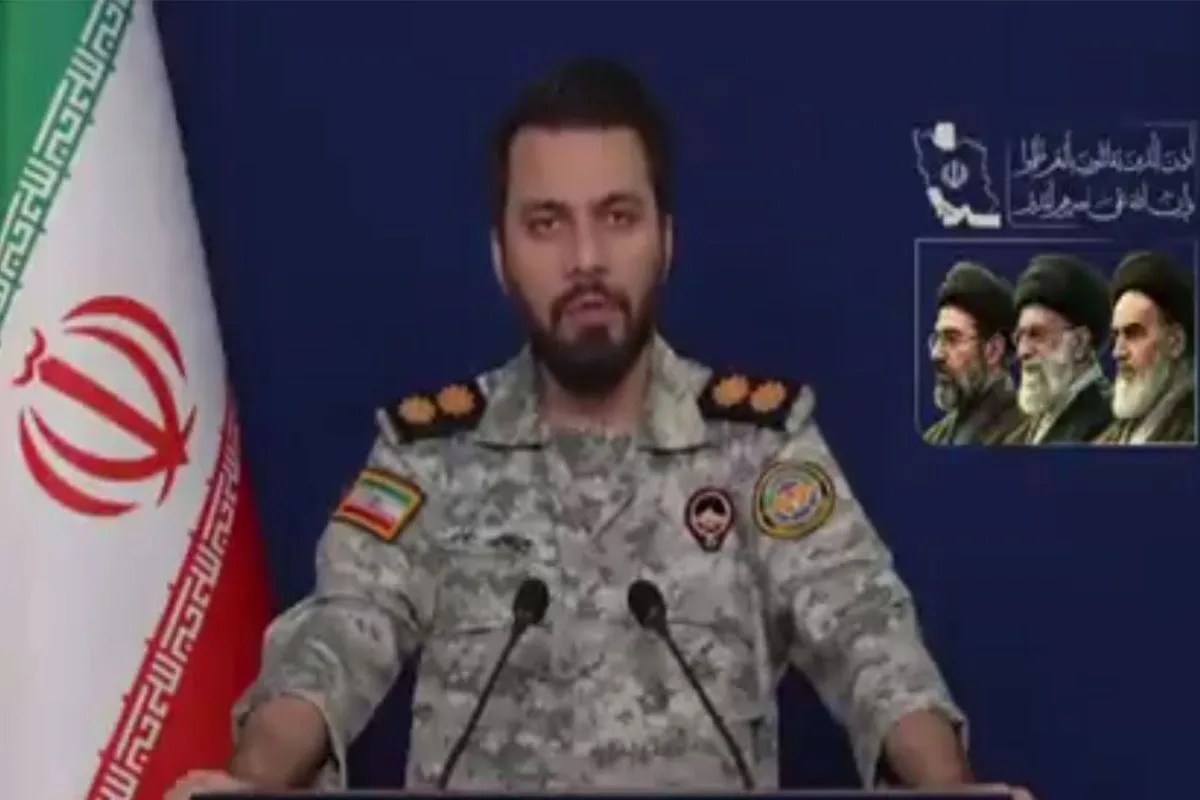
Tehran is signaling a shift from strategic patience to active deterrence. Recent statements from Iranian military leadership suggest that any ground-based violation of their sovereignty will be met with a scorched-earth defensive response. This is not merely rhetorical bravado for a domestic audience. It is a calculated message aimed at Washington and its regional allies, designed to highlight the asymmetrical nightmare that awaits any conventional force attempting to cross Iranian borders.
While the international community often focuses on Iran's nuclear aspirations or its drone exports, the actual mechanics of its "Forward Defense" doctrine are what keep regional planners awake at night. Iran has spent four decades preparing for a specific scenario: a high-intensity ground invasion. They have built a decentralized military architecture specifically designed to survive the initial air superiority that a Western coalition would inevitably establish.
The Architecture of Asymmetric Resistance
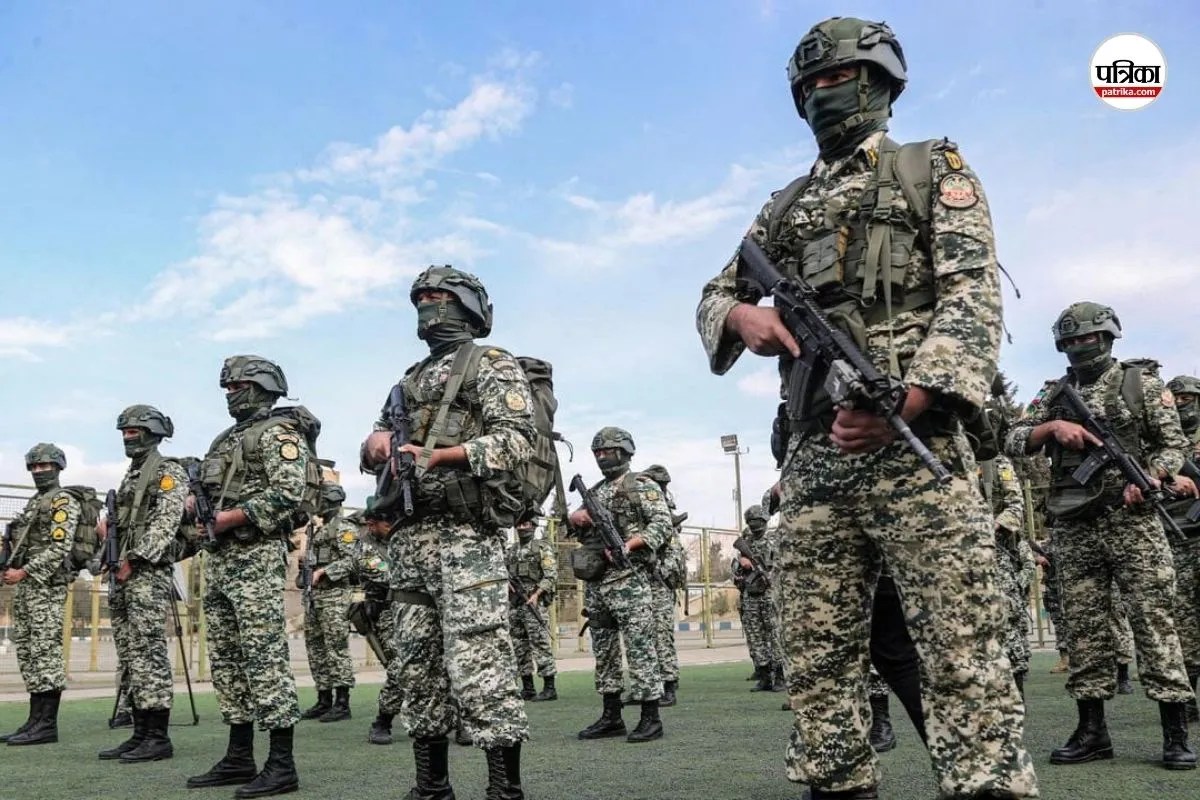
The core of Iran’s defense is not its aging fleet of F-14s or its Soviet-era tanks. It is a doctrine of "mosaic defense." This strategy divides the country into semi-autonomous military zones. If the central command in Tehran is neutralized, local commanders of the Islamic Revolutionary Guard Corps (IRGC) have the standing orders and the hardware to continue an insurgency-style defense without needing a single phone call from the capital.
This decentralization makes the prospect of a "quick" victory impossible. In traditional warfare, you cut off the head of the snake. In Iran, the snake has dozens of heads, each capable of operating independently. They use the rugged, mountainous geography of the Zagros and Elburz ranges as force multipliers. You cannot roll an armored division through a narrow mountain pass without becoming target practice for man-portable anti-tank missiles.
The Missile Umbrella and Coastal Access
Iran’s missile program is the most sophisticated in the Middle East, but its purpose on the ground is often misunderstood. These aren't just for striking cities; they are for denying entry. The Fateh-110 and its successors provide a precision-strike capability that can target specific staging areas or logistical hubs.
If an invasion force attempts to land via the Persian Gulf, they face the Ghadir and Noor anti-ship cruise missile batteries. These are often mounted on mobile launchers hidden in "missile cities"—massive underground complexes carved into coastal mountains. The sheer volume of fire they can produce is designed to overwhelm the Aegis Combat Systems of modern destroyers.
The Human Factor and the Basij
Technology aside, the IRGC relies heavily on the Basij paramilitary force. While Western analysts often dismiss them as poorly trained, their value lies in their numbers and their integration into every level of Iranian society. In a ground war, every street corner, every basement, and every warehouse becomes a combat outpost.
The psychological toll of this type of urban and mountainous warfare on an invading force is immense. There is no "front line" in this scenario. The front line is everywhere. This is the "straight warning" Iran is broadcasting: they are prepared to turn their entire geography into a meat grinder.
Deep Tunnels and Strategic Depth
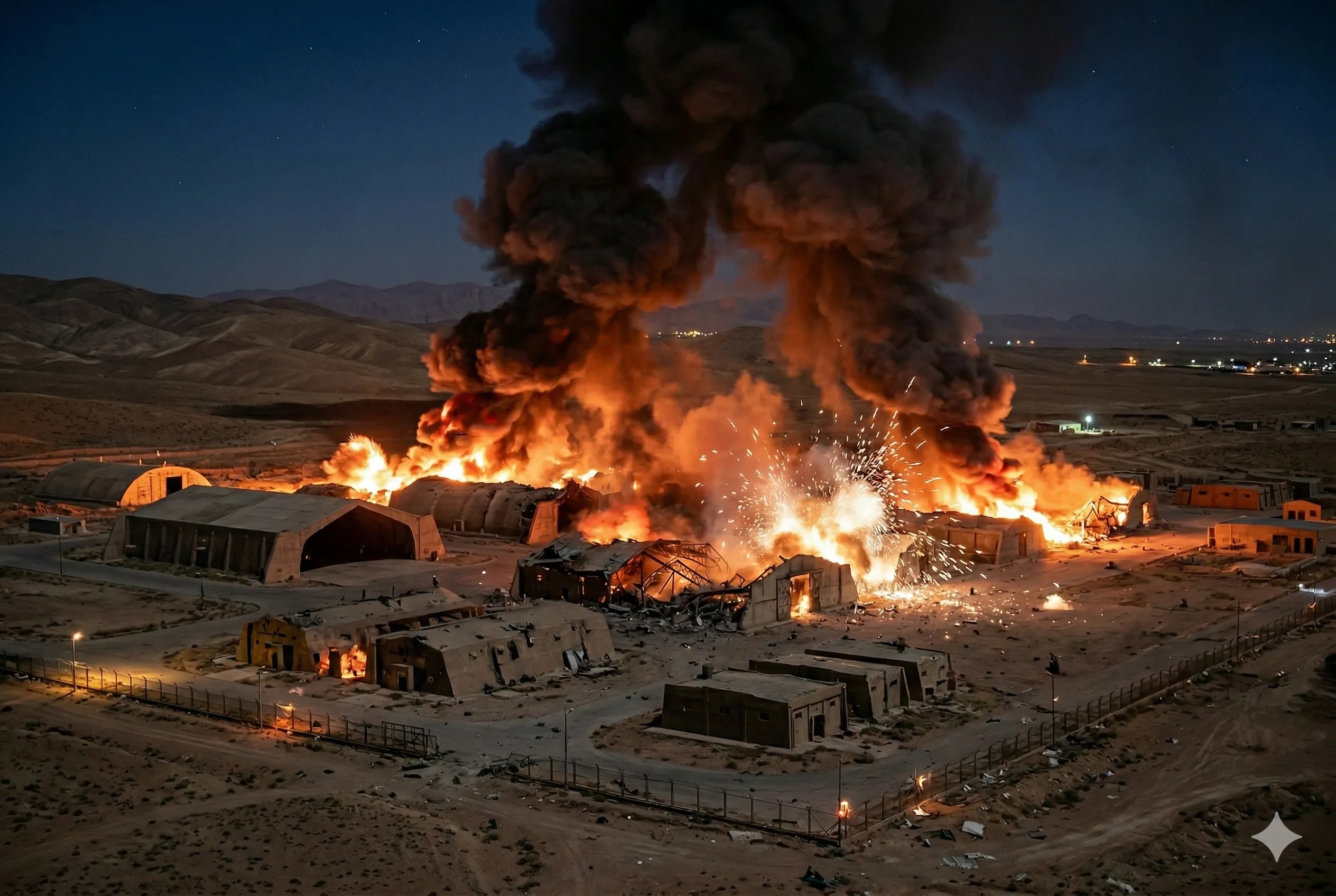
Iran has invested billions into "passive defense." This involves the construction of thousands of kilometers of tunnels and bunkers. They have buried their command structures, fuel reserves, and munitions factories hundreds of meters underground.
- Redundancy: Every major defensive system has multiple backups hidden in different geographic regions.
- Invisibility: Much of this infrastructure is hardened against thermal imaging and satellite surveillance.
- Sustainability: These bunkers are designed to allow personnel to survive for months under siege.
Air strikes can take out bridges and power plants, but they cannot reach the heart of the Iranian military machine. To stop the missiles, you have to go in on the ground. To go in on the ground, you have to face a population that has been ideologically and militarily prepared for this exact moment since 1979.
The Economic Suicide of a Gulf War
The threat isn't just to the soldiers on the ground; it is to the global economy. Iran’s military posture is inextricably linked to the Strait of Hormuz. Roughly 20% of the world’s liquid petroleum passes through this narrow waterway.
If a ground invasion begins, the Iranian military will likely execute its "choke point" strategy. They don't need to defeat the U.S. Navy. They only need to sink a few tankers or sow enough naval mines to make insurance rates for shipping skyrocket to impossible levels. The global economy would shudder. Oil prices would not just rise; they would explode, potentially triggering a global depression before the first armored column even reaches the outskirts of Shiraz.
The Role of Proximity and Proxies
Iran’s "Axis of Resistance" acts as an external layer of the domestic ground defense. Groups in Iraq, Lebanon, and Yemen serve as a tripwire. Any movement toward an Iranian ground invasion would trigger a multi-front conflict.
- Hezbollah would likely open a front in the north.
- Militias in Iraq would target the supply lines and bases necessary for a ground push.
- The Houthis would escalate pressure on Red Sea shipping.
This creates a strategic dilemma for any aggressor. You cannot simply fight Iran; you have to fight a regional network that shares technology, intelligence, and a common goal of ending Western presence in the Middle East.
Why Conventional Models Fail
Military analysts often run simulations based on "net assessment"—comparing the number of tanks, planes, and ships. On paper, the U.S. and its allies win every time. However, these models frequently fail to account for the "will to fight" and the effectiveness of asymmetric attrition.
During the Iran-Iraq War in the 1980s, Iran showed a willingness to endure staggering casualties to protect its territory. That DNA remains in their military doctrine today. They are betting that the American public has no appetite for a conflict that would make the occupations of Iraq and Afghanistan look like minor skirmishes.
The Precision Revolution
In the last decade, Iran has moved away from "spray and pray" tactics. They have mastered the integration of low-cost drones and precision-guided munitions (PGMs). This allows a small team of IRGC soldiers to take out a multi-million dollar command vehicle from several kilometers away.
The cost-exchange ratio is heavily in Iran’s favor. A drone that costs $20,000 can be used to drain a defensive battery of missiles that cost $2 million each. Over a long-term ground campaign, the invading force would be bled dry financially and logistically.
The Reality of the "No One Spared" Threat
When Iranian officials say "not a single life will be spared," they are referring to the total mobilization of their society. This is the logic of a cornered power that views its survival as synonymous with the survival of the state itself. They are not promising a clean, conventional battle. They are promising a chaotic, protracted, and incredibly violent struggle that ignores the traditional "rules" of engagement.
The U.S. military is well aware of this. This is why, despite the heated rhetoric, there is a deep-seated hesitation to engage in a full-scale ground war. The intelligence community understands that the Iranian military is designed to be most effective when it is being invaded. It is a defensive shell lined with spikes.
Any ground war in Iran would not be a march to Tehran. It would be a grueling trek through a vertical landscape where every cave is an armory and every civilian is a potential combatant. The Iranian leadership knows that their greatest weapon is not a nuclear bomb—it is the sheer difficulty of occupying their land. They have turned their entire nation into a fortress, and they are making sure the world knows that the door is booby-trapped.
The threat of total war serves as the ultimate insurance policy for the regime. By making the cost of invasion high enough to be unthinkable, they ensure their own continuity. This isn't just a warning; it is a statement of geographic and military reality. Ground forces are easy to deploy but notoriously difficult to extract once the trap is sprung.