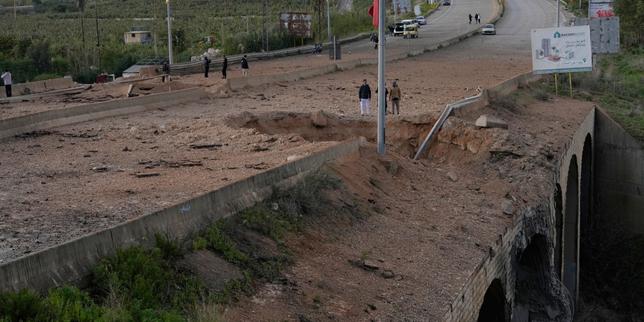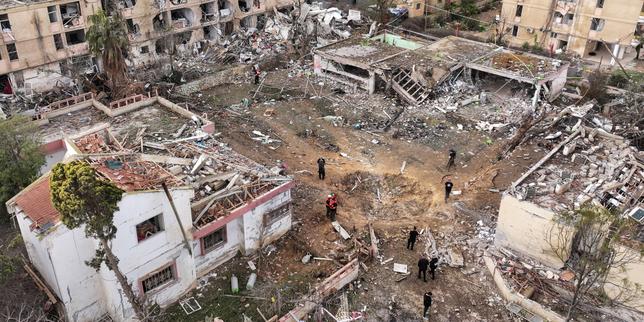
Twenty-one days of high-intensity conflict have pushed the Middle East to a breaking point that many analysts didn't see coming so quickly. You've probably heard the headlines claiming Iran is "ready" for a full-scale war. But readiness is a complicated word in Tehran. After three weeks of watching its regional allies take heavy hits, the Iranian leadership isn't just looking at military maps. They're looking at the survival of their entire political system. The rhetoric coming out of the Iranian Revolutionary Guard Corps (IRGC) suggests a willingness to climb the escalation ladder, yet the actual movement of assets tells a more nuanced story of calculated risk and desperate posturing.
The primary question isn't whether Iran can fight, but whether it can afford to. We're seeing a shift from "strategic patience" to what some officials call "active deterrence." This means Iran is no longer content to sit back while its proxies are dismantled. If you're trying to understand the next move, you have to look past the televised drills and focus on the logistical shifts happening near the borders of Iraq and Syria. Meanwhile, you can find other developments here: The Cold Truth About Russias Crumbling Power Grid.
The Strategy of Managed Chaos
Iran's military doctrine has always leaned heavily on asymmetrical warfare. They know they can't win a traditional head-to-head conventional war against a tech-superior force. Instead, they use a "ring of fire" strategy. This involves encircling their primary adversaries with missile-capable groups like Hezbollah in Lebanon, various militias in Iraq, and the Houthis in Yemen. After three weeks of sustained combat in the region, this ring is under immense pressure.
When the Iranian leadership talks about escalation, they're often referring to the activation of dormant cells or the transfer of more advanced precision-guided munitions to these groups. It's a way to bleed an opponent without triggering a direct strike on Iranian soil. However, this strategy is hitting a wall. The level of attrition among proxy commanders has been staggering. If Tehran doesn't escalate now, they risk losing the influence they've spent forty years and billions of dollars building. To explore the full picture, check out the recent article by USA Today.
I've watched this pattern before. Tehran blusters when they feel cornered. They're cornered right now. The internal pressure from hardliners within the IRGC is pushing the Supreme Leader to authorize a more direct response. They feel that staying quiet makes them look weak, and in the Middle East, looking weak is a death sentence for a regime.
Breaking Down the Military Capabilities
Let's get real about what "escalation" actually looks like on the ground. Iran has the largest missile arsenal in the region. That's a fact. We aren't just talking about old Scuds. They have the Fattah-1, a hypersonic missile they claim can bypass most air defense systems. Whether it works as advertised is debatable, but the threat alone changes the math for regional security.
- Drone Swarms: The Shahed-136 drones, which have seen extensive use in other global conflicts recently, are cheap and effective. Iran can launch hundreds at once to saturate radar systems.
- Ballistic Missiles: The Kheibar Shekan has a range of roughly 1,450 kilometers. It's designed specifically to hit targets with high precision while maneuvering in its final phase.
- Naval Harassment: The Persian Gulf is a choke point. Iran's navy specializes in "swarming" tactics using small, fast boats armed with anti-ship missiles. They don't need to win a sea battle; they just need to sink one tanker to send global oil prices into a tailspin.
Basically, Iran's military is built for a short, violent spike in intensity rather than a long, drawn-out campaign. They want to cause enough pain to force a ceasefire or a diplomatic concession, not to occupy territory.
The Proxy Fatigue Factor
Three weeks of war is a long time for volunteer militias. Hezbollah, which is Iran's crown jewel, is facing a two-front dilemma. They have to defend their positions in Southern Lebanon while maintaining their political grip in Beirut. Iran provides the hardware, but the human cost is starting to weigh on these groups.
If Iran pushes for more escalation, they might find that some of their partners aren't as eager to jump into the fire as they were on day one. We've seen reports of friction between Iranian advisors and local militia leaders in Iraq. The locals don't want their cities turned into rubble for a cause that feels increasingly dictated by Tehran's survival rather than their own local interests.
Why the Domestic Front Matters Most
You can't talk about Iran's military moves without talking about its economy. The Iranian Rial is in the basement. Inflation is rampant. Most Iranians are more worried about the price of eggs and fuel than they are about a war in a distant land. The government knows this.
A full-scale war would likely lead to the destruction of Iran's energy infrastructure. If the refineries go, the regime's ability to keep the lights on—and keep the security forces paid—disappears. This is the ultimate deterrent. The IRGC might be ready for war, but the Iranian Treasury definitely isn't. This creates a fascinating and dangerous "escalation gap." The military wants to prove its worth, while the political elite is terrified of a popular uprising triggered by wartime shortages.
Miscalculations and Red Lines
The biggest risk right now is a mistake. In a high-tension environment, a stray missile or a misidentified target can trigger the very war everyone claims they want to avoid. Iran has tried to set "red lines" regarding ground incursions and the targeting of its "advisors" abroad. The problem is that these red lines keep getting crossed, and Iran’s responses have been largely symbolic—until now.
After three weeks, the symbolic phase is ending. The pressure to "do something" is reaching a boiling point. We're seeing increased movement of the Hajizadeh-led Aerospace Force. They are the ones who handle the big missiles. If you see them moving assets from central Iran to the western provinces, that's the clearest sign that the talk of escalation is turning into an operational reality.
Practical Indicators to Watch
If you want to know what's actually happening, stop listening to the official spokespeople. Look at the shipping insurance rates in the Strait of Hormuz. Look at the flight patterns of Iranian cargo planes heading into Damascus. These are the "tells" of a country preparing for a shift in conflict intensity.
- Cyber Activity: Watch for a spike in state-sponsored hacking attempts against regional infrastructure. This usually precedes physical kinetic action.
- Internal Security: An increase in "morality police" presence or internet shutdowns in Tehran often signals that the regime is bracing for a domestic backlash to a military move.
- Diplomatic Vacancies: When diplomats start leaving Baghdad or Beirut, the window for talking is closing.
The reality of Iran's "readiness" is that it's a desperate play for relevance in a rapidly changing regional order. They're trying to prove they still hold the keys to stability. Ironically, by trying to prove their strength, they may be exposing their greatest vulnerabilities.
Keep an eye on the missile silos in Tabriz and Kermanshah over the next 48 hours. If the launchers stay covered, the escalation is just talk. If those covers come off, the three-week mark was just the preamble to a much larger disaster. You should monitor the official IRGC Telegram channels for sudden shifts in "martyrdom" rhetoric, as this frequently serves as the final internal signaling before an operation. Check the daily Brent Crude price updates as well; the markets often react to intelligence reports before the public even sees them.