Military strikes on Iranian interests don't crush their economy. They calibrate it.
The Western press loves a predictable narrative. An Israeli airstrike happens, a US carrier group moves into the Mediterranean, and the headlines scream about the imminent collapse of the Rial. They point to double-digit inflation and a black market currency that looks like a vertical slide. They tell you Iran is a fragile state one kinetic event away from bankruptcy.
They are wrong. They are looking at the wrong ledger.
What the "consensus" misses is that the Iranian economy has spent forty years evolving into a high-friction, high-resilience organism specifically designed to thrive on the very pressure meant to destroy it. While analysts wait for the "breaking point," the Iranian state has weaponized its own isolation.
The Sanctions Delusion and the Rise of the Fortress Economy
Sanctions are often sold as a tool of economic strangulation. In reality, they act as a massive, unintended protectionist policy.
When you cut a country off from the SWIFT banking system and global imports, you don't just "stop" trade. You force the domestic industrial base to cannibalize the market share previously held by foreign giants. This is the Resistance Economy (Eqtesad-e Moqavemati). While it sounds like a propaganda slogan, the mechanics are cold and functional.
Western observers obsess over oil exports. They see a dip in shipments to the Port of Qingdao and assume the coffers are empty. But they ignore the massive growth in Iran’s non-oil exports—steel, cement, and petrochemicals—shipped via "gray market" channels that don't show up on a Bloomberg terminal.
Iran isn't a victim of isolation; it is the pioneer of the Parallel Economy.
Why Kinetic Strikes Are a Subsidy for the Revolutionary Guard
Every time a US or Israeli missile hits an Iranian-linked target, the IRGC (Islamic Revolutionary Guard Corps) gains more control over the domestic market.
Security threats justify the "securitization" of the economy. When the threat level rises, the IRGC-linked conglomerates—Khatam al-Anbiya and its thousand subsidiaries—are handed the keys to infrastructure projects under the guise of national security. Competition is eliminated. Transparency is branded as treason.
If you want to dismantle the IRGC’s grip on the Iranian economy, you don't bomb them. You lift every single sanction and let the "Dutch Disease" and cheap Western imports rot their domestic manufacturing base from the inside out.
War isn't a disruptor for the Iranian elite. It’s a procurement strategy.
The Rial’s Devaluation is a Feature Not a Bug
The world looks at the Rial losing 90% of its value over a decade and sees failure. The Iranian government sees a massive export subsidy.
A weak Rial makes Iranian steel and agricultural products incredibly cheap for neighbors like Iraq, Afghanistan, and the UAE. While the average citizen struggles with the cost of a Samsung phone, the industrial sector—largely owned by the state or the military—is raking in hard currency from regional trade.
They operate a multi-tiered exchange rate system. It’s a mess of corruption, sure. But it allows the state to provide cheap essential goods to the poor to prevent a full-scale revolution while letting the elite play the arbitrage game between the official rate and the open market rate.
Inflation isn't an accident. It’s a tax on the middle class to fund the survival of the state apparatus.
The Drone Tech Loophole
We are told Iran is a backward, isolated state. Then we see their Shahed drones clogging the skies of Ukraine and realize the "technology gap" is a myth.
Iran has mastered the art of Asymmetric Innovation. They don't try to build a $100 million F-35. They build a $20,000 drone using off-the-shelf components sourced through front companies in Dubai and Malaysia.
This isn't just a military success; it's an economic template. They have created a tech sector that excels at reverse-engineering and "good enough" engineering. By the time a US-Israeli strike destroys a facility, the blueprints have already been decentralized. You can’t bomb a supply chain that lives in the shadows of the global gray market.
The Misunderstood Role of China and Russia
The "West" is no longer the world. This is the hardest pill for DC-based analysts to swallow.
The US-Israeli strikes haven't isolated Iran; they have pushed it into the arms of the BRICS+ architecture. Iran’s entry into the Shanghai Cooperation Organization (SCO) and BRICS isn't symbolic. It provides the legal framework for "Sanction-Proof" trade.
China is the ultimate hedge. As long as Beijing needs a reliable, non-Western-aligned energy source, Iran has a floor on its economic decline. China isn't buying Iranian oil because they are "friends." They are buying it because it’s priced at a massive discount and paid for in Yuan, bypassing the US Dollar’s hegemony.
Every strike that "destabilizes" the region just increases the risk premium on oil, which—ironically—puts more money in the pockets of the very people the strikes are meant to punish.
The "People Also Ask" Reality Check
Does Iran’s economy collapse after a major attack?
No. It contracts in the formal sector and explodes in the informal sector. The "collapse" narrative ignores the fact that 30-40% of Iran’s GDP is unofficial.
Can sanctions stop Iran's nuclear or military program?
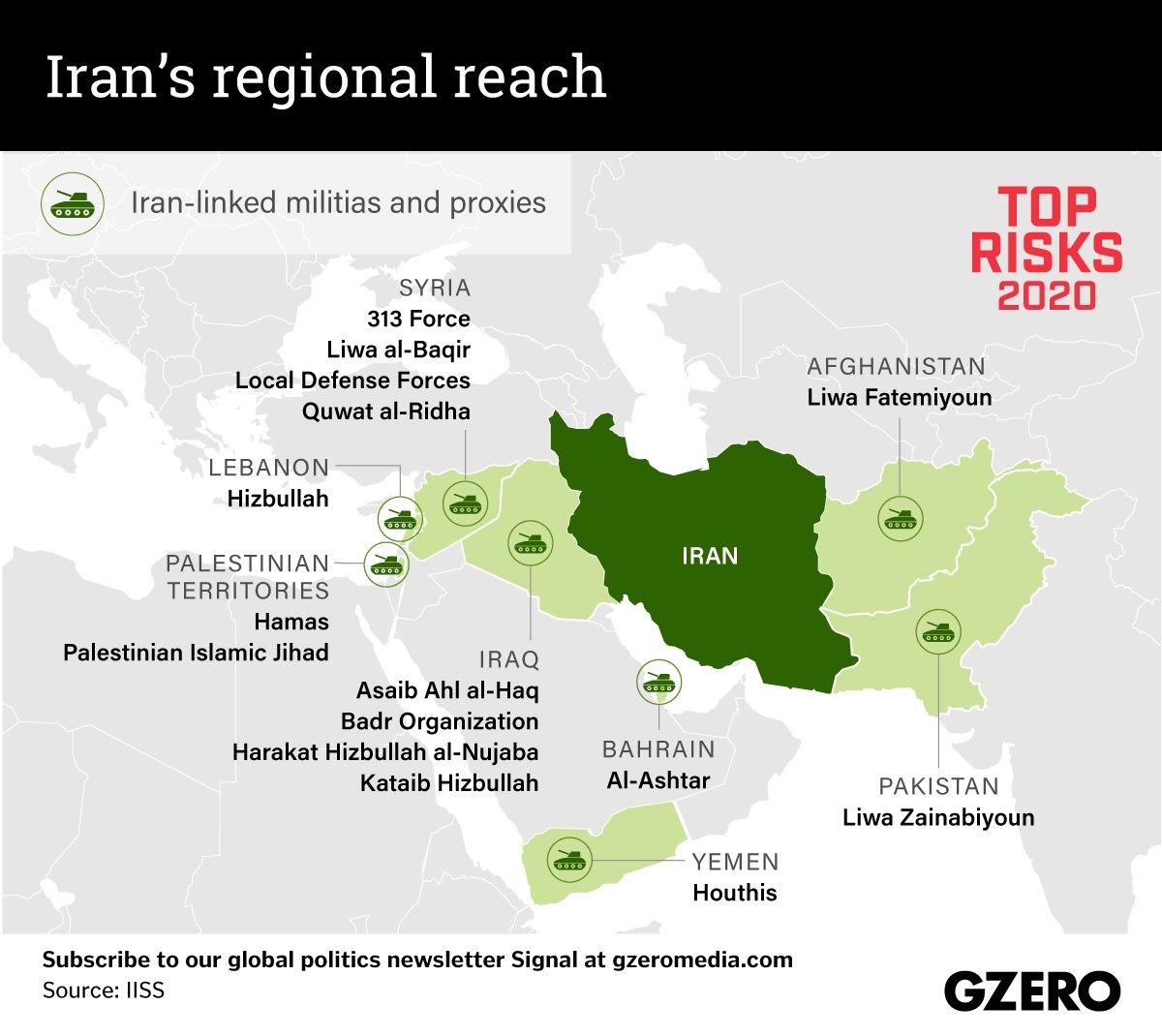
No. Sanctions have been in place since 1979. In that time, Iran has gone from a regional power with a surplus of American spare parts to a drone and missile superpower that dictates terms from Lebanon to Yemen.
Is there a way to actually hurt the Iranian economy?
Yes. Peace. A stable, open, and globalized Middle East would destroy the IRGC’s monopoly on trade. Total transparency is the only weapon the Iranian state cannot survive.
The Hard Truth of Asymmetric Economics
We keep using 20th-century economic warfare against a 21st-century asymmetric state.
We measure "impact" by GDP growth and currency stability—metrics that matter to a democracy with a volatile electorate. They don't matter to a revolutionary state that views economic hardship as a "divine test" and a tool for purging Western influence.
The US and Israel can hit every base from Bandar Abbas to Tehran, but as long as the "Gray Market" exists and the state controls the bread and the bullets, the regime's economic foundation remains untouched.
Stop looking at the Rial. Start looking at the supply chains. The more you hit them, the more they harden. The more you isolate them, the more they integrate with the East.
The strategy isn't working because the premise is flawed. You cannot bankrupt a country that has learned how to turn poverty into a weapon of war.
Go ahead. Launch another round of sanctions. The IRGC's accountants are already pricing it in.


