The collapse of ClarionCo—the soap and cleaning products manufacturer formerly known as CLARITY-The Blind Craftsman—was not a failure of its workforce. It was a failure of the modern financial structures that claim to support social impact but often stifle it. When the firm entered liquidation, it left behind more than just unpaid creditors; it exposed a systemic flaw in how we value labor. For over 160 years, this institution proved that blind and disabled workers could compete in a cutthroat manufacturing market. Then, the math stopped working.
The immediate cause of the shutdown was a lethal combination of rising energy costs, post-pandemic supply chain disruptions, and a crippling debt load. But that is the surface-level autopsy. To understand why a company with a guaranteed "feel-good" brand and a dedicated staff went under, you have to look at the mechanics of the Social Enterprise model. It is a precarious tightrope walk where the mission often eats the margin.
The High Cost of Doing Good
Most businesses operate on a simple principle: maximize efficiency to maximize profit. A social enterprise like ClarionCo operates on a contradictory one: maximize employment for those the traditional market rejects. This creates an inherent "productivity gap" that must be bridged by either premium pricing, government subsidies, or extreme operational efficiency.
In the case of ClarionCo, the gap became a canyon. While the company produced high-quality soaps and toiletries, it was competing against global conglomerates with massive economies of scale. When raw material prices for surfactants and packaging spiked by 30% in a single year, the company couldn't pass those costs onto consumers who were already facing a cost-of-living crisis.
The Subsidy Trap
Historically, the UK government provided the Work Choice and later the Access to Work grants to help offset the additional costs of employing disabled staff. However, these funds are often bureaucratic and slow to adapt.
- Fixed Costs: Industrial equipment must be modified for safety and accessibility.
- Training: Onboarding takes longer and requires specialized instructors.
- Infrastructure: The physical footprint of a factory for the blind requires specific tactile and auditory layouts that standard warehouses lack.
When the government pivoted its support models, firms like ClarionCo were left holding the bill for an infrastructure that their competitors didn't have to fund. It was an uneven playing field from the start.
When Private Equity and Social Mission Clash
In its final years, the company sought private investment to stay afloat. This is where the narrative shifts from a tragedy of circumstance to a lesson in corporate governance. When a social enterprise takes on traditional debt or private equity, the "Social" part of the mission often becomes a secondary concern to the "Enterprise" part.
The transition from a charity-led model to a commercial one under the ClarionCo banner was intended to modernize the brand. The goal was to move away from "pity purchases" and toward a competitive lifestyle brand. It was a noble ambition. But modernization requires capital, and capital comes with strings.
The pressure to hit growth targets led to aggressive expansion into retail spaces where margins are razor-thin. If a batch of product is late or a contract is missed, the penalties from major retailers can wipe out a month's worth of profit. For a workforce that requires stability and specific pacing, the "move fast and break things" mentality of modern business was a toxic fit.
The Debt Cycle
The company didn't just run out of cash; it ran out of time.
- Phase 1: Initial loans are taken to cover seasonal lulls.
- Phase 2: Interest rates rise, making the debt service more expensive than the actual manufacturing process.
- Phase 3: Management spends 80% of their time managing creditors instead of innovating the product.
By the time the liquidators were called in, the brand's reputation—its most valuable asset—was the only thing left.
The Myth of the Skill Gap
The most frustrating aspect of this collapse is the narrative that disabled workers are a liability. This is a lie.
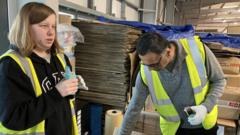
During the height of the crisis, the staff at the East London factory remained the most consistent part of the operation. The institutional knowledge lost in that liquidation is staggering. We are talking about chemists, machinists, and logistics experts who happened to be blind. They didn't lose their jobs because they couldn't do the work; they lost their jobs because the overhead of their environment was deemed "inefficient" by an accounting spreadsheet.
A Failure of Public Procurement
If the UK government was serious about social value, ClarionCo would never have struggled for orders. The Social Value Act 2012 was supposed to ensure that public sector contracts took social impact into account. Yet, many local authorities and government departments continued to buy cheaper, mass-produced soap from overseas because it saved pennies on the unit price.
True "Social Value" would have meant prioritizing a local manufacturer that kept 80+ disabled people off the benefits rolls and in meaningful, tax-paying employment. Instead, the system chose the lowest bid, effectively subsidizing the collapse of a national treasure with one hand while paying for unemployment benefits with the other.
Is the Model Broken?
The survival of the "mission" mentioned in the original reports refers to the fact that some staff have transitioned to other social firms, or that the brand name might be revived. But a brand name without the factory floor is just a ghost.
To prevent the next ClarionCo from failing, the business community must acknowledge that Social Procurement is not charity. It is a strategic investment.
- Direct Contracts: Governments must move beyond "considering" social value to mandating a percentage of spend with disability-confident employers.
- Patient Capital: We need investment funds that accept lower returns in exchange for verified social outcomes.
- Modernization Grants: Instead of just subsidizing wages, we should be subsidizing the automation and technology that allows disabled workers to be more productive than their able-bodied counterparts.
The death of a 160-year-old firm is a warning. It tells us that our current version of capitalism has no room for the "inefficient" human element, no matter how much "social impact" is written into the annual report.
If you want to support this mission, stop looking for the cheapest price. Look for the most expensive impact. Demand to know who made your soap, how they were treated, and why their factory is still open—or why it isn't.
Contact your local MP and ask why the Social Value Act isn't being used to keep domestic, disability-led manufacturing alive.