The air in the Kashmir Valley doesn't just carry the scent of pine and cold water. It carries a weight. For decades, that weight has been the silent, thrumming anxiety of two nuclear powers standing chest-to-chest, separated by a line that is often drawn in blood. When the sirens wail in the border towns, people don't look at maps. They look at the sky. They look for the streak of a vapor trail or the flash of an afterburner that signals the world might be ending.
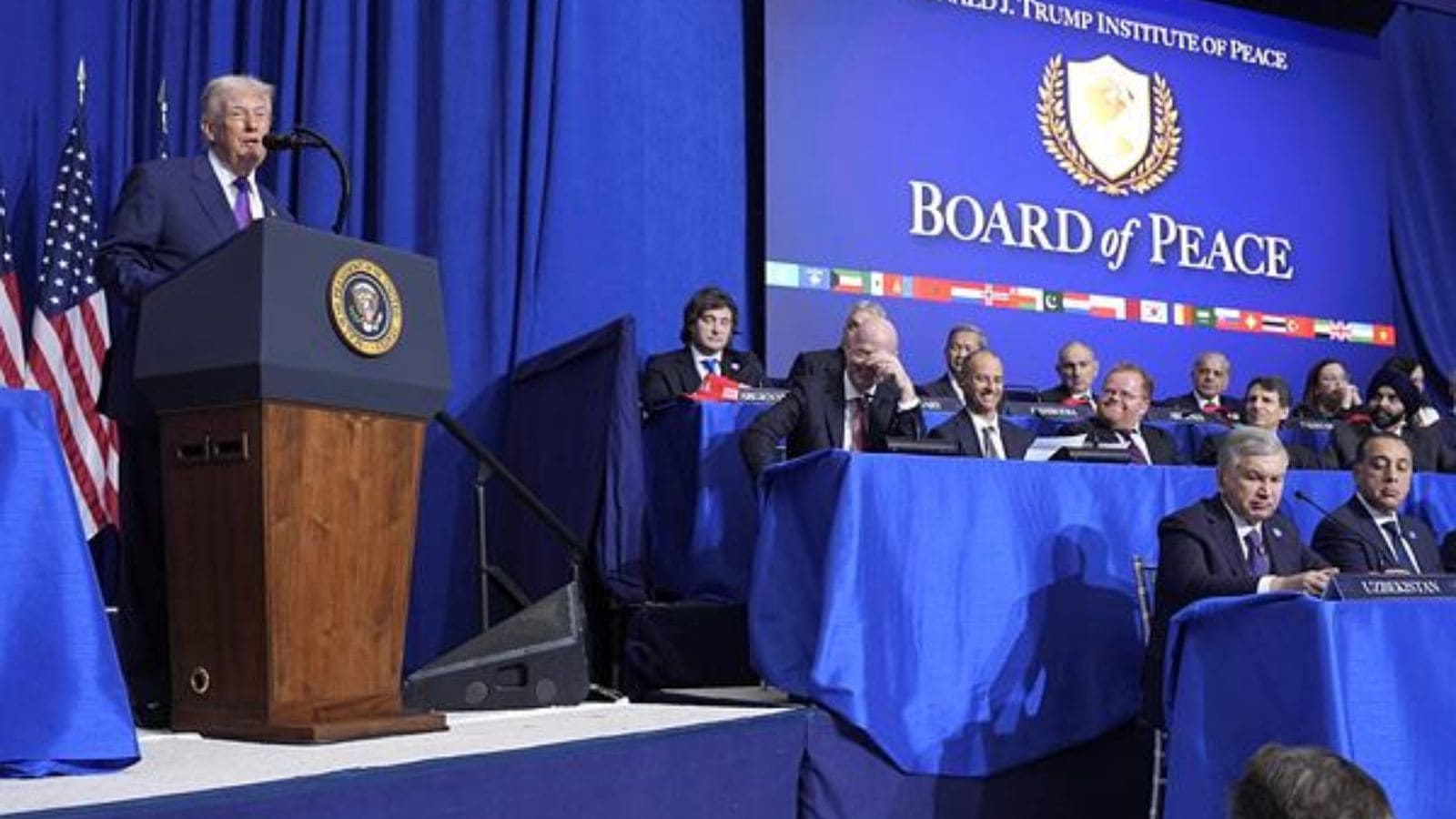
Donald Trump stood before a crowd recently and spoke about that very sky. He didn't use the cautious, marbled language of a career diplomat. He didn't talk about "bilateral de-escalation frameworks" or "multilateral peacekeeping initiatives." He talked about money. He talked about expensive toys falling from the clouds. Specifically, he claimed to have stepped between India and Pakistan during a moment of high-octane peril, asserting that his intervention stopped a war where "eleven expensive jets were shot down."
It is a staggering number. In the world of modern aerial warfare, losing eleven advanced fighter jets in a single skirmish isn't just a bad day at the office. It is a generational catastrophe. To understand the gravity of that claim, one has to move away from the podium and into the cockpit.
The Price of a Single Second
Think about a fighter pilot. Let’s call him Arjun, a hypothetical wing commander for the Indian Air Force, or perhaps his counterpart across the border, a man named Tariq. Neither of these men wakes up wanting to trigger a global apocalypse. They wake up, check their gear, and climb into machines that cost more than the lifetime earnings of an entire village.
When Trump speaks of "expensive jets," he is touching on a visceral truth that often gets lost in geopolitical analysis. A modern fighter—whether it’s an F-16, a Rafale, or a MiG-21—is a miracle of engineering and a pit of soaring costs. When one goes down, it isn't just a loss of hardware. It is a loss of prestige, a loss of a highly trained human life, and a potential spark for a fire that no one knows how to put out.
The reality of the 2019 tensions, which Trump was likely referencing, was a fever dream of confusion and adrenaline. India launched an airstrike on Balakot. Pakistan responded. The dogfight that followed resulted in the confirmed downing of an Indian MiG-21 and the brief, high-profile capture of Wing Commander Abhinandan Varthaman.
Trump’s narrative, however, scales this up to a cinematic level. Eleven jets. In his version of history, the sky was raining titanium.
The Art of the Narrative Intervention
Why does a former president frame a nuclear standoff as a matter of "nothing like money"? It is a window into a specific philosophy of power. To Trump, the world isn't a chess board of ancient grievances and ethnic complexities; it’s a ledger. If you can show both sides that the cost of the conflict—the literal, dollar-for-dollar cost of those eleven jets—outweighs the benefit of the fight, you win.
But the real problem lies elsewhere. The people living in the shadow of the Himalayas aren't thinking about the sticker price of a Lockheed Martin contract. They are thinking about the "Invisible Line."
The Line of Control is a jagged scar across the earth. For a farmer tending to saffron fields near the border, peace isn't a signed treaty in a Washington ballroom. Peace is the absence of the "thud." The thud of artillery. The sonic boom that cracks windows. When a leader claims he stopped a war, he is claiming he held back the tide of history.
Consider what happens when that claim meets the hard wall of military records. Most defense analysts and international observers maintain that the 2019 skirmish was far more contained than Trump’s "eleven jets" figure suggests. Yet, the story persists because stories are often more powerful than spreadsheets. If a leader can convince a population that he alone averted a massacre, he gains a form of political capital that is, as he says, "nothing like money."
The Human Cost of Hyperbole
There is a danger in turning war into a tally of expensive machinery. When we focus on the jets, we forget the villages. We forget that every time a pilot ejects, two nations hold their collective breath, wondering if this is the moment the "hotline" fails.
The standoff between India and Pakistan is a delicate dance. It is a relationship defined by a shared history and a divided present. It is a house of cards built on top of a powder keg. Diplomacy in this region usually requires the precision of a surgeon, moving slowly, acknowledging every nuance and every "pivotal" moment of shared culture.
Trump’s approach is more like a sledgehammer. By asserting that he stepped in and "stopped" it, he positions himself as the ultimate arbiter. It’s a narrative of the Great Man theory—the idea that individual personality can override decades of institutional friction.
But talk to someone who has actually lived through a border shelling.
"The ground doesn't care about the price of the jet," a local elder might say, watching the dust settle. To the person on the ground, the jets are just birds of prey. Whether one fell or eleven fell matters less than whether more are coming tomorrow. The tension isn't just a "business" problem to be solved with a deal; it’s a living, breathing anxiety that dictates where children can play and where the sheep can graze.
The Ledger of Peace
The former president’s fascination with the "expensive" nature of war highlights a bizarre paradox of the modern age. We have reached a point where war is so technologically advanced that it is almost too expensive to conduct on a large scale. The loss of eleven jets would represent billions of dollars in sunk costs, not to mention the decades required to train the pilots who flew them.
In a way, Trump’s rhetoric accidentalizes a deep truth: the sheer cost of modern conflict is its own kind of deterrent. But that deterrence only works if the actors are rational and the information is clear.
When narratives become inflated—when "one jet" becomes "eleven"—the clarity of the situation begins to blur. We start to live in a world of competing realities. In one reality, a localized skirmish was de-escalated through a mix of international pressure and back-channel communication. In another, a singular figure stood in the breach and halted a mechanical slaughter.
Trust is the ultimate currency here. If the public cannot agree on how many planes fell, how can they agree on how to move forward? The "human element" isn't just about the people in the line of fire; it’s about the collective psyche of nations that are being told different versions of their own survival.
The Echo in the Valley
The story of the India-Pakistan conflict isn't over. It doesn't end with a press conference or a campaign rally. It continues every night when the sun sets over the Karakoram Range.
We often look for heroes in these stories. We want to believe that someone, somewhere, has the power to simply say "stop" and have the world obey. It’s a comforting thought. It’s much more terrifying to realize that peace is actually maintained by thousands of small, invisible choices made by colonels, diplomats, and local leaders who decide not to pull the trigger today.
The jets are symbols. They are fast, they are sleek, and they are incredibly expensive. But they are empty without the pilots, and the pilots are nothing without the ground they are sworn to protect.
If we view the world only through the lens of what things cost, we lose sight of what things are worth. A jet has a price tag. A peaceful night in a border village is priceless.
The next time a streak of light appears over the valley, the people below won't be checking their bank accounts. They will be looking at each other, waiting to see if the world is still there. They will be waiting to see if the invisible line holds for one more day.
The mountains remain silent, indifferent to the claims of men in far-off cities, holding the secrets of every plane that ever fell and every one that was never meant to fly.
Would you like me to research the specific military specifications of the aircraft involved in the 2019 Balakot incident to compare the actual versus the claimed losses?