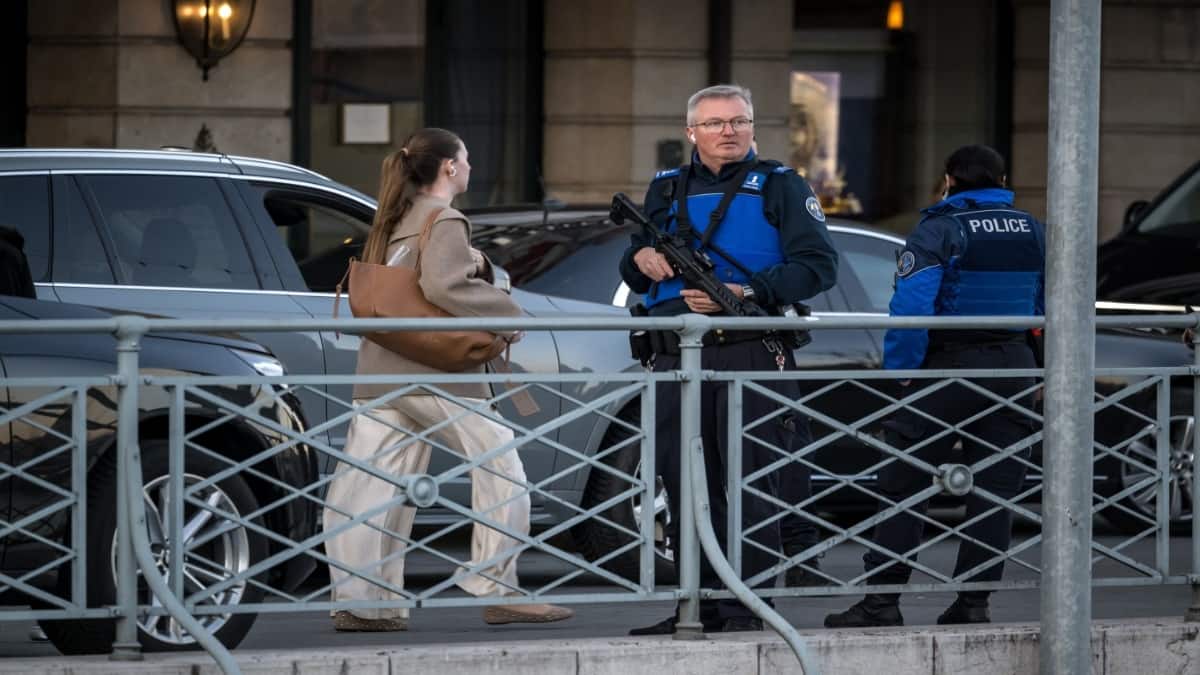
The room in Geneva smells of expensive floor wax and old, cooling coffee. It is a sterile, quiet scent that masks the metallic tang of reality—the smell of wet wool, diesel, and iron that currently defines the lives of millions three hours to the east. Inside these high-ceilinged halls, the air is climate-controlled to a perfect, indifferent temperature. Outside, in the Donbas, the temperature is measured by the depth of the mud and the heat of an incoming shell.
Diplomacy is often described as a chess match, but that gives the process too much credit for logic. In reality, the recent wrap-up of talks between the United States and Ukraine in Geneva felt more like a séance. One side is trying to summon a future that involves borders, sovereignty, and the simple right to exist without being erased. The other side—represented by the conspicuous silence and the "no rush" signals radiating from the Kremlin—is waiting for the clock to run out.
The Man in the Mud vs. The Man in the Suit
To understand what just happened in Switzerland, you have to look past the joint statements and the carefully worded press releases. Consider a hypothetical soldier named Mykola. He isn't a strategist. He is a former high school history teacher who now spends his days calculating the trajectory of drones. While the diplomats in Geneva discussed "strategic frameworks" and "security architecture," Mykola was likely trying to figure out if his boots would last another week in a trench that feels more like a grave every time it rains.
The gap between Mykola’s trench and the Geneva conference table is where the tragedy of modern geopolitics lives. The United States and Ukraine emerged from these talks with a show of unity, a handshake intended to signal to the world that the alliance is ironclad. They spoke of long-term commitments. They spoke of the "unwavering" nature of Western support.
But "unwavering" is a heavy word to carry when you are the one being shot at.
Russia’s signal that it is in "no rush" for a peace deal isn't just a tactical stance. It is a psychological weapon. It is the sound of a predator breathing steadily, waiting for the prey to tire. By refusing to engage in the urgency of the Geneva momentum, Moscow is betting on the one thing they believe the West lacks: patience. They are betting that the voters in Ohio, the taxpayers in Berlin, and the politicians in Washington will eventually get bored, or distracted, or broke.
The Architecture of a Stalemate
The talks were designed to solidify the roadmap for Ukrainian victory, or at least a sustainable defense. The U.S. delegation brought data, logistics, and the promise of continued flow. The Ukrainian delegation brought the desperate, burning energy of a nation that knows every day of delay is measured in funerals.
What they found, however, was a wall of strategic indifference from the East. Russia isn't just fighting for land; they are fighting to prove that the international order is an illusion. When the Kremlin signals that there is no hurry for a deal, they are effectively saying that the rules of the room in Geneva don’t apply to them. They are treating the concept of peace not as a goal, but as a hostage.
This creates a terrifying paradox for the negotiators. If you push too hard for a deal, you look desperate, and the price goes up. If you wait, people die. It is a math problem where the variables are human heartbeats.
The Invisible Stakes of the Long Game
We often talk about "war fatigue" as if it’s a medical condition that affects observers. We read the news, we see the headlines about Geneva, and we feel a slight heaviness before scrolling to the next thing. We are tired of the conflict.
But fatigue is a luxury. Mykola doesn't have the option of war fatigue. Neither does the mother in Kyiv who has learned to distinguish the sound of a Shahed drone from a moped. For them, the Geneva talks are not a news cycle; they are a lifeline that feels like it’s being frayed by the slow, deliberate indifference of their aggressor.
The "no rush" signal is a calculated move to turn the passage of time into a weapon of war. Every week that passes without a breakthrough is a week where the Russian military can dig deeper, lay more mines, and wait for the political winds in the West to shift. They are playing a game of historical endurance, banking on the idea that democracy is too noisy and too fickle to maintain a singular focus for years on end.
The Sound of Silence
When the talks concluded, there were no breakthroughs. There were no "eureka" moments where the clouds parted and a path to peace was revealed. Instead, there was a reaffirmation of a grim reality. The U.S. and Ukraine are locked in a room, shouting for justice, while the person with the key is standing outside, checking his watch and smiling.
The tragedy of the "no rush" stance is that it transforms peace into a commodity. It suggests that the lives being lost today are less important than the political leverage gained tomorrow. It is a cold, calculated devaluation of human life in favor of territorial ego.
In the hallways of Geneva, the echoes of the closing statements faded quickly. The diplomats went back to their hotels. The journalists filed their stories. The world moved on to the next crisis. But the silence from the Kremlin remained—a heavy, suffocating blanket that says, "We will wait as long as it takes for you to give up."
The Weight of the Handshake
The image of the U.S. and Ukrainian officials shaking hands is powerful, but it is also fragile. It represents a commitment to a set of values that are currently under fire—literally and figuratively. That handshake has to hold up against the weight of a Russian economy that has been fully converted to a war footing. It has to hold up against the fatigue of a global audience that is increasingly prone to looking away.
If we treat these talks as just another news item, we miss the point. The Geneva wrap-up wasn't a conclusion. It was a pulse check. And the pulse is steady, but the pressure is rising.
Consider the reality of a world where "no rush" becomes the standard for ending a war. It is a world where the aggressor dictates the tempo of suffering. It is a world where the quiet rooms of Switzerland are more about managing a tragedy than stopping one.
The real story isn't the communiqué. The real story is the gap between the polished mahogany of the conference table and the jagged, frozen earth of the front line. It is the story of people who are being told to wait for a peace that someone else is in no hurry to provide.
Mykola is still in that trench. The coffee in Geneva is cold. The clock is ticking, but only for those who value the lives being lost. For the rest, the silence is a strategy.
The only way to break that silence is to prove that the "no rush" gamble is a losing bet. It requires a level of persistence that matches the cruelty of the delay. It requires an understanding that the stakes aren't just about borders on a map, but about whether the world still believes that some things are worth the rush.
History isn't written by the people who wait for the right moment. It is written by the people who refuse to let the moment pass them by. As the lights go out in the Geneva hall, the question isn't what was said today, but what will be done tomorrow when the silence from the East becomes even louder.
The mud in the Donbas is drying, and then it will freeze again, and then it will melt. The cycles of the earth don't care about diplomacy. Neither does a missile. Only people care. And right now, the people are being told to wait.
Would you like me to analyze the specific geopolitical implications of the U.S.-Ukraine bilateral security agreements discussed during these sessions?