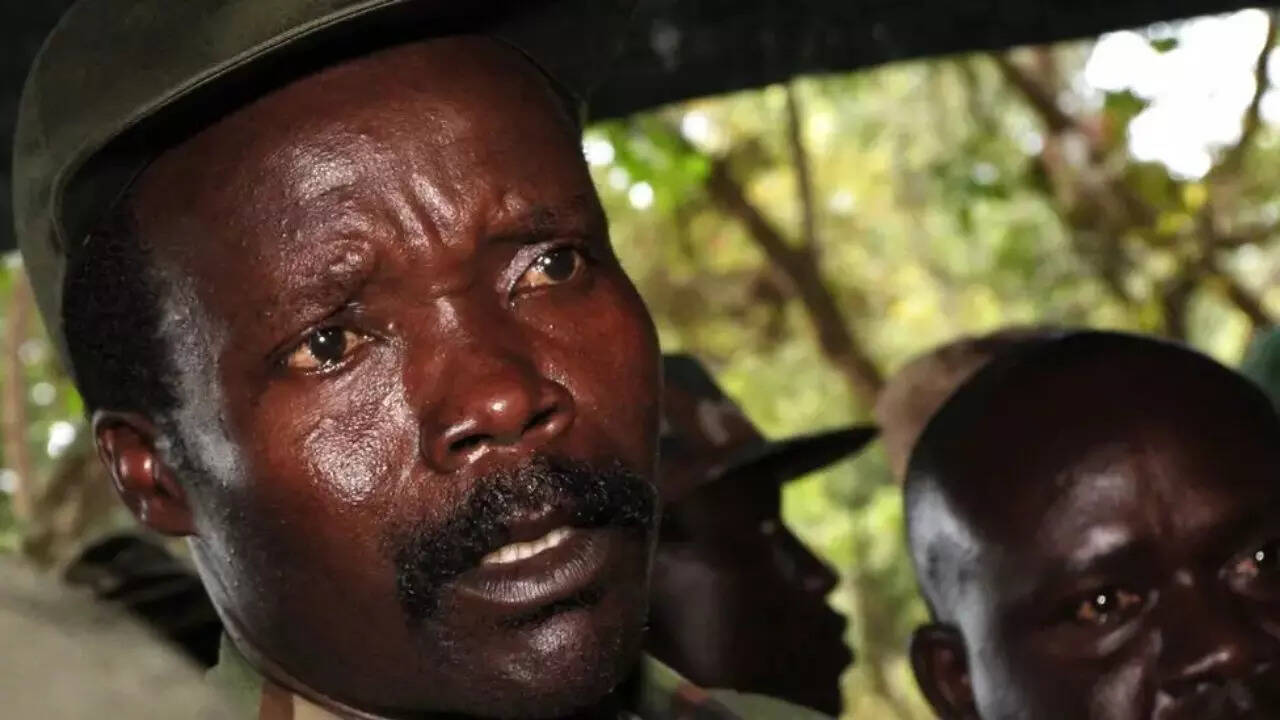
Joseph Kony is still alive. For nearly four decades, the leader of the Lord’s Resistance Army (LRA) has evaded the combined military might of the African Union, United States special forces, and high-tech satellite surveillance. He remains the world's most enduring fugitive, a man who transformed from a local Ugandan rebel into a global symbol of human rights atrocities. While the international community moved on to newer conflicts in Ukraine or the Middle East, Kony stayed in the shadows. He did not survive by luck. He survived through a sophisticated blend of geographical exploitation, opportunistic political alliances, and a brutal internal command structure that turns his captives into his most loyal protectors.
The hunt for Kony effectively stalled years ago. In 2017, both the U.S. and Ugandan militaries called off their search, claiming the LRA had been reduced to irrelevance. They were half right. The LRA no longer poses a conventional military threat to the Ugandan state, but Kony himself remains a potent, destabilizing force in the vacuum of the Central African Republic (CAR) and the disputed enclave of Kafia Kingi. He is not a hermit hiding in a cave. He is a mobile tactical entity.
The Geography of Lawlessness
Kony’s primary survival tool is the map. He operates in the "shatter zones" of East and Central Africa—areas where national borders are lines on paper rather than realities on the ground. The tri-border region between South Sudan, the Democratic Republic of the Congo (DRC), and the CAR is a vast, densely forested wilderness roughly the size of France. It is almost entirely devoid of roads, cellular service, or government presence.
When the Ugandan People’s Defence Force (UPDF) would push into the DRC, Kony would simply slip across the border into the CAR. When international pressure mounted in the CAR, he retreated toward the Sudanese-controlled territory of Kafia Kingi. This "border-hopping" exploit takes advantage of the lack of extradition treaties and the deep-seated mistrust between neighboring governments. Military commanders cannot simply chase a rebel leader into a sovereign neighbor's territory without risking a full-scale diplomatic crisis or an accidental war between national armies. Kony knows this. He uses the sovereignty of weak states as his personal shield.
The Kafia Kingi Connection
The most significant factor in Kony's recent longevity is his relationship with Sudan. For years, the government in Khartoum used the LRA as a proxy force to destabilize Southern Sudan. While that formal relationship cooled after South Sudan’s independence, intelligence reports consistently place Kony’s inner circle in the Kafia Kingi enclave, a mineral-rich territory disputed between Sudan and South Sudan.
In this region, the LRA has transitioned from a marauding rebel group into a commercial enterprise. They trade "blood ivory," gold, and diamonds looted from the DRC and CAR for food, ammunition, and medicine. This is not the behavior of a dying cult; it is a diversified survival strategy. By integrating himself into the local informal economy, Kony has made himself useful to local power brokers who value the goods his soldiers bring out of the bush.
The Psychology of the Human Shield
The LRA is unique because of its recruitment model. Almost every soldier currently protecting Joseph Kony was once his victim. By kidnapping children and forcing them to commit unspeakable acts of violence against their own communities, Kony creates a psychological break. These soldiers feel they have no home to return to. They believe the world views them as monsters, leaving them with only one source of identity and protection: the "Father" himself.
This creates an impenetrable inner circle. Unlike political rebels who might be tempted by a bribe or a seat in a new government, Kony’s personal guard is bound to him by a mixture of spiritual terror and a lack of alternatives. He has spent decades refining a cult of personality centered around Acholi mysticism and a perverted interpretation of the Ten Commandments. He claims to be a medium for spirits that tell him when an attack is coming or who among his ranks is a traitor. In the isolation of the jungle, without access to outside information, this propaganda is absolute.
The Failure of High Tech Warfare
The U.S. intervention, known as Operation Observant Compass, deployed some of the most advanced tracking technology on the planet. They used Reaper drones, signals intelligence (SIGINT), and thermal imaging to scan the canopy. It failed to catch him.
Technology struggles in the triple-canopy rainforest. Heat signatures are masked by the dense vegetation, and SIGINT is useless against a group that has banned the use of satellite phones and radios. Kony’s LRA reverted to "bush technology." They use runners to deliver handwritten notes. They move in small groups of ten to fifteen, leaving almost no trail. They walk in streams to hide their tracks. They have learned to live entirely off the land, avoiding the need for large, detectable supply chains.
The LRA’s tactical evolution has outpaced the digital warfare strategies designed to stop them. When the U.S. withdrew, they cited the high cost and the diminished size of the LRA—estimated at under 100 armed fighters. But for the villages in the CAR and northern DRC, those 100 fighters are a constant, terrifying reality. A dozen men with machetes and AK-47s can still destroy a community, even if they no longer threaten a capital city.
The Complicity of Silence
There is a political convenience to Kony’s continued existence. For the Ugandan government, the "threat" of the LRA long served as a justification for high military spending and a close security relationship with the West. For the governments of the CAR and DRC, Kony is a low priority compared to the dozens of other rebel groups fighting for control of mines and cities.
The international community has also suffered from "outrage fatigue." The Kony 2012 movement, despite its massive viral reach, ended in a messy collapse of the organization behind it. This left a vacuum of public attention. When the Western public stopped caring, the political pressure to maintain a costly and difficult military mission vanished.
Kony has been "dying" for thirty years. He has been reported as sick with diabetes, dying of exhaustion, or assassinated by his own men. Yet he persists. He survives because he understands the friction of the terrain and the indifference of the world. He is not a man who can be caught with a drone strike or a press release. He is a ghost of the Garamba, protected by the very children he stole and the very borders that were meant to keep him out.
Until the governments of the region can agree on a unified, cross-border security strategy that prioritizes the lives of the villagers in the "shatter zones" over their own territorial disputes, the ghost will continue to walk. He will remain a living reminder of the catastrophic failure of international justice.
The price of this failure is still being paid in the CAR, where LRA splinter groups continue to loot, kill, and kidnap. Joseph Kony is no longer a revolutionary; he is a permanent fixture of the regional instability. He is the personification of a war that refused to end.
Stop looking for a headline about his capture and start looking at the maps of the gold and ivory trade routes. That is where you will find the man.