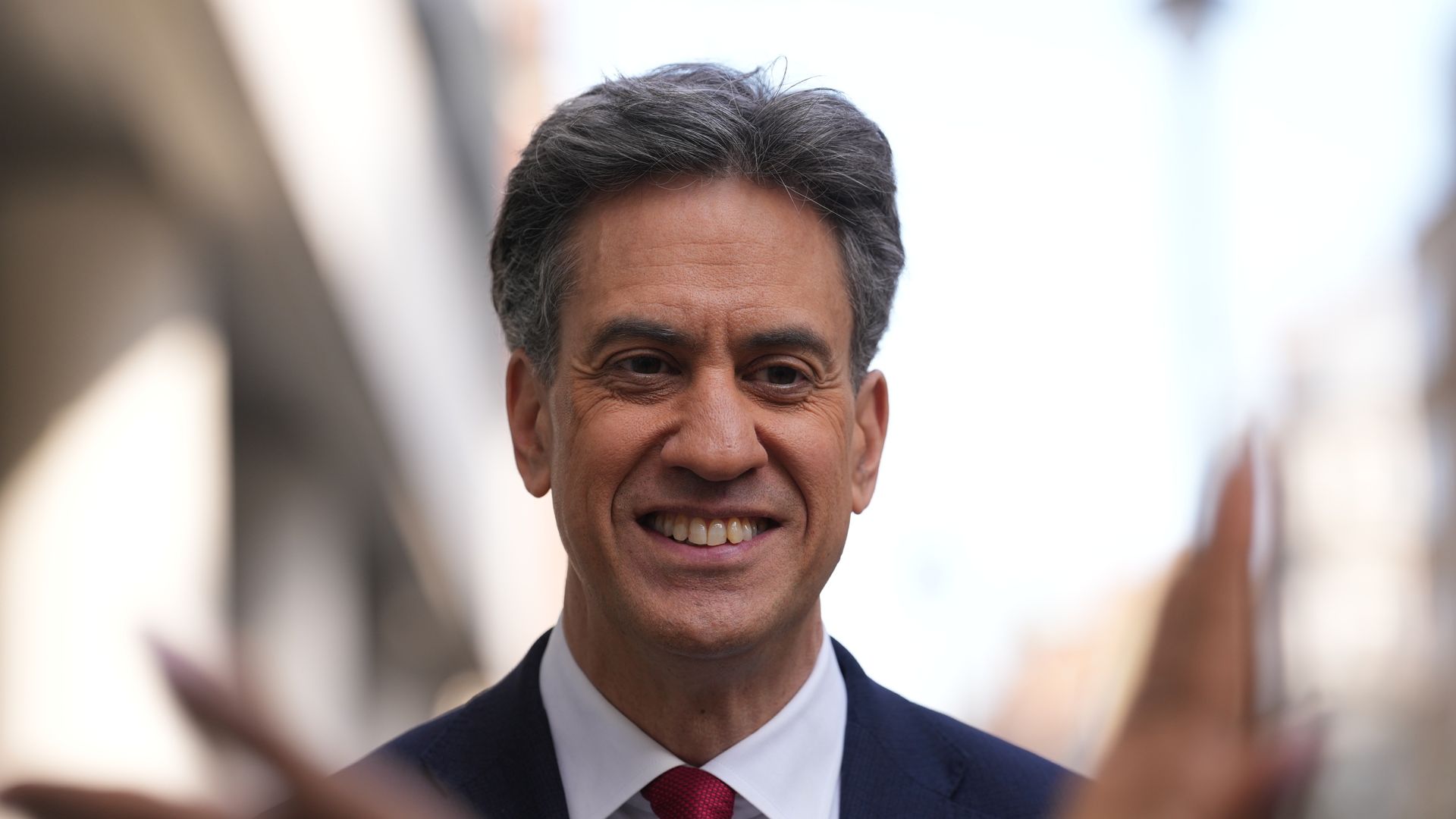
The Department for Energy Security and Net Zero recently scrambled to shut down reports that Energy Secretary Ed Miliband is on the verge of greenlighting the controversial Jackdaw gas field. Official spokespeople dismissed the media chatter as unfounded speculation, insisting that no final decision has been made. This knee-jerk denial fails to mask the severe geopolitical and economic reality crushing the UK government. Miliband is trapped between an electorate terrified of soaring energy bills and a manifesto that explicitly promised to halt new oil and gas licensing.
The government line is technically true but practically irrelevant. Regulators are still demanding more environmental data from the developers, giving the ministry a convenient procedural shield to hide behind. Yet the true story is not about administrative paperwork. It is about a massive, structural energy deficit that is rapidly eroding political ideals. With war in the Middle East causing severe oil price spikes and a continuous threat to supply routes passing through the Strait of Hormuz, the luxury of purely ideological energy planning has evaporated.
The Illusion of the Clean Break
Labour swept into power promising a clean energy revolution, viewing the North Sea as a sunset asset to be managed toward a graceful retirement. Reality has a brutal way of tearing up manifestos. The UK is acutely exposed to global market shocks because of its heavy reliance on gas-fired power. When international markets panic, British households immediately absorb the blow.
To understand why Miliband is facing intense internal and external pressure to yield, one must examine the legal gridlock holding up these assets.
The core mechanism at play involves two massive projects.
- Jackdaw: A major gas field situated roughly 150 miles off the coast of Aberdeen.
- Rosebank: The largest undeveloped oil resource in the UK, located about 60 miles west of Shetland, holding an estimated 300 to 500 million barrels of oil equivalent.
Both were approved under the previous Conservative administration. Both were promptly dragged into the legal mud by environmental campaigners. The Scottish High Court subsequently quashed those approvals, determining they were unlawful because the government failed to consider downstream emissions—the carbon generated when the extracted fuel is actually burned by consumers.
This forced the operators to conduct brand-new environmental assessments. It also dumped the final decision straight onto Miliband's desk.
The dilemma is paralyzing. If he rejects them, he proves his climate credentials but risks presiding over a worsening domestic energy crisis and the loss of billions in potential tax revenue. If he approves them, he shatters the trust of the green lobby and faces an immediate rebellion from the left wing of his own party.
The Rigged Math of Energy Independence
Advocates for drilling, ranging from opposition politicians to industry bodies, argue that approving Jackdaw and Rosebank is the only logical path to energy security. They claim that domestic production will shield the public from foreign dictators and volatile global shipping lanes.
This argument is deeply flawed.
The UK does not own the oil and gas extracted from its continental shelf. Private corporations extract it and sell it on the global open market to the highest bidder. British consumers pay the global market rate regardless of whether the gas comes from Qatar or 150 miles off the Scottish coast.
The true benefit to the nation is not cheaper fuel, but tax revenue and jobs. The government currently levies a combined tax rate of 78 percent on North Sea profits, driven heavily by the energy profits levy. Denying these projects means walking away from a massive fiscal injection at a time when public finances are stretched to their absolute limit.
Furthermore, the physical state of the North Sea cannot support a total rescue of the British economy. Decades of aggressive extraction have left the basin mature and depleted. Any new fields are smaller, more technically complex to reach, and carry higher marginal costs.
The Regulators Forcing the Timeline
While politicians argue over the morality of fossil fuels, the Offshore Petroleum Regulator for Environment and Decommissioning is quietly pulling the strings. The regulator recently issued letters to the developers identifying dozens of issues across their revised environmental assessments.
Government inspectors specifically challenged the corporate claim that the emissions from these projects were not significant on a global scale. The regulator noted that comparing a single project's emissions to the entire planet's output is not a meaningful metric. They also flagged the reliance on outdated climate models that assume the world will successfully limit warming to $1.5^\circ\text{C}$, a target that international scientific bodies now view as highly improbable.
This regulatory back-and-forth buys the energy secretary time, but it does not solve his problem. Decisions must eventually be made. The industry is signaling that if Jackdaw receives approval by late summer, it could begin pumping gas in time for the winter heating season. This presents a massive temptation for a government terrified of a winter energy crisis.
The political theater of denying that a decision has been made is standard Westminster crisis management. The real story is the silent death of absolute climate certainty in the face of brutal global economics. Leaders are realizing that managing a transition away from fossil fuels without destroying industrial capability and public goodwill is an impossibly narrow tightrope.
Let me know if you want me to analyze the specific fiscal impact that rejecting the Rosebank oil field will have on the UK treasury's projected revenue through 2030.