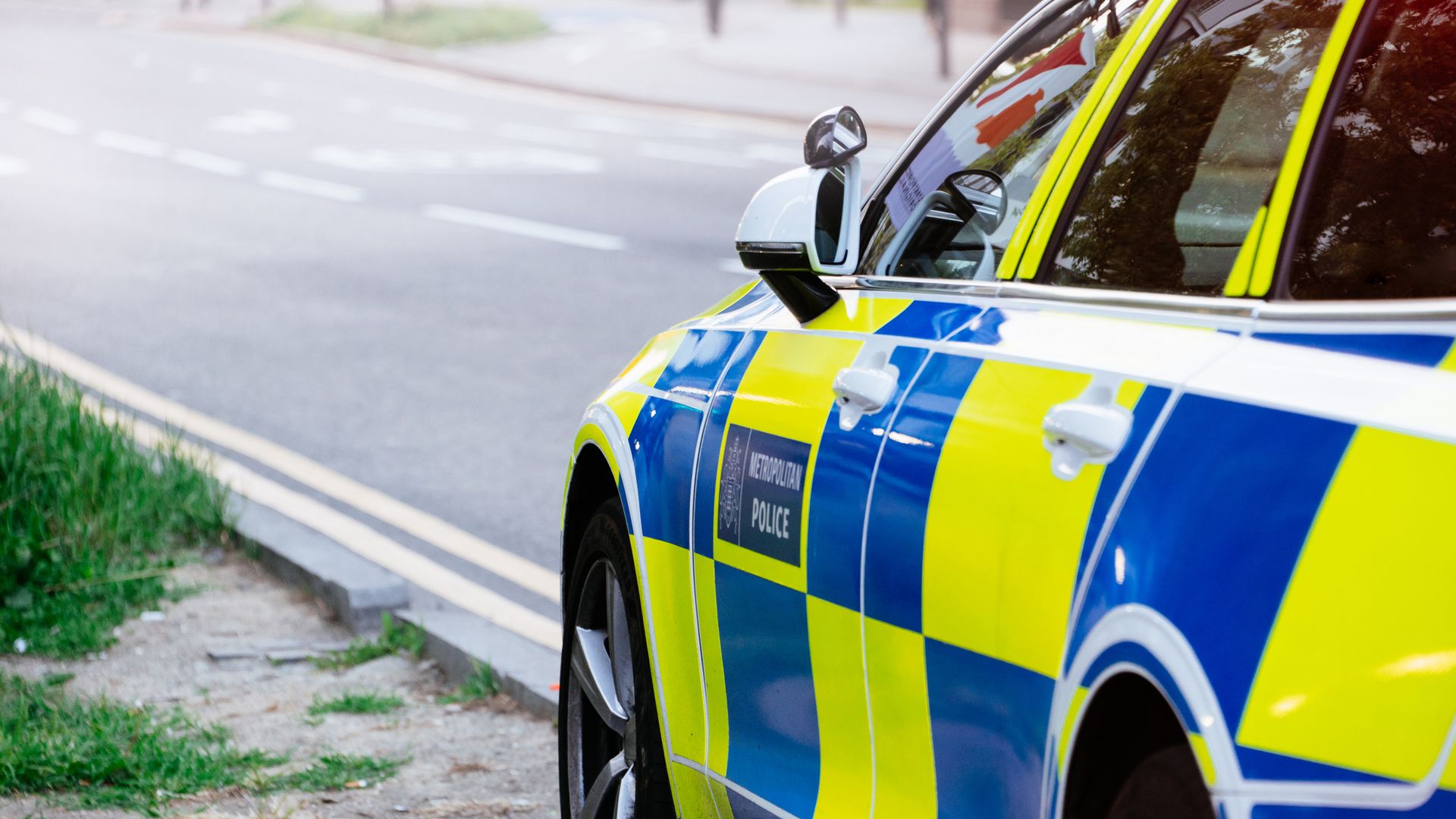
The headlines write themselves. Two men arrested. A nine-year-old girl dead. A community in shock. The public demands justice, the police issue a stern press release, and the cycle of reactive outrage repeats. We treat these tragedies as moral failings of individual "reckless" drivers. We pretend that arresting people after the fact is a solution.
It isn't. It’s a performance. You might also find this similar story insightful: Strategic Asymmetry and the Kinetic Deconstruction of Iranian Integrated Air Defense.
If you think the arrest of two men in the wake of a child’s death makes the roads safer today than they were yesterday, you are wrong. In fact, our obsession with the criminal justice aspect of traffic fatalities is the very thing preventing us from actually stopping them. We are addicted to the "bad actor" narrative because it absolves the system. It lets the engineers, the car manufacturers, and the city planners off the hook.
The Myth of the "Reckless Driver"
Most journalism surrounding car crashes focuses on the suspects. Were they racing? Were they drunk? How fast were they going? These are the wrong questions. By focusing on the individual, we ignore the environment that permitted the behavior. As highlighted in detailed articles by The New York Times, the effects are notable.
I have spent years looking at urban design and data-driven safety metrics. What I see is a "forgiveness gap." A well-designed road is supposed to be "self-explaining." It should use physical cues to dictate speed. Instead, we build wide, straight residential roads that look and feel like runways, and then we act shocked—shocked!—when people drive on them like they’re on a highway.
When a pilot crashes a plane, we don't just blame the pilot and go home. We look at the cockpit interface, the air traffic control protocols, and the mechanical redundancies. In the automotive world, we just arrest the "pilot" and leave the faulty "cockpit" exactly as it was. If a road allows a driver to reach speeds that can kill a child, that road is a failure of engineering, regardless of who was behind the wheel.
Arrests Are Not Prevention
The "lazy consensus" suggests that high-profile arrests act as a deterrent. This is a fantasy.
Research into the psychology of deterrence shows that the severity of punishment has almost zero impact on behavior. What matters is the certainty of being caught and the immediacy of the consequence. An arrest weeks or months after a crash does nothing to change the calculus of a driver in the moment.
If we actually cared about that nine-year-old girl, we wouldn't be talking about the arrests. We would be talking about "Modal Filtering" and "Continuous Sidewalks."
- Modal Filtering: Closing off residential streets to through-traffic so they cannot be used as high-speed "rat runs."
- Continuous Sidewalks: Forcing cars to drive over a raised sidewalk to enter a street, signaling to the lizard brain of the driver that they are an intruder in a pedestrian space.
We don't do these things because they are "inconvenient" for drivers. We prefer the occasional high-profile tragedy and a subsequent arrest because it doesn't require us to change our commute. We trade lives for three minutes of saved time, then use the police to mask the transaction.
The Kinetic Energy Math We Ignore
Let’s talk about the physics people hate to acknowledge. The relationship between speed and fatality is not linear; it’s power-law.
The kinetic energy of a moving vehicle is calculated by the formula:
$$E_k = \frac{1}{2}mv^2$$
When you double the speed ($v$), you quadruple the energy. A car hitting a child at 40 mph is not twice as dangerous as one hitting them at 20 mph; it is infinitely more lethal. At 20 mph, the survival rate for a pedestrian is roughly 90%. At 40 mph, it drops to about 10%.
Most modern SUVs weigh over 4,000 pounds. When you combine that mass ($m$) with the $v^2$ of modern suburban speeds, you aren't driving a car; you’re piloting a kinetic weapon. Yet, we allow these weapons to be sold with "sport" modes and massive blind spots, and we allow them to be driven on streets where children play.
The "contrarian" truth is that the men arrested are just the inevitable output of a system designed for speed over safety. If it wasn't them, it would have been someone else. The variables—the road width, the vehicle mass, the lack of physical barriers—remained constant.
Why "Education" Campaigns Are a Waste of Money
Every time a tragedy like this occurs, some well-meaning bureaucrat suggests a "Road Safety Awareness" campaign. They buy billboards. They make sad commercials.
It’s a grift.
Education does not change behavior in high-stress, high-speed environments. Environmental design does. If you want a driver to slow down, you don't tell them to "think of the children." You make the road narrower. You plant trees close to the curb to disrupt their peripheral vision. You install chicanes that make it physically impossible to drive fast without damaging their precious rims.
The reason we don't do this is that it’s politically "polarizing." People want "safe streets," but they also want to drive 45 mph through someone else's neighborhood. You cannot have both.
The Accountability Gap
I’ve seen city councils blow millions on "Smart City" tech and AI-powered traffic cameras that do nothing but generate revenue. They avoid the hard, physical work of "road diets" because it upsets the local "Save Our Parking" contingent.
We need to stop asking "Who did this?" and start asking "What allowed this?"
- Why was the speed limit 30 mph when the survival threshold is 20 mph?
- Why were there no physical speed-reduction measures on a known cut-through?
- Why are we allowing vehicles with 5-star "occupant" safety ratings to have 0-star "pedestrian" safety profiles?
The suspects in the crash will go through the legal system. The lawyers will argue, the judge will rule, and the headlines will fade. But the road where that girl died will likely remain exactly as it was. It will still be wide. It will still be straight. It will still be inviting the next "reckless" driver to hit 50 mph before they even realize they're in a residential zone.
Stop Asking the Wrong Questions
People ask: "How can we stop people from driving like this?"
The answer: You can't. Human beings are flawed, distracted, and occasionally malicious. You cannot "fix" human nature. You can, however, fix the infrastructure. You can build cities that assume the driver is an idiot and design the environment to mitigate that idiocy.
If a child dies on a street, the city engineer should be in that courtroom alongside the driver. The manufacturer of the oversized vehicle should be in the seat next to them. Until we spread the "blame" to the people who actually design the parameters of our lives, we are just waiting for the next arrest report to populate our feeds.
Arresting the driver is the easy way out. It’s the "thoughts and prayers" of traffic enforcement. It’s time to stop pretending that handcuffs solve structural failures.
Build narrower roads. Build heavier bollards. Stop caring about the "flow of traffic" and start caring about the flow of blood.
The men are in jail. The road is still a killer. You do the math.