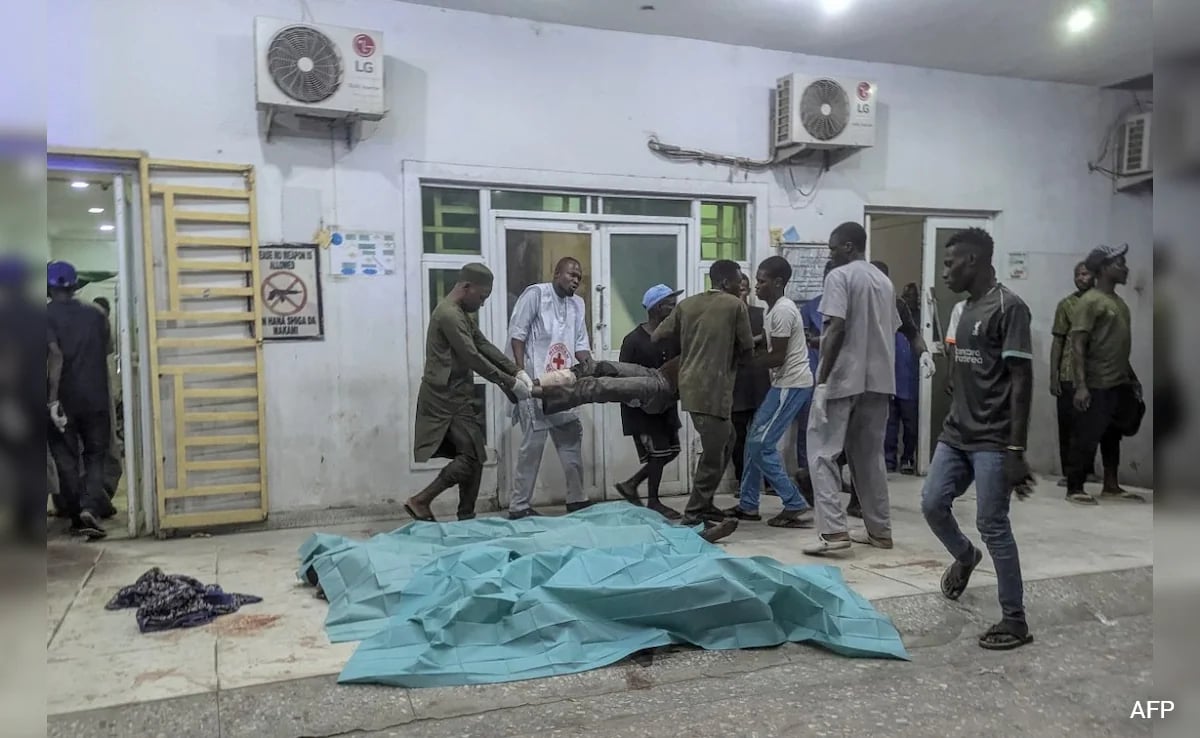
The stability of a sovereign nation rests upon the integrity of its "Baseload Social Contract," a precarious equilibrium where the state provides reliable critical infrastructure—specifically electricity and physical security—in exchange for civic compliance and tax revenue. When the power grid collapses, the state loses its primary mechanism for economic coordination and domestic control. This systemic failure creates a power vacuum that external actors often attempt to fill through the projection of kinetic force. The current escalation involving threats of external intervention amidst a domestic energy catastrophe is not merely a political standoff; it is a textbook case of infrastructure-driven state de-legitimization.
The Kinetic Feedback Loop of Grid Failure
A total grid collapse is never a singular event. It is the terminal stage of a "Cascade Failure Model" where deferred maintenance, fuel supply bottlenecks, and over-stressed transmission lines reach a point of thermodynamic irreversibility.
In this environment, the loss of electricity triggers a specific sequence of societal breakdown:
- The Information Blackout: Telecommunications towers rely on battery backups that typically expire within 4-12 hours. Once these fail, the state loses the ability to transmit directives, and the population loses the ability to verify rumors, leading to localized panic.
- The Logistics Freeze: Modern supply chains operate on Just-In-Time (JIT) delivery systems coordinated by digital ledgers. Without power, fuel pumps stop, refrigeration fails, and the movement of food and medicine halts.
- The Security Dissolve: As the urban environment darkens, the cost of policing rises exponentially. Security forces, often distracted by the need to protect their own families from the resource shortage, experience high desertion rates.
The threat of an "invasion" or external kinetic intervention during this window of vulnerability is a strategic maneuver designed to capitalize on "Institutional Friction." An army entering a country with a collapsed grid faces minimal organized resistance but maximum logistical complexity.
The Geopolitical Calculus of Intervention
External actors utilize a "Cost-Benefit Matrix" when deciding to threaten or execute an intervention during a domestic crisis. The rhetoric surrounding an invasion often masks a deeper strategic objective: the securing of "Critical Nodes."
- Resource Extraction Points: If the country in question possesses high-value commodities (oil, minerals, or rare earth elements), an intervention is often framed as a "stabilization mission" while the actual objective is to ringfence the production sites.
- Infrastructure Hegemony: By "fixing" the grid through external engineering and fuel supplies, the intervening power gains a permanent lever of control over the target nation’s economy.
- Buffer Zone Creation: If the grid collapse threatens to send millions of refugees across a border, the neighboring power may preemptively occupy territory to create a "Sanitary Cordon."
The threat of force serves as a psychological multiplier. By signaling an intent to invade, the external power accelerates the internal collapse. Domestic officials begin to focus on defense rather than grid restoration, ensuring the energy crisis worsens. This is a "Strangle-and-Strike" strategy.
Quantifying the Vulnerability Index
To understand why certain nations are more susceptible to this combination of energy failure and external threat, we must look at the Infrastructure Vulnerability Index (IVI). This is calculated by measuring three specific variables:
- Generation Diversification: A grid dependent on a single fuel source (e.g., imported natural gas) has a high "Single Point of Failure" risk.
- Transmission Path Redundancy: If a handful of high-voltage substations carry 80% of the load, the system is brittle.
- Debt-to-Maintenance Ratio: When a state spends more on debt service than on transformer replacement and line clearing, a collapse is statistically inevitable over a 10-year horizon.
When the IVI exceeds a critical threshold, the state enters "Terminal Fragility." At this point, even a minor weather event or a localized cyber-attack can trigger a national blackout. This fragility becomes a beacon for opportunistic foreign policy.
The Mechanics of Escalation and Domestic Response
The response of the targeted government to both a dying grid and a looming invasion usually follows a predictable, yet flawed, trajectory. Leaders often pivot to "Nationalist Distractionism." Instead of deploying engineers to the substations, they deploy the remaining loyalist military units to the borders.
This creates a secondary failure. The diversion of funds and personnel away from technical restoration toward military posturing ensures the blackout lasts longer. In a high-entropy environment, the military itself becomes a liability. Tanks and armored vehicles require refined fuel—the very resource that is likely unavailable due to the grid failure. A military "stuck in the mud" due to dry fuel pumps is an easy target for an invading force that brings its own logistics tail.
The second limitation of the domestic response is the "Information Asymmetry" problem. The government may claim the grid is being restored, but the population can see the dark skyline. This creates a "Trust Deficit" that the invading power exploits through psychological operations (PSYOPS). If the invader promises "Light and Bread," a starving and dark population is less likely to support an insurgency against them.
Strategic Realignment and the Energy-Security Nexus
The intersection of power grid stability and national sovereignty is the new frontline of 21st-century warfare. We are moving away from the era of "Territorial Conquest" toward "Infrastructure Capture."
The logic is simple: you do not need to occupy every city if you control the switches that turn on the lights. Modern warfare is becoming a series of surgical strikes against energy infrastructure followed by an offer of "Reconstruction Aid" that comes with heavy political strings.
The primary bottleneck for any nation facing these threats is the lack of "Grid Hardening." To survive the dual pressure of domestic decay and foreign aggression, a state must transition to a "Decentralized Energy Architecture."
- Microgrids: Breaking the national grid into smaller, self-sustaining islands prevents a single failure from cascading.
- Hardened Substations: Physical and cyber shielding against electromagnetic pulses (EMP) and kinetic sabotage.
- Domestic Fuel Sovereignty: Prioritizing local energy sources over cheaper, but volatile, international markets.
Without these adjustments, the cycle of infrastructure failure followed by geopolitical predation will continue. The current threat of invasion is not a deviation from the norm; it is the logical conclusion of a system that allowed its life-support systems to atrophy.
The strategic play for any regional power in this situation is to bypass the centralized state organs and establish direct "Energy Diplomacy" with localized power centers. By providing modular power solutions directly to provincial leaders or industrial hubs, an external actor can de-facto govern a territory without ever firing a shot. This "Sub-Sovereign Integration" is the most efficient method of expansion in the modern era, rendering traditional invasion threats a loud, but secondary, part of the theater. The true conquest happens at the transformer, not the trench.
Direct investment in long-lead-time components—specifically high-voltage transformers, which currently have a 2-year manufacturing cycle—is the only viable defense against the "Grid-to-Invasion" pipeline. Nations that fail to stockpile these components are effectively ceding their sovereignty to the first power capable of providing a replacement.